


Paris Fashion Week AW26: Power Shoulders, Precision Tailoring and the Rising Voices of the Season
11-03-2026


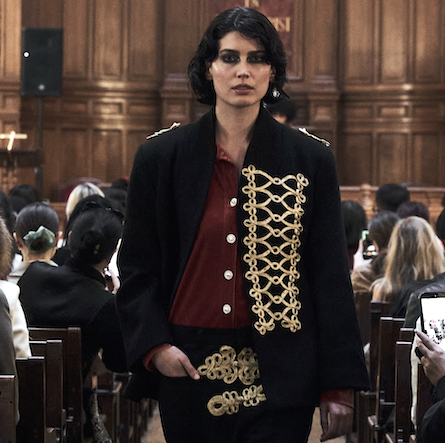
From 4th to 10th March, the Autumn/Winter 26/27 shows closed out fashion month in Paris, bringing together established houses and a growing number of emerging designers presenting new perspectives on structure, identity and craft.
While the Paris Fashion Week headline moments often belong to the largest luxury brands and who sat on their FROW, this season’s broader conversation extended beyond the major houses. Across the week, collections balanced strong tailoring, bold silhouettes and conceptual storytelling, with smaller labels offering some of the most thoughtful presentations.
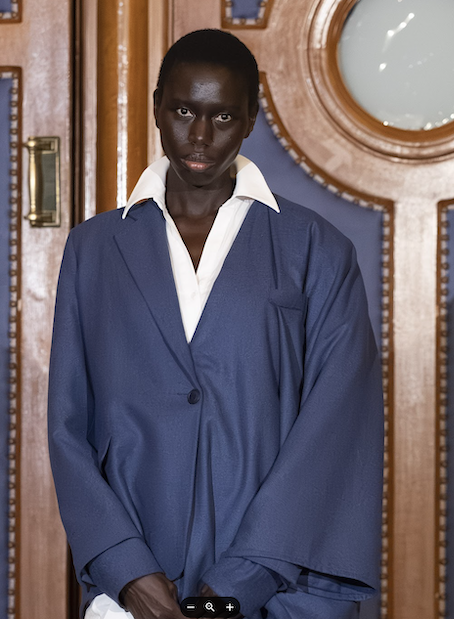
(Power shoulders return, image: MOSSI AW26)
Power Shoulders Return
One of the clearest visual trends across the week was the continued expansion of the shoulder line. Jackets and coats arrived with exaggerated proportions, reinforcing the industry’s ongoing interest in power dressing. Givenchy leaned into sharp tailoring, presenting structured blazers and suits that emphasised strong silhouettes while maintaining fluidity through fabrics and movement.
The aesthetic echoed an evolution of the 1980s-inspired “inner power dressing” that has been building across recent seasons, where sculptural shoulder pads and defined waists create dramatic, architectural shapes.
Elsewhere, designers continued to experiment with tailoring that balanced structure and softness: capes, frills, peplums, belted coats and sharply cut trousers appeared across multiple runways, suggesting a wardrobe built around authority as much as elegance.
Colour and Contrast
Colour was used strategically this season. Red in particular emerged as a strong accent shade, appearing in coats, dresses and tailoring, both on the runway and across street style.
Alongside these bold tones, designers explored contrasts between hard and soft elements. Lace, frills and lingerie-inspired details remained visible, but often presented with a sharper edge, while leather and glossy materials added weight to otherwise delicate silhouettes.
The result was a season defined by duality: structure paired with fluidity, sensuality balanced with restraint.
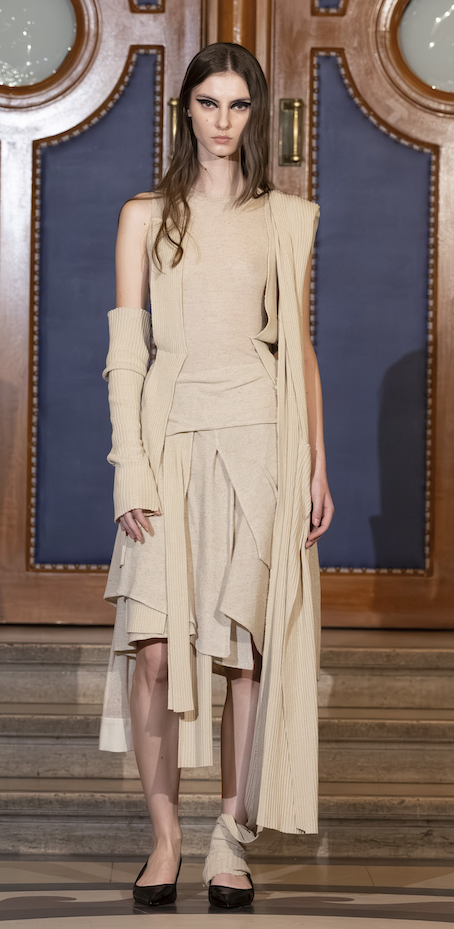
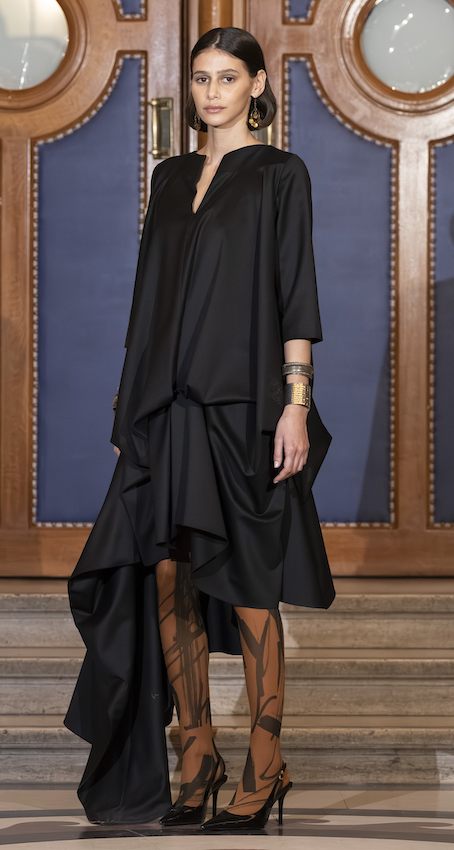
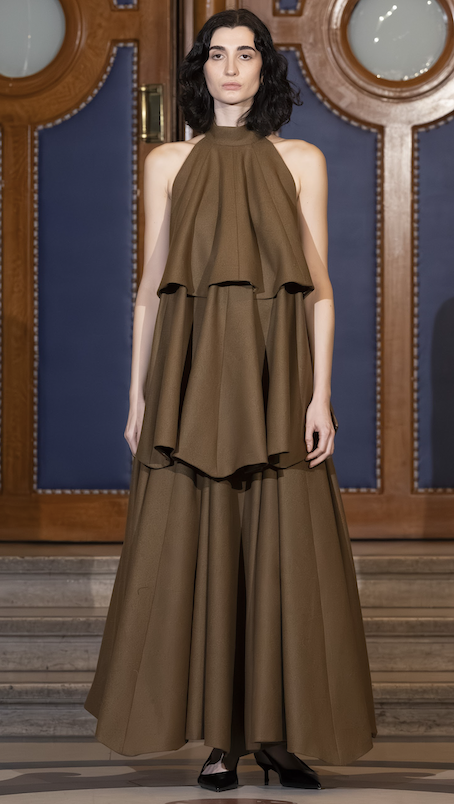
(Images: MOSSI AW26)
MOSSI: A Runway Staged as a Courtroom
Among the most distinctive presentations came from MOSSI, founded by Mossi Traoré. For Autumn/Winter 26/27 the brand staged its show inside the Court of Appeal of Paris, transforming the runway into a symbolic courtroom.
The presentation unfolded as a fictional trial in which the fashion industry itself appeared to “file a complaint” against the designer. The collection drew directly from judicial wardrobes, reinterpreting judges’ robes and legal uniforms through MOSSI’s structured silhouettes and signature pleating.
Sculptural shapes referenced the work of artist Lee Bul, reinforcing the show’s focus on fashion as both argument and evidence. The format turned the runway into a debate about creativity, authority and the role of fashion institutions.
(Images: LOVELOUDER AW26)
LOVELOUDER: Mythology Translated into Modern Structure
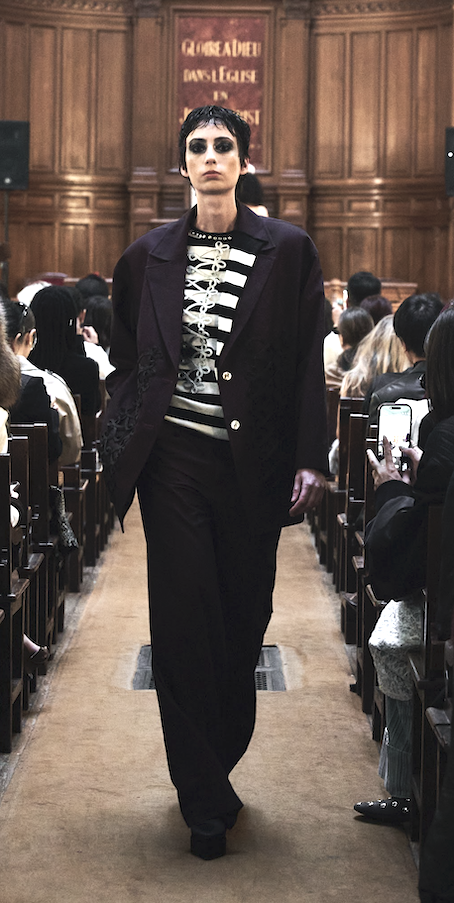
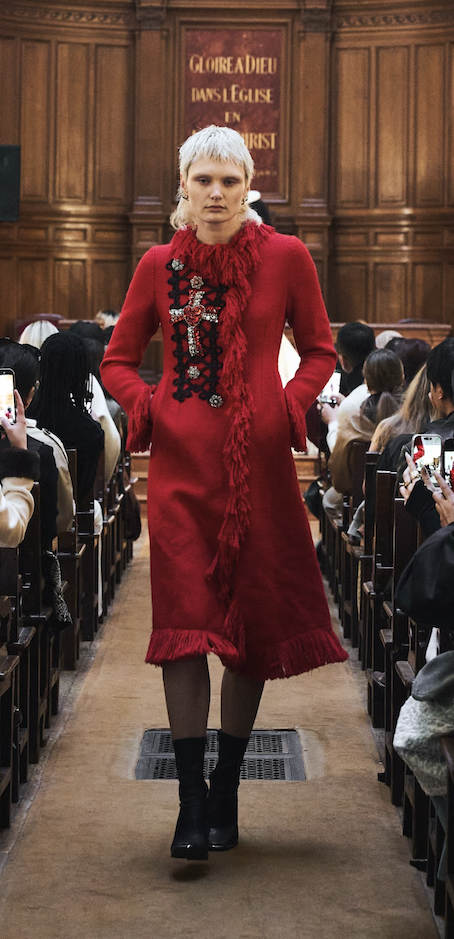
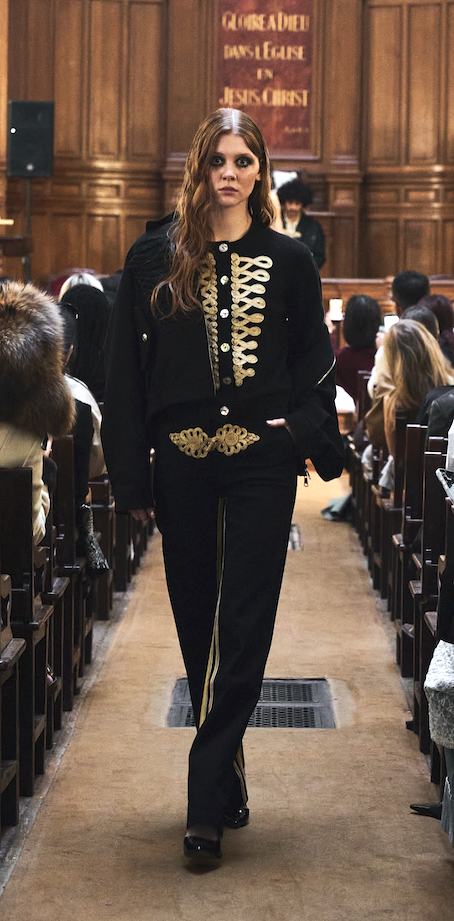
Emerging label LOVELOUDER presented its Autumn/Winter 2026–2027 collection, ORIENTATION: After the Sirens, during the week.
The collection explored the myth of the Sirens as a metaphor for the narratives that shape modern identity. Rather than retelling the story directly, the brand translated the theme into a shift in silhouette.
Early looks featured fluid, ocean-inspired forms and reflective materials, gradually transitioning into more structured shapes. The fabric palette followed a similar trajectory: liquid surfaces gave way to heavier textiles designed to emphasise structure and clarity.
Colour moved from deep blues and iridescent tones toward stark white, red and black, reinforcing the idea of navigation and direction.
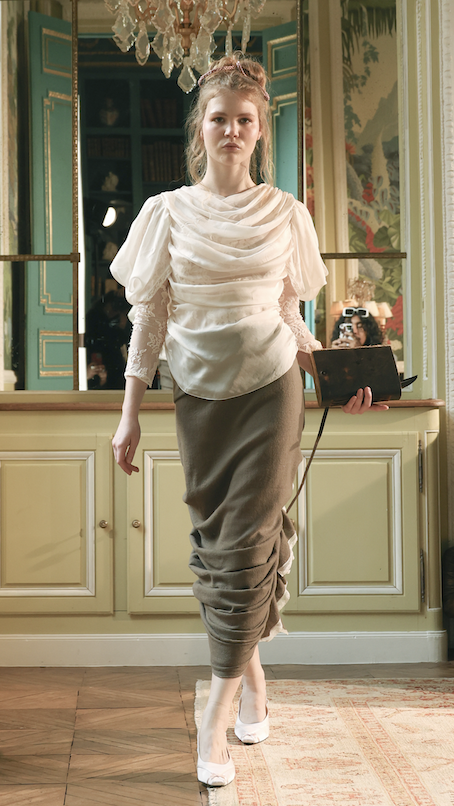
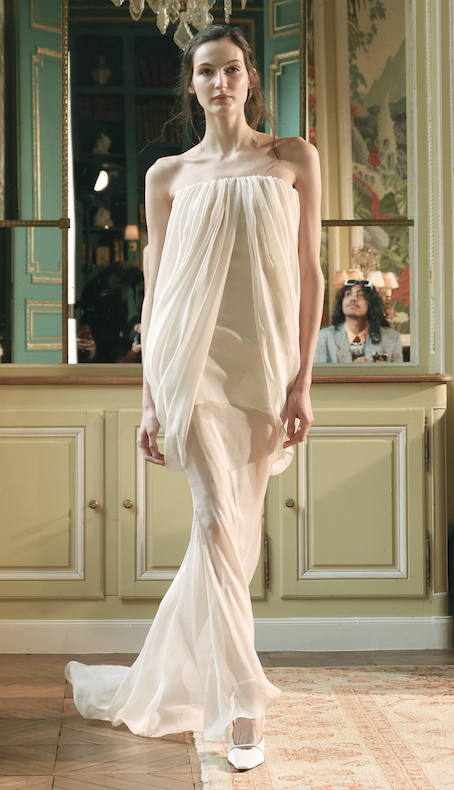
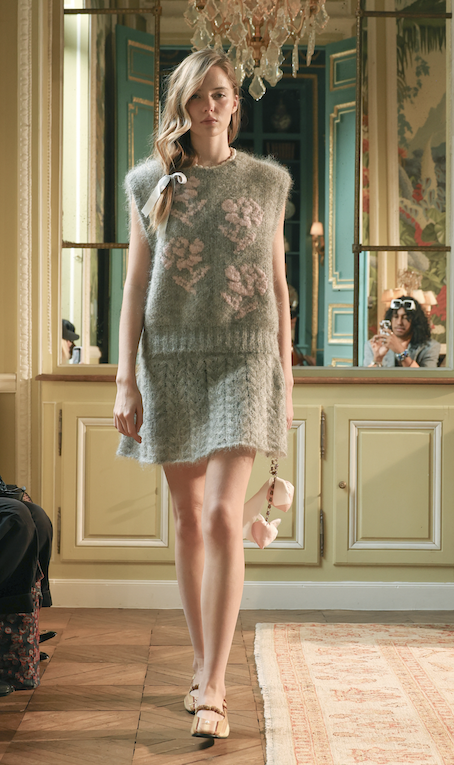
(Images: r.l.e AW26)
r.l.e: Slowing Down the Fashion Cycle
Designer Qixin presented the Autumn/Winter 2026 collection for r.l.e under the title Play House, a collection focused on experimentation and process.
The project reflects on the pressure to define identity quickly in contemporary culture. Instead, the designer proposes a slower space for development and play.
The collection references the 1920s through silhouettes and pacing, combining tulle skirts, cropped trousers and bra-like structures with contemporary tailoring. Craft plays a central role: crochet and knotting techniques transform fabric scraps into new textiles, while hand-knit garments emphasise time and process.
A capsule collaboration with youth-focused label imyourAnkin introduced more playful silhouettes, creating a dialogue between maturity and innocence. In addition, ceramic artist Dai contributed sculptural buttercream cake objects that reimagined celebration as something permanent rather than fleeting.
A Broader Shift Toward Narrative
Beyond specific styles and trends, the week reflected a wider shift in how collections are presented. Increasingly, emerging designers are using storytelling and unconventional formats to frame their work.
In a season dominated visually by strong silhouettes, sculptural tailoring and bold colour accents, it was these conceptual presentations that stood out. While the major houses continue to define the commercial direction of fashion, smaller labels are increasingly shaping the direction and conversation around it.
This season the traditional runway format continued to evolve, increasingly, designers are approaching their presentations as carefully constructed visual environments. Sets, lighting and narrative are designed with the afterlife of the show in mind — the photographs, short videos and social clips that will travel instantly across the globe. Whether through theatrical staging, immersive installations or tightly directed presentations, the runway is becoming part performance, part photoshoot. For many labels, particularly emerging ones, the moment captured in an image can be just as important as the one experienced in the room.
Top intro image: LOVELOUDER AW26


