


Oxford Street Now Traffic-Free: What This Means for Fashion Retailers
26-10-2026


Oxford Street has entered a new era, with almost a kilometre of the iconic London shopping street becoming permanently traffic-free, as from 26th October 2026.
The scheme, led by Mayor of London Sadiq Khan, marks the first step in a wider transformation designed to strengthen the street’s position as a world-class shopping destination.
For fashion retailers, the timing is significant. With the busy Christmas trading period approaching, the removal of traffic could create a more relaxed environment in which shoppers can browse, discover brands and spend more time exploring stores.
The changes will also bring new opportunities for retailers to rethink how their physical spaces engage consumers. As competition from online shopping continues, a more pedestrian-friendly Oxford Street could help flagship stores become destinations in their own right, combining product discovery with events, styling services, exclusive launches and other in-store experiences.
There is already a London example of how this approach can work. The £22 million Strand Aldwych redevelopment, completed in December 2022, transformed a traffic-dominated area into a 7,000 sq m public space, with 41 new trees, extensive planting and seating for up to 700 people. Working alongside cultural and educational institutions including Somerset House and King’s College London, the space provides a setting for exhibitions, art installations, performances and public events. Westminster City Council and LDA Design have documented the project’s development.
Although Strand Aldwych is not a direct retail equivalent, it demonstrates the potential of a more European approach to urban spaces: creating places where people want to linger, socialise and engage with their surroundings, rather than simply pass through. For Oxford Street, the opportunity is to apply that principle to a major shopping destination, bringing fashion together with culture, leisure, hospitality and public events to encourage repeat visits.
The plans extend beyond traffic removal. By spring 2027, Oxford Street is expected to feature more than 50 new trees, over 100 seats, two public squares, improved signage and new lighting. These additions are intended to encourage visitors to stay longer and return more frequently, potentially benefiting fashion businesses alongside hospitality, leisure and neighbouring retailers.
Major retailers are already signalling their commitment to Oxford Street’s future. John Lewis has highlighted its investment in its flagship store, including a new 300-seat restaurant and an expanded sports department, while Under Armour sees pedestrianisation as an opportunity to connect with consumers through sport, community and brand experiences beyond traditional retail.
However, the transformation is not without practical considerations. With buses, taxis, private hire vehicles, cycles and other traffic diverted onto surrounding roads, retailers will need to monitor how customers access the area. Deliveries within the pedestrianised zone will be restricted to midnight to 7am, making efficient logistics and stock management particularly important during peak trading.
Accessibility, safety and the overall quality of the visitor experience will also be critical to the project’s success. The initial transitional scheme will be monitored and refined using public feedback, giving businesses an opportunity to help shape the permanent environment.
For fashion retailers across the wider high street, Oxford Street could become an important test case. If pedestrianisation encourages more visits, longer dwell times and greater engagement with physical stores, it could strengthen the argument for investing in people-first retail environments elsewhere in the UK.
The immediate priority will be translating the new space into commercial results. As the Christmas season gets underway, retailers will be watching closely to see whether a traffic-free Oxford Street delivers the footfall, spending and customer experience needed to turn an ambitious regeneration project into a lasting retail success.
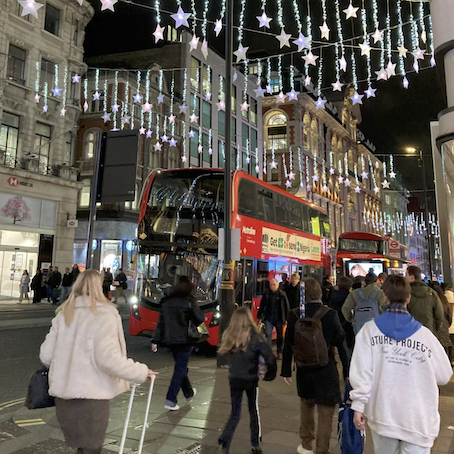
Top image: Oxford Street pre-pedestrianised by JoJo Iles


