


Fashion Education Needs An Employment-Ready Upgrade For Grads To Gain A Real Advantage
23-11-2026


As the fashion industry evolves, are education providers doing enough to equip graduates with the technical, digital and production skills employers actually need? From AI and 3D garment visualisation to smarter pattern development and more efficient manufacturing, the future of fashion education must look beyond design and embrace how clothes are made.
Fashion education has traditionally placed creativity, design development and individual expression at its heart. These remain essential foundations, but as the fashion industry faces increasing pressure to become more commercially responsive, technologically advanced and environmentally responsible, the skills required of its future workforce are changing.
There is a growing need for people who understand not only how to design a garment, but how to develop it, construct it, cost it and take it through the production process. Knowledge of fabrics, pattern cutting, garment construction, manufacturing methods and quality control is becoming increasingly important, alongside the ability to use digital technologies to improve efficiency, reduce waste and make better-informed production decisions.
For students entering the industry today, creativity alone may no longer be enough. Employers need graduates who can bridge the gap between an initial design concept and a commercially viable, well-made product. Crucially, they also need people who are confident working with the technologies that are beginning to transform the way fashion is designed and manufactured.
Technology is changing the way fashion is made

Artificial intelligence, computer-aided design (CAD), 3D garment visualisation and digital sampling are no longer simply emerging concepts. They are becoming increasingly relevant to the fashion product development process, offering opportunities to rethink traditional workflows and make production more efficient.
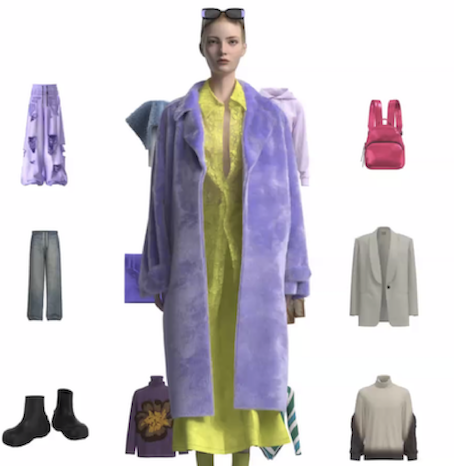
Software such as Style3D, for example, allows designers and product developers to create and visualise garments in a digital environment, exploring silhouettes, fabrics, fit and construction before committing to physical samples. This can help reduce the number of physical prototypes required, shorten development timelines and minimise unnecessary material consumption.
For students, understanding these technologies is about much more than learning another piece of software. It is about developing a different approach to product development: one that considers the entire lifecycle of a garment, from the initial design decision through to construction and manufacture.
Digital tools can also support pattern development, grading, fit assessment and communication between design and production teams. AI has the potential to further support research, design exploration, workflow efficiency and problem-solving. Used thoughtfully, these technologies can give emerging designers and technicians a greater understanding of the practical and commercial implications of their decisions.
However, technology is most valuable when it is underpinned by sound technical knowledge. A student still needs to understand how a garment is constructed, how different fabrics behave, how patterns translate into three-dimensional form and what makes a product suitable for manufacture. Digital capability should enhance these skills, not replace them.
Fashion Technology Academy: putting production skills at the centre of education

Recognising the importance of this shift, Fashion Technology Academy (FTA), based in London and Leicester, is placing technology, practical skills and industry relevance at the centre of its educational approach.

FTA Head of Education, Lan Leader (pictured left), believes that embedding AI and new technologies into teaching and learning is essential to equipping learners with the technical and transferable skills increasingly required by employers.
The Academy’s approach encompasses several areas that are becoming particularly important to modern fashion production. These include introducing learners to AI tools and their workplace applications, developing practical CAD skills for pattern development, grading and garment construction, and exploring 3D garment visualisation and digital sampling.
The latter is particularly significant. By introducing students to digital garment development, FTA aims to help them understand how physical sampling can be reduced, alongside the associated material waste, development time and costs.
Technology is also being explored in relation to quality assurance and production management, helping learners understand how digital systems can support consistency, improve processes and address challenges within product development and manufacturing.
Sustainability is another important consideration. Rather than treating it as a separate subject, FTA encourages learners to explore how technology can contribute to more responsible fashion practices, including waste reduction, material traceability and improved resource efficiency. Equally, students are encouraged to consider the environmental impact of the technologies themselves, recognising that digital solutions also need to be evaluated critically.
This is an important distinction. The objective is not simply to make students proficient in new software, but to develop graduates who can identify where technology can genuinely improve a process, solve a production challenge or support a more considered approach to making clothes.
Why understanding construction still matters
As digital design tools become more sophisticated, there is a risk that the practical knowledge behind garment making receives less attention. Yet, arguably, this knowledge has never been more important.
A digital garment is only as useful as the understanding behind it. Students need to know how different construction methods work, how fabric properties influence fit and performance, and how design decisions affect manufacturing time, cost and quality.
The ability to move between digital development and physical garment construction is particularly valuable. Understanding how a digital pattern translates into a finished garment, for example, requires both technical knowledge and practical experience.
This combination of traditional making skills and technological confidence is likely to become an increasingly important differentiator for graduates entering the fashion workforce.
The industry needs people who can communicate effectively with pattern cutters, machinists, product developers, manufacturers and suppliers, while also understanding the digital systems that connect these different stages of production.
Bridging the gap between education and employment
The need for closer collaboration between education and industry is also recognised by London College of Contemporary Arts (LCCA), which has been developing a model that integrates industry engagement throughout its curriculum.

Lucy London, Dean of Creative Industries at LCCA (pictured right), believes that creative talent alone is not enough to succeed in today’s fashion and textile industry.
“Graduates need to understand how to take an idea from concept through to a commercially viable, manufacturable product that meets the needs of both the consumer and the business,” she explains.
LCCA’s approach brings creative practice and industry knowledge together through live briefs, external partnerships and opportunities for students to engage with industry professionals. Its curriculum also addresses the commercial realities of fashion, including product development, sourcing, production, costing, branding, sustainability and consumer behaviour.
London describes her approach as ‘Edustry’ – an ecosystem in which education is fused with industry.
The intention is to ensure that students understand the wider business and production environment in which their creative work will exist. Alongside technical and commercial awareness, LCCA also places emphasis on professional communication, presentation skills, networking and the ability to market themselves effectively.
Technology is another developing area of focus. LCCA is creating opportunities for students to explore AI and emerging technologies across digital design, visualisation, research, content creation and more efficient workflows.
Importantly, London believes students must understand not only the opportunities these tools present, but also their limitations, including questions around authorship, intellectual property, ethics and sustainability.
The objective is to develop graduates who are confident embracing new technologies without losing their individual creative identity or critical judgement.
A new kind of fashion graduate

The message from both education providers is clear: fashion education needs to respond to an industry that is changing rapidly.
The next generation of fashion professionals will need to be creative, but also technically capable, commercially aware and digitally confident. They will need to understand the realities of production, recognise opportunities to improve existing processes and use technology intelligently to create better products with fewer wasted resources.
This does not mean abandoning traditional fashion education or the creative skills that have always driven the industry forward. Rather, it means strengthening the relationship between design, construction, technology and manufacturing.
For employers, graduates who can understand both the creative vision and the practicalities of delivering it are likely to be increasingly valuable. For students, developing these skills can open up a broader range of career opportunities across design, technical product development, pattern cutting, digital garment development, production and manufacturing.
However, the future of fashion will not be shaped by creativity or technology in isolation, but by the ability to bring them together. Education providers have an important role to play in ensuring that students leave with more than a qualification and a portfolio. They need the knowledge, practical experience and confidence to contribute meaningfully to the industry from the outset.
(Top image: Style3D, classroom images FTA)


