


Just – Style.com Reports On the Call for UK Fashion Watchdog as Manufacturers Report Unfair Buying Practices
09-03-2026


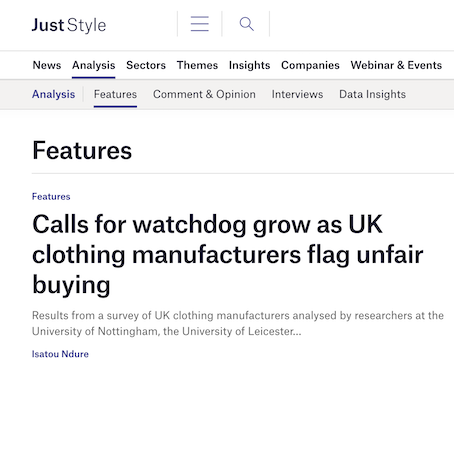
A newly published article, 9th March, in Just-Style.com by Isatou Ndure highlights growing concerns across the UK fashion manufacturing sector regarding unfair purchasing practices by brands and retailers. The report draws on a recent survey of UK clothing manufacturers, Who pays? Brand Purchasing Practices in UK Fashion Manufacturing, analysed by researchers at Transform Trade, the University of Nottingham and the University of Leicester, revealing widespread issues that are placing increasing financial pressure on domestic factories.

The findings paint a stark picture of the challenges faced by UK manufacturers. According to the survey, 31% of manufacturers reported that brands had cancelled orders, while 78% said brands did not cover the costs of last-minute changes to production. A further 75% said prices were not adjusted to reflect minimum wage increases, and 67% experienced reductions in order volumes after quoting for work.
Payment practices were also highlighted as a major concern. Nearly half of respondents (44%) said brands requested extended payment terms, while 10% reported payments delayed by more than three months beyond agreed deadlines. Other issues included post-contract discount demands, late penalties caused by brand changes, and operational pressures that have led to overtime spikes, reduced working hours and layoffs across UK factories.
Researchers involved in the study argue that the findings demonstrate systemic power imbalances between brands and suppliers, with calls growing for stronger oversight to ensure fairer trading conditions. One proposal gaining traction is the introduction of a Garment Trading Adjudicator, similar to the Groceries Code Adjudicator that regulates supermarket relationships with suppliers.
Industry leaders have echoed these concerns. Suzanne Ellingham, Director of Source Fashion, described a “fundamental power imbalance” in the sector, noting that factories are often expected to absorb financial risks while facing penalties for late delivery, despite delayed payments from buyers.
Jenny Holloway, CEO of Fashion-Enter Ltd and Chair of the Apparel and Textiles Manufacturers Federation (ATMF), strongly supports the introduction of an independent adjudicator to address these challenges.
Speaking to Just-Style, Jenny said: “I have always supported the call for a Fashion and Textiles Adjudicator by Transform Trade and other NGOs, and the report Who Pays? highlights exactly why we need an impartial body to review imbalances of power. We only have to look at the recent treatment of factories by Quiz Clothing’s third administration to realise that this coercion of the supply chain has to stop. One factory I know has been offered just 15p in the £, and it had a balance of £900k in unpaid invoices. This is truly shocking.”
Jenny also emphasised that while oversight is necessary, it must be implemented carefully to ensure it does not inadvertently discourage brands from placing orders with UK manufacturers.
“We therefore need to find a way forward that instils confidence for the brands to work with the UK for orders ranging from test and repeat to bulk orders, and at the same time ensure that we do not overburden the factories with unnecessary compliance.”
In addition to regulatory oversight, Holloway reiterated calls for greater government support for UK manufacturing through public procurement.
“This is why the Apparel and Textiles Manufacturers Federation, in union with Fashion-Enter, is calling upon the Labour Government to support clothing Public Procurement contracts to be made in the UK. This way, we can create jobs, safeguard jobs, start employing youth again in apprenticeships, and bring social value into the supply chain for the Government.”
She added that the UK manufacturing sector has already demonstrated its capability and resilience during times of crisis.
“Factories were good enough during the Covid crisis to make PPE for the NHS, so let’s replicate this now and be proud to make the public procurement contracts in the UK.”
The debate around fair purchasing practices is likely to intensify as the industry seeks solutions that protect workers, support supplier sustainability, and maintain the competitiveness of UK manufacturing. With mounting evidence of systemic issues in brand-supplier relationships, calls for regulatory intervention are expected to remain firmly on the agenda for policymakers and industry leaders alike.
Tap here to view the full Just-Style.com article


