


After the Founder: The Legal Architecture of Legacy
13-05-2026



By Elena Bajada, Managing Director at Major, Lindsey & Africa (pictured right)
When a luxury brand loses its founder, or is forced to reinvent itself under commercial pressure, it is the General Counsel who must determine whether the legal architecture built around one person’s singular authority can support a business that is now, by necessity, something different. In Italian fashion right now, that question is live, urgent, and playing out simultaneously at three of the most significant houses in the world.
Giorgio Armani died in September 2025, leaving behind a succession plan so legally precise it embedded creative instructions in the company’s bylaws and imposed a five-year moratorium on major transactions. Versace was acquired by Prada, requiring the integration of two aesthetically distinct identities within a single corporate structure. Dolce & Gabbana, the last of the great independent Italian duos, is diversifying into beauty, real estate, and hotels, building revenue streams designed to outlast the founders’ direct involvement.
The great Italian fashion houses were built on a model in which the founder’s judgement was the final word on almost everything. Creative direction, brand partnerships, licensing decisions, public positioning: all of it flowed from a single, irreplaceable source of authority. The legal frameworks that developed around these businesses were calibrated to serve that model, built to protect and operationalise a vision that was, in the most literal sense, personal.
When that founder steps back or is no longer present, the GC inherits a set of legal instruments designed for a world that no longer exists. To name but a few challenges: trademark portfolios may not cover the product categories the brand now wants to enter, licensing arrangements may conflict with repositioning ambitions, and distribution contracts may lock the business into retail relationships that no longer reflect where the brand intends to go. The GC embedded in strategic conversations from the outset will have anticipated these constraints and begun to address them in advance. The alternative is resolving them under pressure, in public, with significant consequence for brand and business alike.
Determining what a brand means after its founder is gone appears, on its surface, to be a creative challenge. It is, in practice, a governance one, and the General Counsel sits at its centre. When Giorgio Armani codified his aesthetic principles in his company’s bylaws and detailed the process for appointing future style directors, he was doing something that only rigorous legal thinking makes possible: converting a deeply personal creative vision into an enforceable institutional standard. His succession plan was, in the most consequential sense, a legal document designed to protect an artistic legacy.
For brands navigating less structured transitions, the contribution of a General Counsel is equally critical and considerably less visible. As creative authority disperses across a new leadership team, the GC must ensure that the brand’s core intellectual property is properly protected, that partnership and licensing decisions remain coherent with the brand’s legal identity, and that the governance structures are robust enough to support sound decision-making without a founder’s instinct to fall back on.
There are also modern-day challenges that are distinct from creative legacy and foundational change but tie in to the same timeline. There is, for example, a dimension of brand protection that the luxury sector has been slow to address with the seriousness it warrants: cyber risk. For a luxury house, the compromise of design IP ahead of a collection launch, or the breach of high-net-worth client data, is a reputational event before it is an operational one. The GC is increasingly the function that translates these risks into governance language, ensuring that the board understands them as matters of business continuity rather than technical failure.
Financial security is a related and equally pressing concern. As the major Italian independents face sustained pressure from the global conglomerates, the GC is central to navigating the terms of external investment, the shareholder arrangements that determine how much creative independence survives a change in ownership, and the contractual protections that prevent a brand from becoming unrecognisable inside a larger structure. Armani’s will named preferred buyers and imposed strict transfer timelines precisely because someone understood that without those legal constraints, the brand’s future would be determined by market conditions rather than by its own values.
The Italian fashion houses under the most pressure right now are not failing for want of heritage or talent. They are failing because structures built around one person’s final judgement were never designed to outlast that person. What survives these transitions will depend less on creative reinvention than on governance, and on whether the General Counsel is in the room when the decisions that matter are being made. At this moment in fashion, the legal question and the brand question are one and the same. How these houses govern their transitions will determine what survives them.
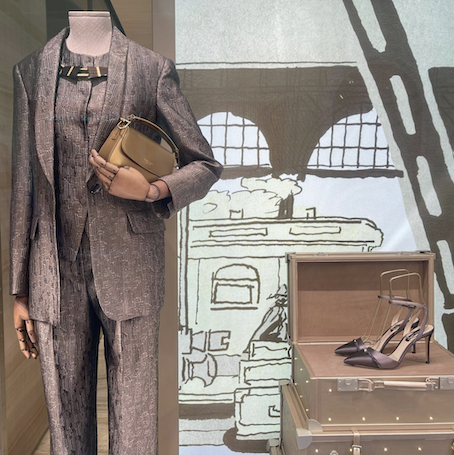
Top image: Armani window Rome by JoJo Iles


