


Why Fashion Brands Should Test Retail Demand Before Scaling Production
11-05-2026


For an emerging fashion brand, production is one of the most exciting and expensive steps in the business journey. Seeing a design move from sketch to sample to finished garment can feel like proof that the brand is becoming real. But producing too much too early can quickly create cash flow pressure, excess stock and difficult decisions.
This is why retail testing should sit closer to the production conversation. Before a founder commits to larger runs, a short physical retail test can reveal what customers actually pick up, try on, ask about and buy.
Production Decisions Need Market Evidence
Fashion production is not just about making clothes. It is about making the right clothes, in the right quantities, at the right time. Business of Fashion’s guide to production makes the point that a fashion business ultimately depends on what is produced and delivered to the customer, not just what is designed.
For small labels, that connection is especially important. A garment may look strong in a lookbook and perform well on social media, but behave differently once a customer touches the fabric, checks the fit or compares it with another item on a rail. Physical retail creates a feedback loop that online analytics cannot fully replace.
Use Pop-Ups as Fit and Product Research
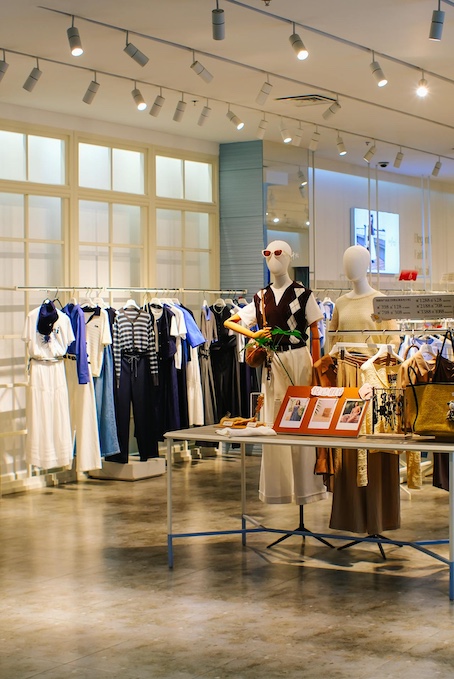
A temporary store can be a practical research environment. Founders can observe which pieces attract attention first, which sizes sell through fastest, what customers hesitate over, and which questions come up again and again. These details can guide grading, colour decisions, price points and future sample development.
For brands looking for pop up retail space, platforms like xNomad can help connect short-term retail demand with suitable locations, giving designers and founders a way to test customer response before committing to larger production volumes.
Reduce the Risk of Overproduction
Overproduction remains one of fashion’s most persistent commercial and sustainability problems. When brands produce more than they can sell at full price, margins suffer and unsold stock often ends up discounted, stored or wasted. For an early-stage brand, that can be enough to damage momentum.
Retail tests can help founders make more precise decisions. If one style consistently attracts interest but customers ask for a different length, fabric weight or colour, the next production run can reflect that learning. If a product performs better in person than online, that may suggest a different sales strategy. If a hero piece fails to convert, it is better to discover that before scaling.
Match Manufacturing Skill With Commercial Timing
UK fashion manufacturing depends on technical skill, realistic planning and strong communication between designers and production teams. The Fashion Technology Academy model, which operates alongside a live factory and fashion studio, reflects how valuable practical exposure is for understanding the garment lifecycle.
Retail testing adds another layer to that learning. It helps brands bring customer evidence back into conversations about sampling, fit, quality and lead times. Instead of treating production as a fixed endpoint, it becomes part of a cycle: make, test, learn and refine.
Speed Matters in Fashion
Fashion rewards timing. Research from Stanford Graduate School of Business has argued that combining trend-driven design with shorter production and distribution lead times can help fashion companies avoid missed demand and excessive markdowns. For small brands, speed does not mean rushing blindly; it means building enough flexibility to respond to what the market is showing.
A pop-up can support that flexibility. A brand may test a capsule collection over a weekend, gather customer feedback, and then decide which styles deserve deeper production. This creates a more informed path than relying only on wholesale assumptions, influencer comments or website traffic.
Turn the Shop Floor Into a Learning Space
The most useful retail tests are designed intentionally. Founders should decide in advance what they want to learn: whether the price is right, whether customers understand the product story, whether sizing is clear, or whether a particular neighbourhood attracts the right audience.
Staff should record common questions, objections and compliments. Returns, exchanges and abandoned purchases should be studied, not ignored. Even conversations that do not lead to a sale can reveal what needs to change before the next run.
A Smarter Path to Growth
For emerging fashion brands, the goal is not to avoid production risk completely. Risk is part of building a label. The goal is to make that risk more intelligent. When retail testing happens before a major production commitment, founders gain evidence they can use with manufacturers, investors, stockists and customers.
That makes pop-up retail more than marketing. It becomes a bridge between creativity, manufacturing and commercial reality. For a sector where margins are tight and technical skills matter, that bridge can help young brands grow with more confidence and less waste.
Images by BI ravencrow via pexels.com


