


How to Prepare a Scarf Development Brief Before Contacting a Supplier
November 23, 2026 - November 23, 2026


A scarf collection often begins with a photograph, a colour palette or an idea about how the product should feel. For a supplier, however, those references leave important questions unanswered. What fibres should be used? What size and weight are required? How many pieces does the brand intend to order?
A clear development brief gives both sides a practical starting point. It does not need to answer every technical question immediately, but it should separate confirmed requirements from details that still need discussion.
Start with the intended customer and use
Explain who the scarf is for, when it will be worn and where it will be sold. A lightweight accessory for transitional weather involves different considerations from a substantial winter scarf or an oversized wrap.
Describe your intended market position and share a realistic target price if you have one. Terms such as “luxury” and “premium” are useful starting points, but explain what they mean for your collection: softness, surface appearance, drape, finishing or packaging.

Clarify the material and construction
State the required fibre composition if it has already been decided. If not, ask the supplier to recommend options against your intended use and budget. Avoid treating wool, cashmere and different blends as interchangeable.
Also explain whether you want a woven or knitted scarf. Where you are unsure, provide reference photographs and ask which construction could achieve the desired result. Any proposed material substitution should be discussed before sampling.
Record dimensions, weight and finishing
Give the finished length and width, stating whether fringe is included. Where possible, provide a target piece weight. If you do not know the weight, say so rather than guessing.
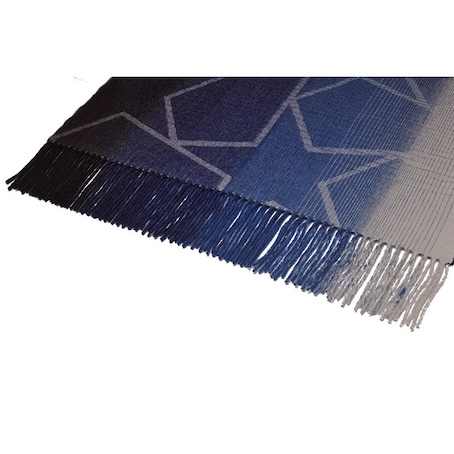
Describe the edges and ends: fringe, short tassels, hems or knitted borders. Include fringe length and appearance where relevant. Agree on measurement methods and acceptable tolerances with the supplier before approving production.
Explain what each reference represents
A physical sample can communicate qualities that photographs cannot, particularly hand feel and drape. However, “make it like this” can still produce misunderstandings.
Identify exactly what should be followed. You might want the softness of one sample, the dimensions of another and an entirely different colour arrangement. Mark these requirements separately.
For patterns, supply clear artwork and explain scale, placement and orientation. Confirm that you have permission to use any supplied design. Screen colours should be treated as discussion references; agree on physical colour approval where needed.
Include quantities and commercial requirements
State the estimated total quantity and the proposed split by colour or design. Ask about minimum order quantities for each option, since custom colours and constructions may have different requirements.
Include labels, packaging and the delivery destination. Share your intended launch date, but ask the supplier to confirm a feasible schedule covering development, approvals, production and transport.
Discuss sample charges, courier costs and what the quotation includes. A price comparison is useful only when suppliers are quoting against comparable specifications and delivery terms.

Use sampling to resolve the remaining questions
Treat the first sample as an opportunity to test your shared understanding, a useful resource: cashmere–wool scarf sourcing guide. Check measurable details alongside softness, drape, colour and finishing.
In my experience supplying blankets and scarves, a sample can meet the stated dimensions and weight yet still miss the quality a customer expects. Feedback such as “not premium enough” needs further explanation: is the problem surface feel, loft, appearance or construction?
Provide one consolidated set of comments, with photographs where helpful. Identify what is approved, what needs changing and which sample or document is the current reference.
Keep the final specification current
Once a sample is approved, update the brief to reflect the agreed product. Keep the specification, artwork, colour references, labels and packaging instructions together, with clear version dates.
Before bulk production, confirm that any care instructions and performance claims are supported for the approved product. If your market requires particular testing, specify the methods and acceptance criteria early, rather than after goods arrive.
A useful brief is a working record, refined through discussion and sampling. For a new brand, its value is straightforward: it helps the supplier understand the product you want and gives you a clearer basis for assessing what arrives.


