


The Regional Artisan Workshop Model That Predated Modern Ethical Production
16-07-2026


Ethical production, slow fashion, and sustainable manufacturing are terms that feel new but have existed for centuries. Fashion brands started using them widely within the last two decades, mostly as a response to the problems created by fast fashion. But the values behind these terms are not new at all.
Before the sustainability argument entered the marketing world, the small artisan workshops of Europe were already practicing ethical fashion. Crafting a garment was a slow and detailed process, so fast fashion and overconsumption were non-existent. The makers actually focused on the durability of the clothes, and repairing was preferred so clothes would end up at repair workshops instead of landfills, and everyone along the supply chain actually benefited from this manufacturing.
How Craftsmanship Looked Before Mass Production
Every piece of clothing that was created before industrial manufacturing came from a small workshop. Making a garment took real skill. Cutting fabric correctly, fitting a garment to a specific body, and finishing seams that would hold up under daily wear all took a tailor or seamstress years to learn properly.
Most craftsmen needed to train for years to gain experience before they ever worked on their own. A tailor, a cobbler, and a tanner each represented a distinct crafting technique, and each had its own training.
Construction Quality Was Never Compromised
Makers focused on quality construction because each garment that was produced through craftsmanship techniques required significant time. This slow manufacturing process of clothing ensures that the garments are sturdy enough to endure years of wearing.
Clothing Repair Was Preferred Over Replacement
When traditional craftsmanship was used for making garments, the concept of replacing old, torn clothes with new ones was very rare. Clothing was valuable, so repairing it was preferred. People patched and repaired damaged garments and reused them. Notice that at this time, the concept of conscious consumption didn’t exist.
In modern fast fashion, many garments are just manufactured to last one season. Mass production has taken over the textile industry, and factories can produce thousands of identical pieces in no time. Terms like durability have gone out of the question and are only brought up during marketing claims.
What Made Traditional Craftsmanship “Ethical” Before the Term Existed
Traditional workshops did not need to claim that their work was ethical. The structure of the work already lines up with most of what that word means today.
Quality Assurance Through Craft
Only a limited number of clothing orders could move through a small workshop at once. Consistently weak or poorly made goods could cost a workshop its customers and its reputation, sometimes within a single season. Quality was enforced by word of mouth and community accountability, not by an outside certification or a label on a tag. Many regions also had formal guild oversight, with inspections and quality marks used to confirm a piece met an agreed standard before it could be sold under the guild’s name.
Maintenance of Fair Labour Standards
Apprentices learned a trade directly from an experienced maker, often over several years, and that relationship came with real obligations on both sides.
Epstein’s research on pre-industrial European guilds confirms that apprenticeship was never simply about passing on a skill. It came with enforceable obligations on both sides, a labour standard that modern employment law is still trying to replicate
Teaching real, usable skills was the master’s obligation, not extracting cheap labour from someone younger. An apprentice who completed their training became a skilled tradesperson with genuine earning potential, not someone stuck indefinitely in a low-paid entry-level role.
Use of Ethically Sourced Materials
Materials mattered just as much as the clothing. Workshops typically sourced leather, wool, and linen from nearby producers. That meant a maker usually knew exactly where their materials came from and how they were produced. Modern ethical fashion calls this traceability and treats it as a selling point. Traditional workshops simply called it how business worked, because there was no other practical option.
Bavarian Tracht as a Living Example of Artisan Heritage
Bavarian tracht, like the dirndls and lederhosen, are one of the clearest surviving examples of the artisan heritage. Lederhosen and dirndl dress are regional clothing with a real working history. The material climate and the working life of the alpine region shaped their origin.
Lederhosen and dirndl both originated as a result of the working culture of the Alpine region. The people needed attire that could survive the harsh labour.
The Artisan Technique of Lederhosen and Dirndls
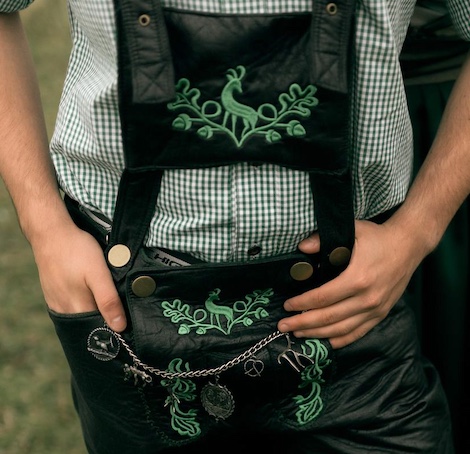
Leather has the ability to withstand the hard outdoor labor far better than woven cloth did, which made it the natural material choice for farmers and laborers. Traditional lederhosen use real animal hides from cows, deer, and goats. This leather is then cut and stitched into the leather pants known today. This specific shape was developed to allow mobility and accessibility.
Regional motifs like oak leaves and edelweiss flowers were hand-stitched, which further signifies the artisan skill of the Bavarian people.
The Dirndl developed alongside the lederhosen as women’s regional dress. A three-piece dirndl requires traditional artisan technique, and each component is practical.
Traditional Embroidery Portrays Regional Craftsmanship
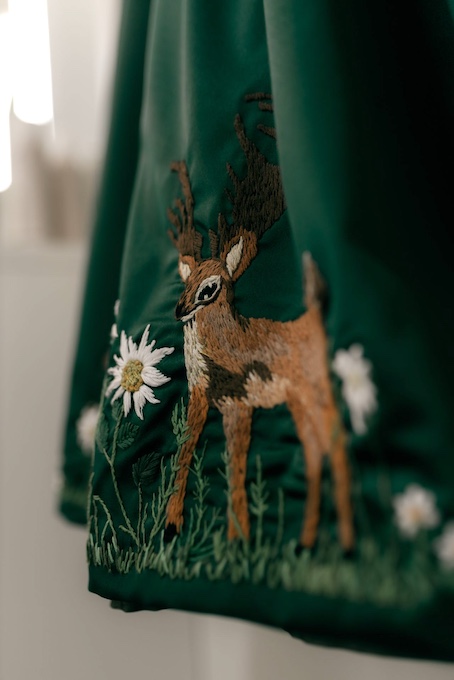
The embroidery on the traditional clothing adds another layer of skilled craftsmanship. The motifs like edelweiss flower, oak leaves, and stag horns are hand-sewn with time and skill. These are not random design choices picked for visual appeal. Each motif carries meaning that has been passed down alongside the construction techniques themselves, generation after generation. Regional clubs across Bavaria still exist today specifically to keep these construction methods and meanings intact, rather than letting them fade into a generic, simplified version of the tradition.
Today, traditional Bavarian clothing continues to inspire modern designs, with Lederhosen and Dirndl remaining popular choices for Oktoberfest and cultural celebrations. the same kind of pieces a dedicated Tracht retailer like Lederhosens still builds using authentic material and hand-finished embroidery rather than shortcuts.
The Role of Traditional Clothing in Modern Ethical Fashion
Traditional clothing has facilitated the new buyers to invest in ethically produced fashion by just buying the heritage pieces.
Buyers Are Choosing Fewer, Better-Made Pieces
Consumer habits are shifting toward ethical fashion. People are buying fewer pieces and paying closer attention to how those pieces get made. A garment built to survive a decade of regular wear looks like a far better investment than five cheaper pieces that fall apart within a year, and a growing number of buyers are starting to shop with that maths in mind.
Garment History and Origin are Becoming Part of the Purchase
Interest in garment history is part of the ethical shift too. Knowing exactly where a piece came from, what region, what material, and why it was built a certain way, carries more meaning than something mass-produced with no story attached to it at all.
A 2026 study published by Springer found that heritage-driven clothing achieves ecological responsibility and economic viability at the same time and that cultural identity built into a garment’s construction, not just its marketing, is what drives consumer trust. Bavarian Tracht has operated on exactly that basis for centuries, with no marketing required.
Story-Driven Clothing is Replacing Disposable Trends
People are increasingly choosing clothing that tells a story rather than disposable seasonal trends. Dirndls and Lederhosen carry a specific regional history, specific construction standards, and materials chosen for a functional reason, not a decorative one. That is a very different purchase from a garment picked off a rack simply because it matched a trend that will look dated again within a year.
What Modern Buyers Can Learn From Artisan Workshop Traditions
The workshop model left behind a useful, practical set of standards for anyone shopping for quality clothing today, whether it’s traditional Tracht or anything else in a closet.
Look for Quality Materials
Full-grain and suede leathers, like the deer and goat suede used in traditional Lederhosen, hold up to years of regular wear and develop real character over time instead of cracking or peeling apart. Natural fabrics such as cotton and linen breathe better and last longer than many synthetic blends on the market. Strong, even stitching is one of the easiest quality signs to check by hand before buying, since loose or uneven seams are usually the first part of any garment to fail.
Consider Longevity
Before buying, it helps to ask two simple questions. Can this be worn repeatedly without falling apart after a few uses? Will it age well over time, or will it start looking worn out after just a handful of wears? Traditional garments were built around a clear yes to both of those questions, since a workshop’s entire reputation depended on the answer.
Respect Local Cultural Details
Traditional designs carry specific meaning, and authentic construction reflects that meaning accurately.
Buying from a source that understands and respects the cultural details of the clothing, rather than a generic costume version made for a single wear, supports both better quality and a more accurate connection to the tradition itself.
Our full Lederhosen Collection and Dirndl Collection are built around exactly these standards, using traditional materials and construction methods instead of costume shortcuts.
Conclusion
Many core principles of modern ethical fashion like quality materials, fair labour, traceable sourcing, and real durability, were already standard practice in artisan workshops long before anyone used the word ethical to describe them. The real difference today is that these values need to be actively chosen, since industrial manufacturing made it just as easy, and often cheaper, to ignore them entirely.
A Lederhosen or Dirndl built the traditional way carries the same values modern ethical fashion is still working to rebuild from scratch, real skill, real materials, and a garment meant to last far longer than a single season ever could.
By Chloe Murdochny
Images by Alexander Mass via pexels.com


