


The Fitting That Matters Most: Why A Bespoke Jacket Is Taken Apart
25-11-2026


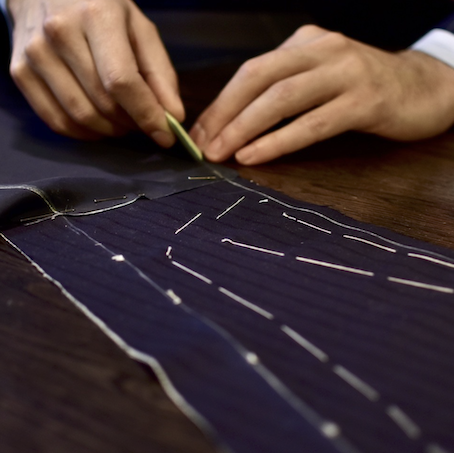
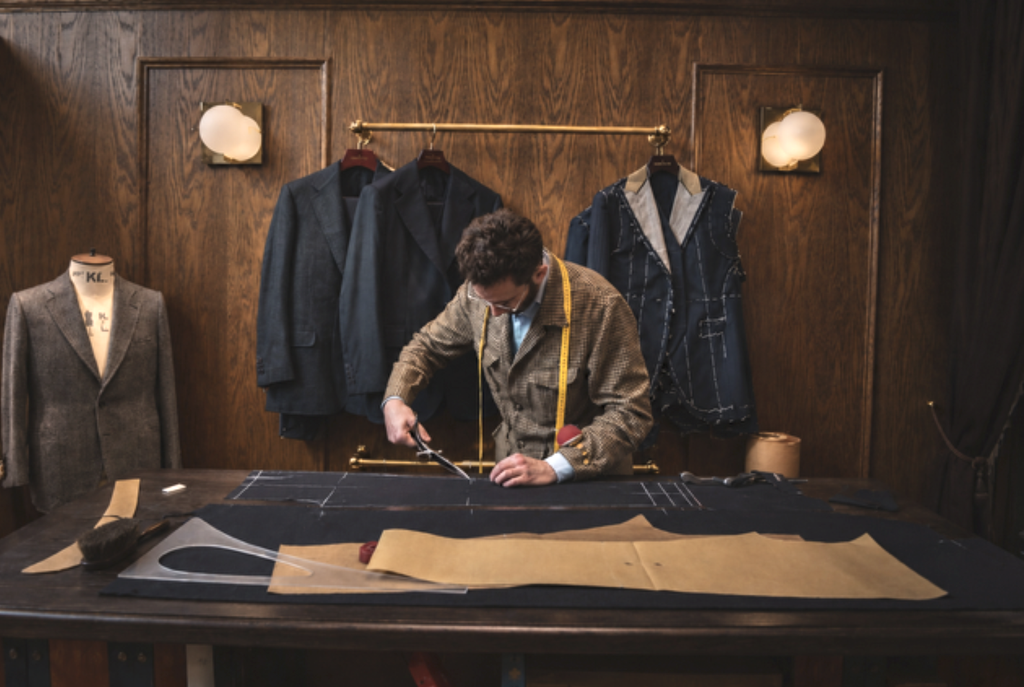
There is a peculiar moment in bespoke tailoring when a jacket that has already been cut, sewn and fitted is taken apart again. At Monte Lys on Bury Street, Juan Carlos Benito might spend a fitting studying a shoulder, the way a sleeve hangs or the angle of a front edge. Then the temporary stitches come out, the panels return to the cutting table and the chalk appears. It is not a correction to an otherwise finished garment. It is a central part of making one.
The baste fitting: where the real work begins
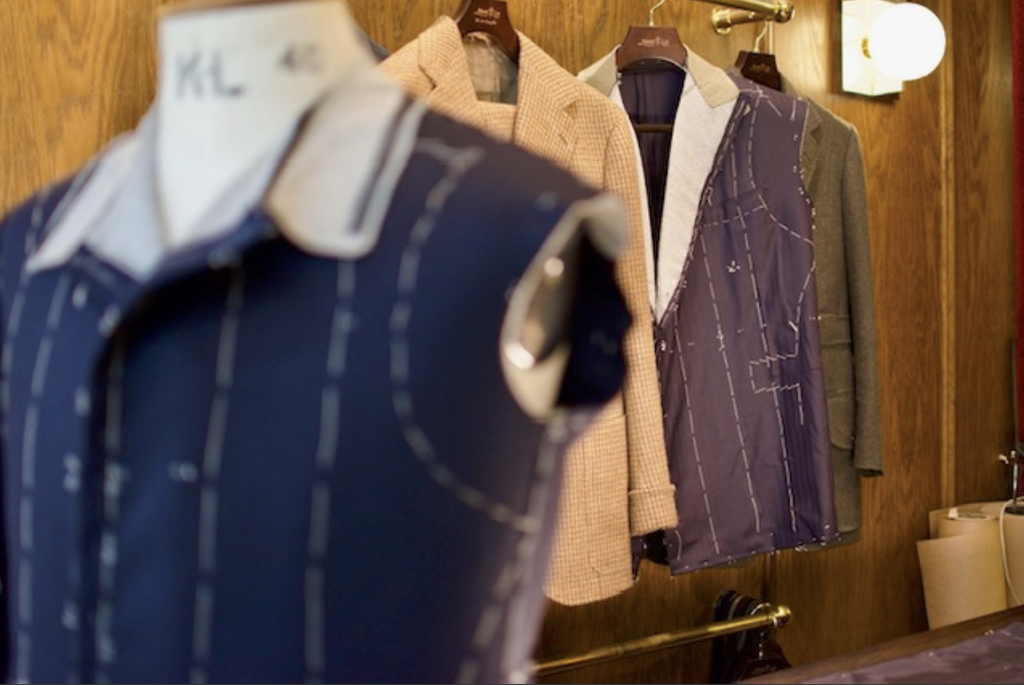
The first, or baste, fitting is deliberately provisional. The jacket has been assembled sufficiently to reveal its shape, but not so thoroughly that the cutter cannot make changes. Pockets, facings and finishing details can wait. At this stage, a few millimetres moved in the right place may matter more than hours of careful hand sewing.
Beyond measurements: understanding the individual
Measurements establish a starting point, not a solution. Two men with identical chest measurements may require quite different patterns. One carries his shoulders forward; another stands with an erect chest. Their heads, shoulder blades and the position of their arms all influence how the cloth must be distributed. That is why an individual paper pattern is more valuable than a standard block simply adjusted at the waist.
Balance is the first serious test. The front and back lengths must work with the wearer’s posture. A jacket can appear too long at the front because it is hanging incorrectly from the shoulder, rather than because the hem needs trimming. Benito studies how the collar sits against the neck, whether the fronts fall cleanly and how the side seams behave when the wearer stands naturally. The mistake is to treat every visible crease as a problem at the precise point where it appears.
Sleeve pitch, posture and movement
Sleeve pitch is another useful example. Arms rarely hang perfectly straight down the body. Most people carry them slightly forward, and that angle differs from person to person. If the sleeve is set at the wrong pitch, it may twist or pull across the upper arm despite being the correct length and circumference. The remedy lies in the armhole and the setting of the sleeve, not at the cuff.
Then there is movement. A jacket that looks immaculate on a motionless mannequin may behave quite differently when somebody reaches for a glass. The cutter must decide how much room to leave across the back, where to control fullness and how to prevent the collar from being pulled away from the neck. Good shaping is not the same as cutting everything close to the body.
Taking the jacket apart: translating the fitting into the pattern
Once the baste has done its work, the coat is taken apart. The cutter reads the fitting marks, adjusts seam lines, changes the shoulder or balance where necessary and recuts the individual pieces. Inlays, the extra cloth deliberately left at certain seams, make some of those adjustments possible.
Crucially, the changes are transferred back to the paper pattern. That pattern becomes a record of the client’s shape, rather than merely a collection of measurements taken at the first appointment. It is an important distinction: bespoke tailoring is not simply about making a garment to measurements, but developing a pattern around the individual who will wear it.
The relationship between cloth, cut and construction
Cloth introduces a second set of decisions. A firm tweed offers its own substance. A fine, lightweight worsted can be much less forgiving, particularly where a more defined silhouette is concerned. Benito has become known for precisely this combination: a defined shoulder, shaped chest and strong waist in cloth so fine that heavy-looking construction would defeat the point of choosing it.
The answer is not simply to insert more padding. The line has to be developed through the cut, the distribution of fullness and the construction beneath the surface. A chest canvas can lend shape without making the whole front rigid; the lapel’s roll depends partly on its pad stitching and pressing. The shoulder needs enough support to establish a clean outline, but not so much that the fabric loses its natural drape. In very lightweight cloth, excessive tension or a hard edge beneath the surface is particularly visible.
The forward fitting: bringing everything together
That is also why the forward fitting matters. With the jacket further constructed, the cutter can see whether the alterations made at the baste now work together. Changing the shoulder affects how the sleeve hangs. Restoring the balance changes the way the fronts meet. Each adjustment has consequences elsewhere in the garment, and the cutter must judge the overall result rather than consider each element in isolation.
The finished jacket may look effortless, but the work that gives it that appearance is perhaps most visible when it is still in pieces on the cutting table.
Monte Lys is a bespoke tailoring house on Bury Street, St James’s, London. Juan Carlos Benito is its head cutter.


