


The Evolution of Aimee Joyce London
29-10-2026


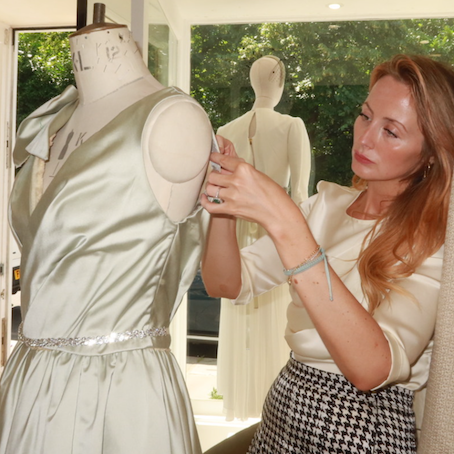
Four years after FashionCapital first featured Aimee Joyce London, the designer has built a distinctive British fashion brand, combining ready-to-wear with bespoke couture.
In 2022, FashionCapital featured the emerging talent of Aimee Joyce, a designer whose approach to fashion reflected a belief that technical knowledge is fundamental to creative excellence.
At the time, we highlighted Aimee’s journey from undertaking the Level 2 Perfect Pattern course at the Fashion Technology Academy (FTA), followed by an apprenticeship with London couture house Ralph & Russo.
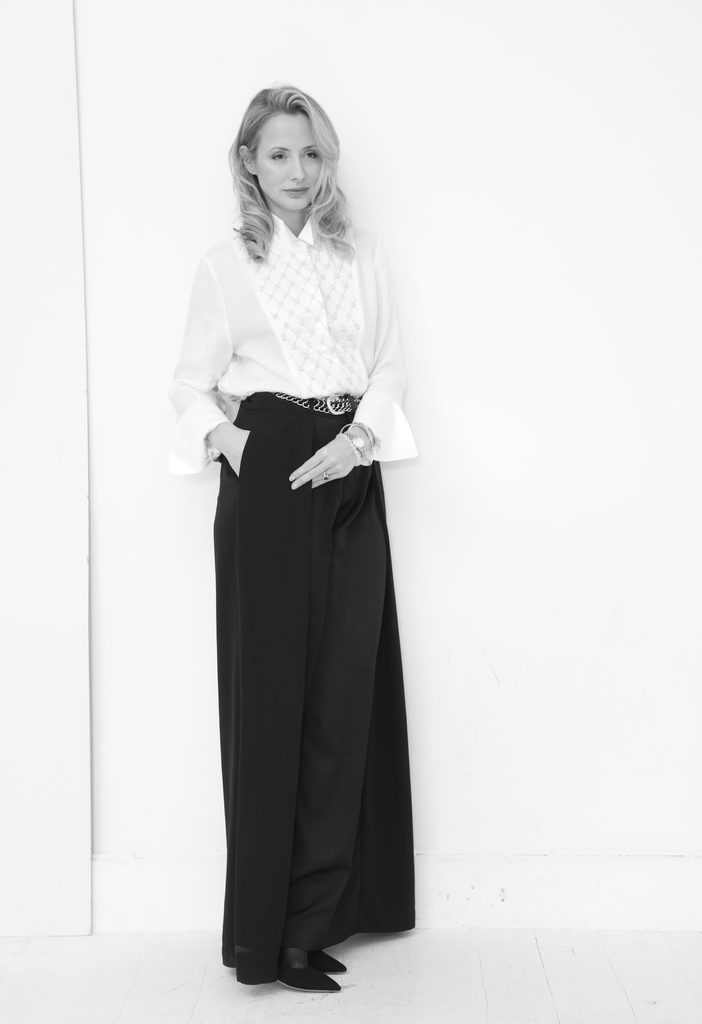
(Aimee Joyce, founder and designer)
Her story reflected a principle we have long championed at the FTA: the best designers benefit enormously from understanding the craft behind their creativity. As the late Alexander McQueen demonstrated throughout his career, a deep understanding of construction and technique can provide the foundation for a distinctive design signature.
Aimee went on to develop her own brand, Aimee Joyce London, built around the concept of Creating Heirlooms. Initially known for bespoke commissions, the business has since evolved considerably.
Now, in October 2026, we catch up with Aimee to explore the milestones that have shaped her business, how she has navigated the challenges of commercial growth and why bespoke couture remains at the heart of her ambitions…
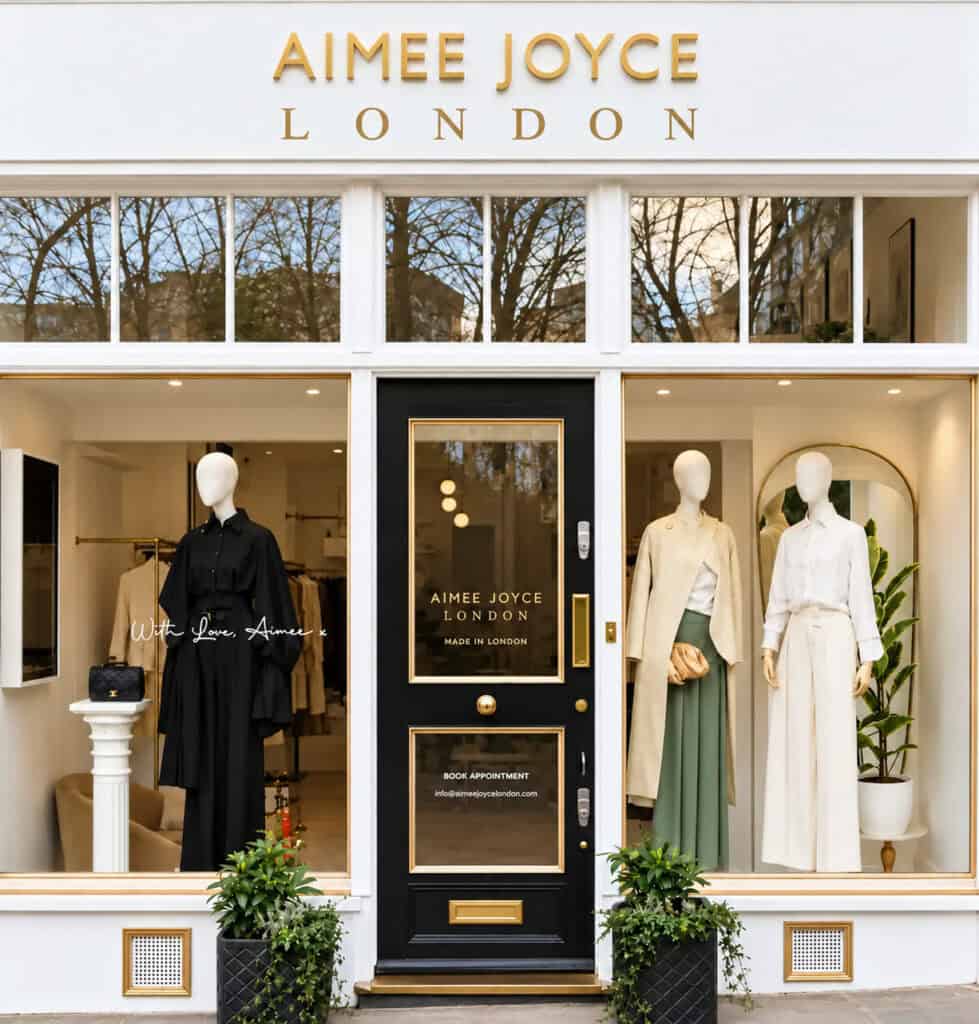
(Aimee Joyce London boutique, Notting Hill)
Q: What have been the most significant turning points in your business journey over the past 4 years, and how has your vision of the brand developed as a result?
A: One of the biggest turning points was moving from showcasing my pieces on a market stall in Portobello to having our own boutique on Westbourne Grove. Portobello taught me so much. There is such a large footfall, and you learn an enormous amount simply by watching people respond to your work and speaking to those who stop.
But moving into the boutique gave me the space to present the garments in an environment that felt right for them. The surroundings are so important: they help people understand the clothes, the workmanship and the world you are creating. Having a space that was distinctly Aimee Joyce London, in a location that connected us with the audience we wanted to reach, was a huge shift for the business.
Dressing the Prime Minister’s wife this year was another pivotal moment. It made me feel that Aimee Joyce London was being recognised as a British fashion brand. After so many years of hard work, that acknowledgement meant a great deal to me.
Developing ready-to-wear alongside bespoke has also been significant. Working so closely with bespoke clients gave me a profound understanding of women: their proportions, their preferences and how they want to feel in their clothes. Our ready-to-wear grew out of that understanding. It allows us to bring that knowledge to a wider audience and build a business that can sustain itself commercially.
“Meeting Jenny was also incredibly important. I found her a strong, inspiring woman, and I felt that she believed in me. That encouragement made a real difference.”
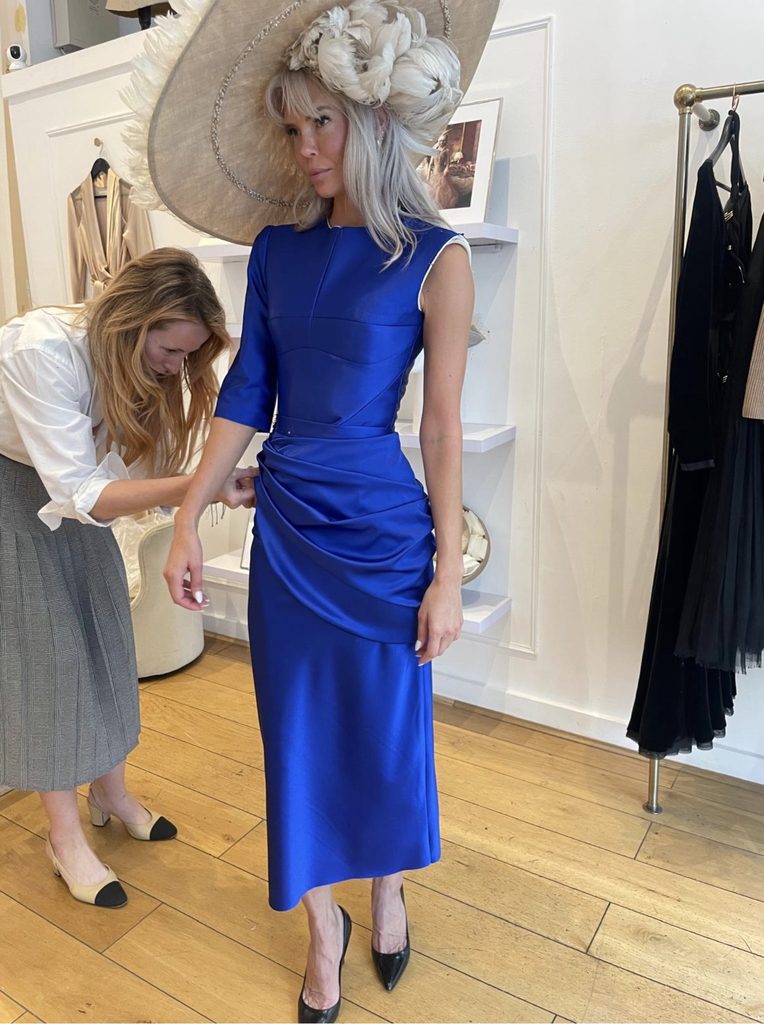
(Bespoke dress fitting at the boutique)
Q: How has your grounding in pattern cutting and garment construction at the Fashion Technology Academy shaped the way you design and develop your collections today?
A: I found the Fashion Technology Academy because I was frustrated by the gap between what I could see in my sketches and how those ideas were being interpreted by a seamstress. I realised I needed the technical understanding to communicate what I wanted more clearly.
You don’t necessarily have to make every garment yourself as a designer, but you do need to understand how it is constructed. You cannot simply force a fabric to behave in a particular way. You need to understand its properties and the structure underneath it that will allow it to fall, hold or move as you intend.
The short courses gave me that insight and helped me approach design with much greater understanding. Meeting Jenny was also incredibly important. I found her a strong, inspiring woman, and I felt that she believed in me. That encouragement made a real difference.
The Academy also opened the door to working at Ralph & Russo through its apprenticeship programme. Being inside a couture house was an extraordinary experience. I could put what I had learnt into practice while learning from people with incredible experience and technical knowledge.
That opportunity would not have happened had I not found the Fashion Technology Academy. It helped me develop both the skills and the confidence to take my work further.
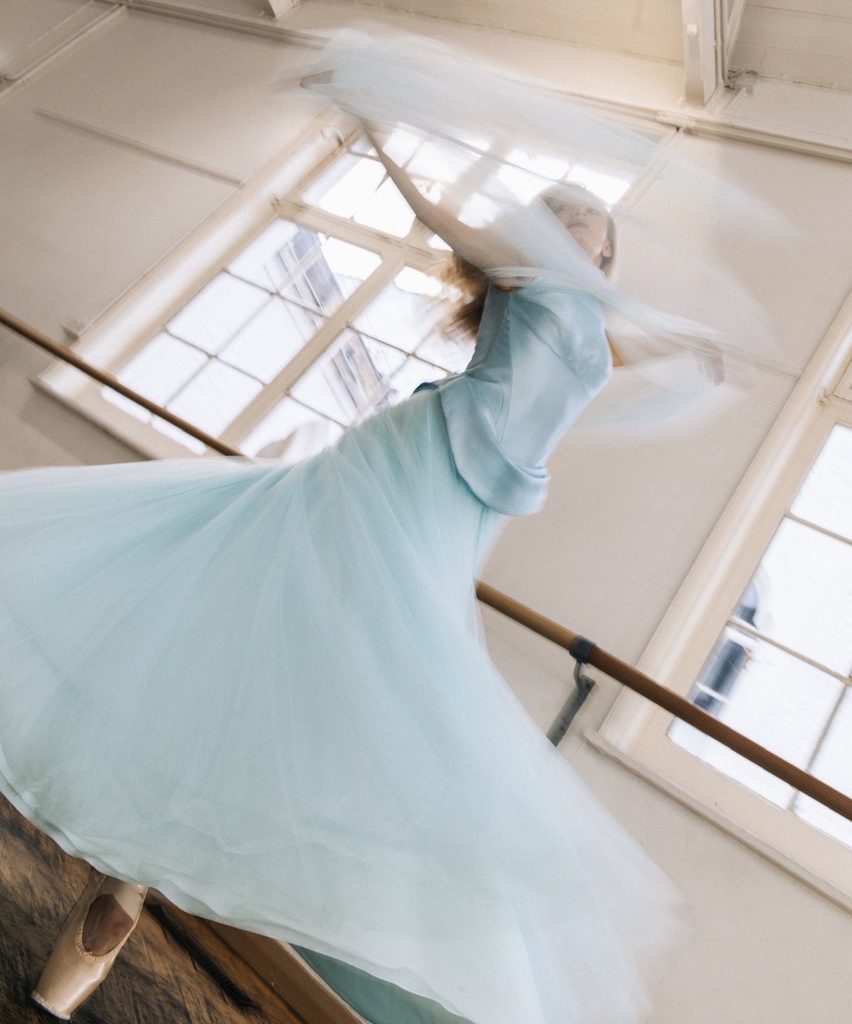
(Principal ballerina Anna Rose O’Sullivan is wearing Aimee Joyce London blue Mikado silk corset and blue tulle skirt)
Q: How have you balanced your creative ambitions with the commercial realities of scaling the business?
A: That has been one of the biggest challenges. Running a fashion brand involves so much beyond designing clothes. You need to understand marketing, social media, content creation, production, contracts and administration, as well as finding the right people to support your vision.
Moving from bespoke into ready-to-wear has involved learning a very different production process. With bespoke, I might pad a mannequin to a client’s measurements and drape directly onto the stand. It is a fluid process, with the garment developing through fittings. Ready-to-wear requires a different level of documentation: a single garment can need a 15- or 20-page technical pack, with precise instructions and consideration of how the design will translate across different sizes.
For a long time, much of my attention has had to go towards the business itself. The creative side comes naturally to me, but building the structure around it has taken a great deal of time and energy. I have missed being able to give design as much attention as I would like.
We are now in a position where I have the right people supporting me, which is allowing me to return more fully to the creative work.
I’m also learning that creativity needs mental space. It can be difficult to move between the pressures of running a business and the clarity you need to create something that feels authentic to you. Finding that balance is an ongoing process, but I feel I am beginning to come through to the other side.
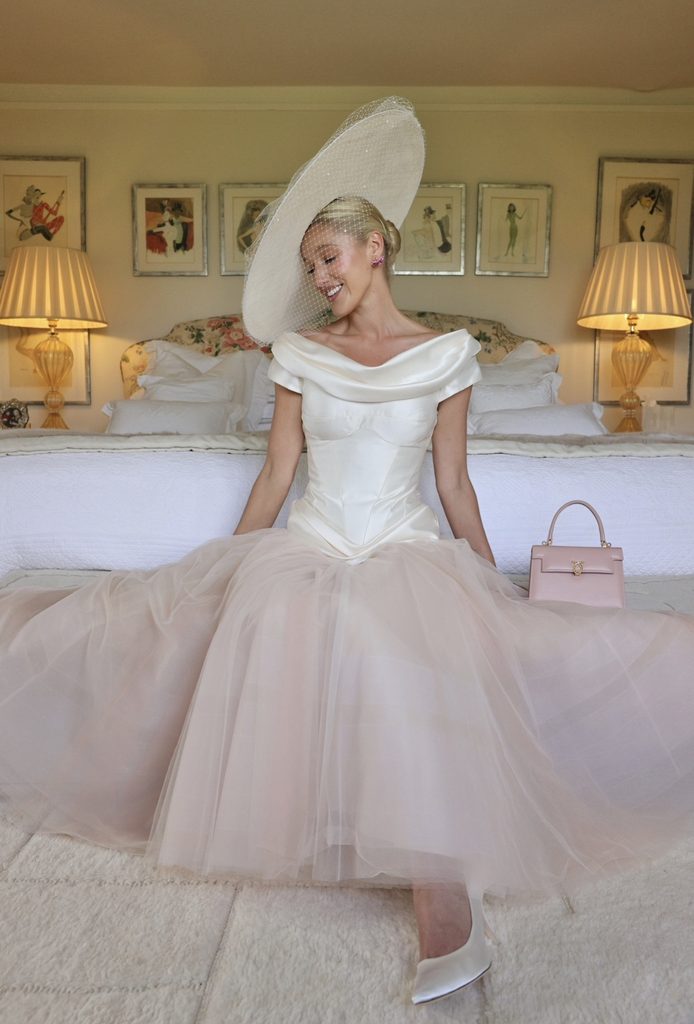
(Leonora Smee is wearing Aimee Joyce London ivory corseted top and tulle skirt for Royal Ascot)
Q: What advice would you give emerging designers about investing in their technical education?
A: I think technical understanding is fundamental, although the route to gaining it can be different for everyone.
I didn’t go to university. I moved to Milan at 18 to undertake internships, and I have always responded well to practical learning. Later, when I began handing my own sketches to a seamstress, I realised how much more I needed to understand about construction.
I discovered that I loved draping: taking fabric directly to a mannequin, exploring proportions and seeing what the fabric naturally wanted to do. I took a draping course to develop that skill, but I also needed to understand the structure that would support those shapes.
A garment that looks effortless can have an extraordinary amount happening underneath it. Depending on the design, there might be layers of canvas, coutil, mesh or tulle, alongside boning or horsehair. The toile and the internal construction are all part of achieving the finished result.
You need enough knowledge to understand those decisions and communicate them. A seamstress can interpret a sketch very differently from the designer who drew it, and technical understanding helps close that gap.
I often think of it like architecture. An architect may not physically build the building, but they need to understand the structure that will make their design possible. For me, the same principle applies to fashion. Invest in learning how your ideas can be made, and keep building that knowledge through practice.
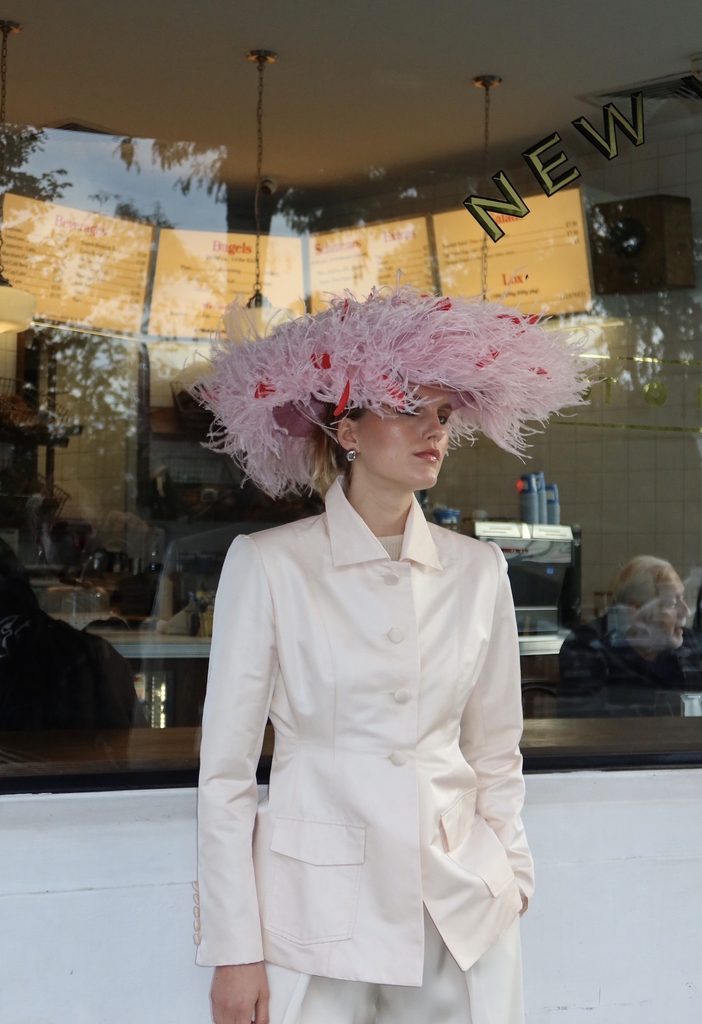
(Pale pink Darcy coat from the latest Aimee Joyce London collection)
Q: Do you have any exciting projects coming up that you can tell us about?
A: Now that we’ve established a ready-to-wear presence, designing the next collection is very much a priority. Alongside that, I’m developing a new couture collection. We’ve recently started working with a PR agency and are receiving more requests for black-tie and red-carpet looks, which has been exciting and has encouraged me to explore that side of my work further.
Bespoke couture has always been my main ambition for the brand. I spent a period concentrating on ready-to-wear to establish that part of the business, and I now want to bring made-to-measure couture firmly to the heart of Aimee Joyce London. It’s where I feel most creatively fulfilled and have the greatest freedom to explore my ideas.
Balancing ready-to-wear and bespoke is challenging, but I believe both have an important place within the brand. The understanding and creativity that come from bespoke work also inform the wider collection.
Having built a stronger team, I’m beginning to have more time and mental space to focus on design again. That is what I’m most excited about: returning more fully to the work that made me want to start all of this in the first place.
To find out more about Aimee Joyce London visit: www.aimeejoycelondon.com
Boutique: 116 Kensington Park Road, Notting Hill, London W11 2PW
Opening hours: Tuesday–Saturday, 11am–6pm; evening appointments on request.
For more on the training and courses at the FTA: https://fcfta.com/courses/


