


Stronger Together – Unity for Small Business Commissioners Meeting With ATMF and FEL
13-02-2026


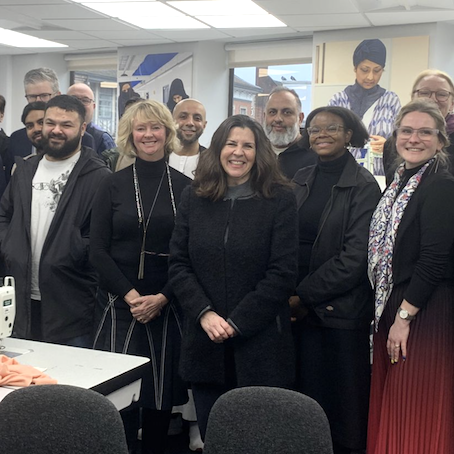
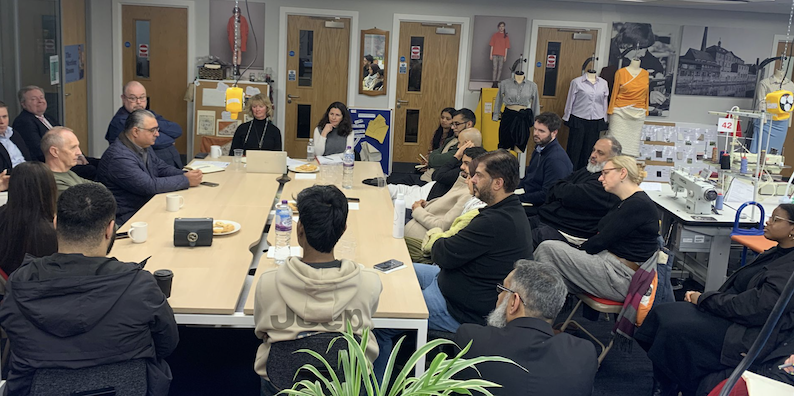
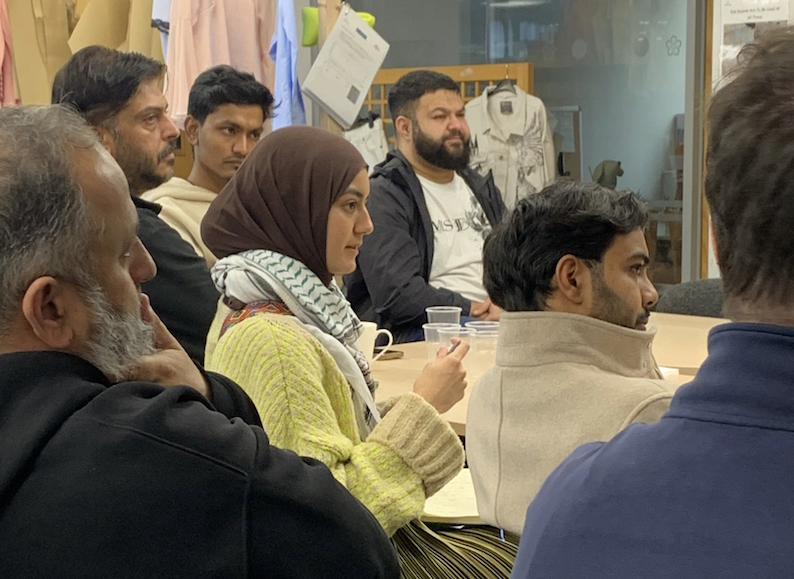
On 12th February 2026, senior figures from across Leicester’s textile sector gathered at Phoenix House for a pivotal meeting hosted by Fashion-Enter Ltd (FEL) in conjunction with the Apparel and Textile Manufacturers Federation (ATMF). The meeting brought together manufacturers, policymakers and representatives from the Office of the Small Business Commissioner and the Department for Business & Trade (DBT) to confront the challenges facing UK garment production and to map a route forward.
Chaired by Jenny Holloway, FEL CEO and Chair of the ATMF, the discussion was framed around one central question posed to government representatives: “How could policymakers better support SMEs?”
The meeting opened with a clear articulation of Leicester’s enduring strengths. The city remains a rare, vertically integrated textile cluster, offering fabric supply, printing, cutting, garment manufacture, embellishment, sampling and product development, often within a five to ten-day turnaround. Many businesses are generational family firms with decades of expertise, employing a skilled workforce and demonstrating renewed commitment to ethical compliance following intense post-COVID scrutiny.
Yet reputational damage sustained during the pandemic continues to cast a long shadow. Despite the majority of factories operating compliantly, negative press coverage led to reduce local sourcing due to perceived risk.
Manufacturers reported that while buyers often express interest in returning production to Leicester, internal resistance at senior management level and lingering perception issues prevent new orders from materialising. The contradiction is stark: retailers demand rapid turnaround and flexibility, yet hesitate to place work locally, frequently prioritising lower-cost overseas production.
Late Payments and Financial Instability
One of the most urgent themes was late payment practices. Factories described 30-, 60- and 90-day terms, retrospective discounts imposed months after delivery, and threats of account termination if such discounts were refused. In effect, suppliers argued they are being treated as informal “banks” for large brands.
The Small Business Commissioner outlined support mechanisms for companies with fewer than 50 employees seeking to recover late payments and confirmed that the Insolvency Service can investigate suspected director misconduct. Government is also reviewing a 60-day maximum payment term, stronger enforcement powers against habitual late payers, and a proposed 30-day rule requiring invoice disputes to be raised promptly.
For many in the room, tackling late payments is not simply a financial matter, it is about restoring basic fairness and sustainability to the supply chain.
Public Procurement: A £400bn Opportunity
The strongest consensus centred on public procurement. With over £400 billion in annual public contracts, manufacturers see a transformative opportunity if even a small proportion were directed to UK garment production.
The discussion referenced the implications of the Public Procurement Act 2023 aimed at increasing transparency and enabling proximity sourcing. Government attendees highlighted that 95% of undisputed invoices are paid within 10 days – a stark contrast to private-sector practices.
Manufacturers have tendered directly and indirectly for contracts serving the NHS, emergency services and major organisations. However, structural barriers remain:
- Contracts bundled into excessively large tenders
- High balance sheet thresholds
- Complex tender documentation
- Four-week turnaround periods that disadvantage SMEs
Participants argued that breaking contracts into smaller “lots” or adopting sub-assembly models would significantly increase SME participation. Social value, now a key evaluation factor, could further favour Leicester’s generational businesses and local employment impact.
Security concerns were also raised regarding military uniforms currently manufactured overseas, including in China. Participants cited potential risks linked to infrared fabric specifications and advanced textile technologies, arguing that domestic production would enhance national security. It was noted that Lord Young of Norwood Green has written to Lord Coaker on this matter, with a response awaited.

A Collective Solution: Sector-Wide LLP
One of the most constructive outcomes was agreement in principle to explore forming a sector-wide Limited Liability Partnership (LLP). The proposed structure would:
- Combine member balance sheets
- Increase financial eligibility for large contracts
- Enable bidding as a unified legal entity
- Centralise tender writing
- Maintain independent factory operations
Under this model, ATMF would act as coordinating federation, ensuring transparency, governance, ethical pricing and standardised production standards. The LLP could also oversee contract allocation among members, reducing undercutting and strengthening collective resilience.
The group also discussed developing a Leicester “Mark of Excellence” assurance logo and securing a pilot government contract to demonstrate capability.
Policy, Sustainability and the 5% Ambition
Manufacturers expressed strong support for encouraging retail brands to commit to producing 3–5% of their ranges in the UK. While acknowledging government cannot dictate private sourcing decisions, participants argued that awarding public garment contracts domestically would send a powerful market signal.
Forthcoming sustainability legislation, including End Producer Responsibility and Digital Product Passport measures under the EU’s Ecodesign for Sustainable Products Regulation, may also shift dynamics. Retailers exporting to Europe will be required to disclose waste figures and comply with bans on destroying unsold garments. Smaller batch production, closer to market, could become more commercially attractive, strengthening the case for UK-based manufacturing.
International Promotion and Trade Support
A further recommendation was for government-backed trade missions and funding support to help Leicester manufacturers promote their services overseas, a practice widely used by EU counterparts.
Looking Ahead: Leicester Made & Regions – 24th April
The meeting concluded with a commitment to maintain momentum. ATMF has requested introductions to key procurement bodies, including MOD officials and Crown representatives, and is seeking ministerial attendance at the forthcoming “Leicester Made and Regions” event 24th April in Leicester. Government representatives expressed willingness to facilitate appropriate connections.
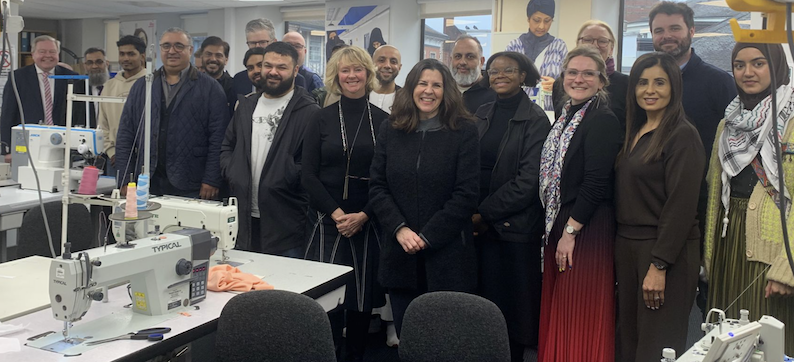
The roundtable demonstrated robust engagement from the 15 participating companies and officials. The message was clear: Leicester’s manufacturers possess the infrastructure, skills and agility to deliver high-quality, ethical production at speed. What they require is fair access to public contracts, prompt payment and policy frameworks that recognise both economic and strategic value.
If procurement reform, collective collaboration and reputational rebuilding can align, Leicester’s textile sector may yet convert challenge into renewal to create a stronger future for UK manufacturing.
Post meeting Jenny Holloway commented: “I can’t express how proud I was today to represent the manufacturers, suppliers and designers from Leicester! It’s time for Leicester to stand tall and proud!
“Manufacturing is a highly skilled business and listening to the earnest comments from these business leaders was just utterly rewarding as Chair of the ATMF. There are HUGE opportunities for the Labour government to fully engage with small businesses to fulfil public procurement contracts and reduce worklessness!
“The ATMF can be a crucial transparent body to support the award of contracts to the right factories – a critical friend to the public sector. The new contract to create and implement a UK first kite mark for factories ‘We Trust’ with funding from Garment & Textile Workers Trust will synergistically create more transparency for ethical factories applying for public procurement contracts!
“Thank you to Emma Jones and the team from Department for Business and Trade; your guidance and supportive motivational comments were very well received.
“This meeting coincided with the backbenchers debate in Westminster today, tabled by Catherine West MP for UK onshoring – it is time to meet the right decision makers and trial public contracts! Now we need action!”


