


Secondhand September: Rethinking What We Buy, Wear and Keep

01-09-2026


September offers us an opportunity to pause and reconsider one of the most habitual parts of modern life: the way we shop. Secondhand September, conceived by the National Association for Charitable Textile Recycling (NACTR), was created in response to the urgent need for more sustainable consumer habits. The initiative encourages people to make a conscious change by embracing secondhand buying throughout September, challenging the assumption that fashion always needs to be new.
But perhaps this September we can take the challenge one step further. Rather than simply committing to buying more secondhand, what if we challenged ourselves to buy nothing new at all?
The fashion industry has made it easier than ever to buy. New collections, constant promotions and rapidly changing trends have created a culture where clothing can feel almost disposable. A garment can be replaced because it no longer feels fashionable, because it has a small fault, or simply because something newer has caught our attention. Yet every garment represents resources, energy, materials, skills and human labour. When we discard clothing prematurely, we are not simply throwing away an item; we are throwing away all the resources that went into making it. Secondhand September offers an opportunity to break that cycle, even temporarily, and to think differently about what we already own.

secondhand movement is sometimes described as an alternative to buying new, but it is becoming much more than that. Resale, repair, reuse, upcycling and clothing swaps are all part of a broader movement towards a circular fashion economy, in which garments and materials remain in use for as long as possible. A pre-loved garment is not necessarily an unwanted garment. It may simply be waiting for its next owner.
There is something particularly appealing about secondhand fashion because it invites us to look beyond the immediate gratification of buying something brand new. A vintage jacket, a beautifully made dress or a pair of well-worn jeans can have character, history and individuality. A garment that has already had a life can become the starting point for another one. And sometimes the most sustainable purchase is no purchase at all.
Before searching for something new, we could search our own wardrobes. That forgotten jacket at the back of the wardrobe might only need a button replacing. The dress that no longer fits could perhaps be altered. A pair of trousers could be repaired rather than replaced. A garment that no longer suits one person could be exactly what somebody else has been looking for.
This is where repair and upcycling become so important to the secondhand movement. Extending the life of clothing isn’t simply about being more careful with what we buy; it is about developing the skills and confidence to keep garments in use.
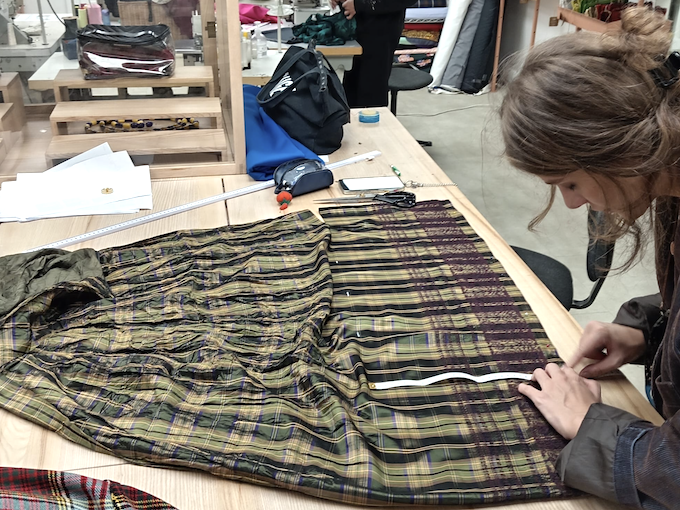
At Fashion-Enter Ltd, repair and repurposing form an important part of this approach, including commercial services for clients such as N Brown. Its learning division, Fashion Technology Academy (FTA), takes that philosophy into education and the community, helping people develop practical skills through upcycling classes and its free bi-monthly drop-in workshops at FC Designer Collective on Fonthill Road, supported by Islington Council. These sessions provide an opportunity to bring along those secondhand gems that need a little attention, whether that means a repair or alteration, or whether the garment could become the starting point for something entirely new.
This is circular fashion in action. It takes sustainability away from being an abstract concept and turns it into something practical: a needle and thread, a sewing machine, a creative idea, a repaired zip or a garment given a completely new purpose.
The resale movement is equally important. When we sell, swap, donate or otherwise pass on clothing we no longer wear, we give those garments another opportunity to be valued and used. What one person regards as surplus can be another person’s discovery. The more we normalise buying and wearing pre-loved clothing, the more we challenge the idea that value is somehow connected to being new.
There is also a role here for fashion businesses. Secondhand September is an opportunity to consider what happens beyond the initial sale. Can garments be repaired? Can samples or excess stock be resold? Can damaged pieces be refurbished or redesigned? Can materials be recovered and transformed into something new? Can customers be encouraged to return to a brand not only to buy another garment, but to repair the one they already own?
These questions are increasingly important as the fashion industry considers how it can move away from a linear model of take, make, use and discard towards one based on longevity, reuse and circularity.
Ultimately, Secondhand September is about becoming more conscious. It is about interrupting the automatic habit of buying new and asking whether there is another possibility. Perhaps we already own what we need. Perhaps someone else has it. Perhaps what we have can be repaired. Perhaps it can be transformed.
So this September, why not accept the challenge? For one month, don’t buy anything new. Shop your own wardrobe. Visit a charity shop or resale platform. Swap with friends. Repair something you’ve been meaning to fix. Take an upcycling class. Sell something you no longer wear. Give a garment another life.
Local to the borough of Islington? If you have any repairs, alterations or upcycling projects you are welcome to join Fashion-Enter’s bi-monthly workshops at the FC Designer Collective shop on Fonthill Road, London N4, generously supported by Islington Council.
During September there are sessions taking place:
and
Tap the links for more information and to register your place.


