


Manchester Fashion Week: Putting the Whole Industry on the Agenda
03-09-2026


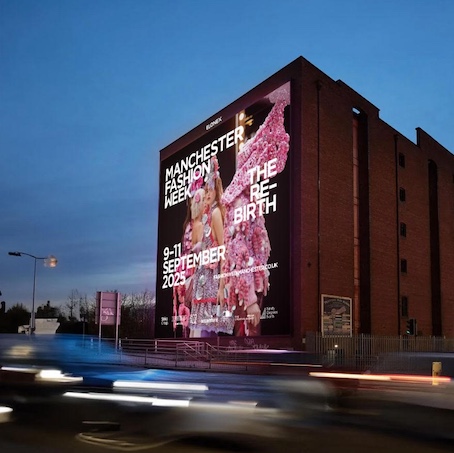
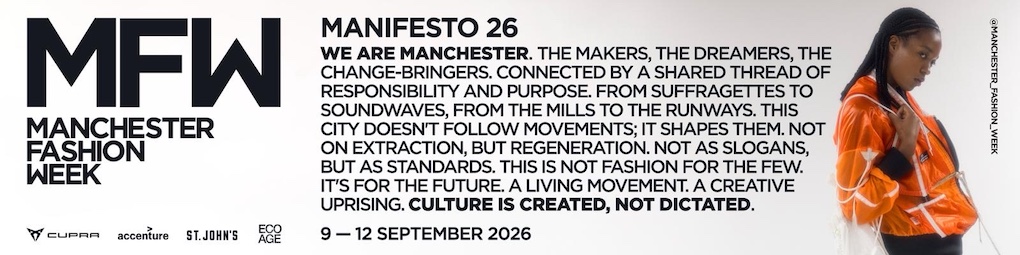
Manchester Fashion Week is back, from 9th – 12th September, with a programme that feels refreshingly different from the usual fashion week formula. Yes, there will be catwalks, designers and international talent, but alongside the shows comes a much bigger conversation about the industry itself – how fashion is made, who makes it, what it is made from, where it is heading and what needs to change.
Across four days, Manchester Fashion Week will tackle everything from near-shoring and supply-chain resilience to synthetic fibres, repair, resale, traceability, AI, 3D technology and automation. There will be conversations around labour conditions, accessibility, independent retail and the financial reality of building a creative career. It is fashion week, certainly, but it is also an industry week and that is what makes it particularly relevant right now.
The fashion industry is being asked to change, but meaningful change cannot happen by looking only at the finished garment. Behind every collection is a complicated network of designers, manufacturers, pattern cutters, machinists, technicians, suppliers and retailers. The people who make the clothes are too often invisible within the glossy facade of fashion. Manchester Fashion Week is bringing some of those conversations to the forefront.
Its opening day looks at near-shoring, offshore manufacturing and supply-chain resilience, while also considering the human consequences of changing the way fashion is produced. Later in the week, The Polyester Paradigm examines our dependence on synthetic fibres, while repair, resale and take-back models ask whether circularity can become a viable part of the industry’s future.
Then there is technology. Data and traceability, AI, 3D design and automation are already changing the way garments are developed and produced. As we embrace new technology, we also need to ask what happens to traditional skills and the people who use them.
The event celebrates designers, while including the industry and skills behind-the-scenes along with an educational angle. More than 270 pupils across nine Manchester and Salford schools have already taken part in its year-round programme delivered by the Northern Fashion Collective, while Sewing Circles is developing sewing, pattern cutting and microenterprise skills among women from refugee, migrant and low-income backgrounds. It is a reminder that fashion is not just about who gets invited to the front row. It is about who gets the opportunity to participate in the industry.
There is also something significant about this happening in Manchester. British fashion has a tendency to become London-centric, yet the UK’s manufacturing, textile and creative heritage stretches far beyond the capital. Manchester has its own extraordinary history of textiles and industry, and there is an opportunity to connect that heritage with a new generation of designers, makers, educators and innovators.
The runway programme will continue to provide visual gems, with emerging, established and international designers taking to the catwalk, including IGC Fashion bringing the creativity of Uganda’s growing fashion industry to Manchester. Alongside them, with the leading future fashion platform – Eco Age hosts some of the industry’s most influential voices, including designer and activist Katharine Hamnett, Lynne Franks OBE and Tamsin Blanchard.
Gemma Gratton, Executive Producer of Manchester Fashion Week, said: “Manchester Fashion Week is not simply about putting clothes on a runway; it is about asking what fashion needs to become next.
“Our collaboration with Collective Fashion Justice reflects that ambition, to challenge how we think about the impact behind what we wear, while giving designers practical tools to make better choices. The future of fashion will not be built by one discipline or one organisation; it will be built by bringing the right people together and giving the next generation the opportunity to shape it.”
John Higginson, CEO of Eco Age, added: “Most fashion weeks talk about the next generation. Manchester Fashion Week has put 270 of them through the programme before the doors open. Skills are the binding constraint on this industry now, in manufacturing as much as design, and regional funding is not going to solve it on its own. Programmes like this one are the working blueprint, and they deserve serious backing.”
For the full programme and ticket information, visit www.fashionweekmanchester.co.uk


