


Jenny’s Visit to India Part 3: The Reality of Global Competition and What UK Manufacturing Needs Next
12-06-2026


After several days of factory visits across Southern India, one message has become abundantly clear: India’s textile and garment manufacturing sector operates on a completely different scale to the UK.
During a visit to VEE CEE INC., one of Southern India’s largest vertically integrated manufacturers, Fashion-Enter Ltd CEO and ATMF Chair Jenny Holloway witnessed first-hand the sheer size, investment and government-backed support that continues to drive India’s global competitiveness.
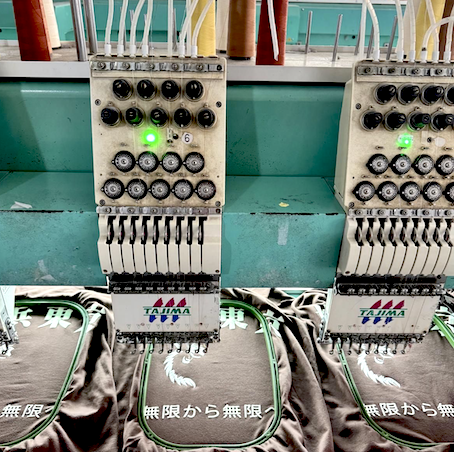
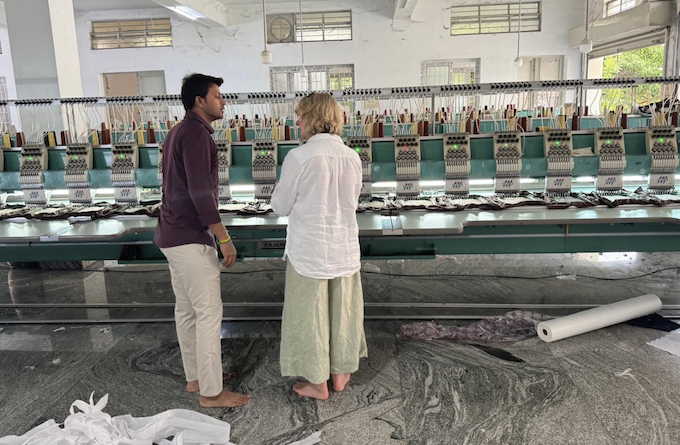
Established in 2002 by owner and Managing Director M. Ramesh, the business has grown into a major exporter supplying customers across Europe. The operation spans spinning, knitting, printing, embroidery and garment manufacturing under one organisation, creating an efficient and highly integrated supply chain.
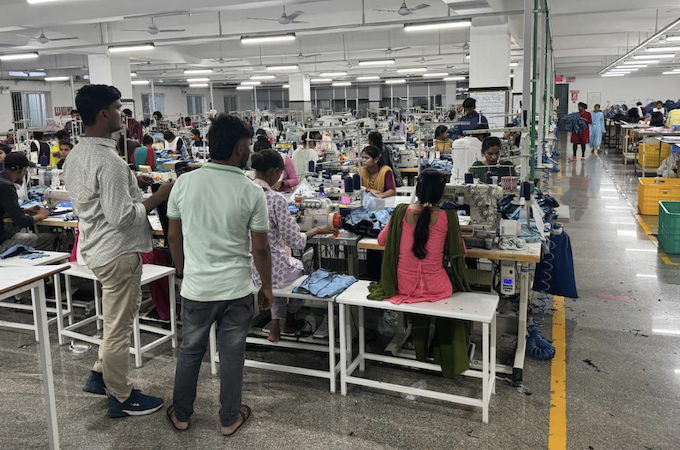
“The scale was extraordinary,” said Jenny. “Across four floors there were hundreds of people working in highly organised teams. From automated cutting rooms to production lines operating with clear hourly targets, every aspect of the business was focused on efficiency and productivity.”
The factory’s cutting department alone featured multiple large cutting tables, including automated cutting technology designed to maximise output and reduce waste. Production teams worked predominantly on a one-piece flow system, demonstrating the level of process optimisation now commonplace across many Indian manufacturing facilities.
However, what stood out even more than the scale of production was the level of support available to manufacturers.
Throughout her visit, Jenny examined the wider economic environment underpinning India’s textile sector and found a comprehensive framework of government incentives designed to encourage investment, exports and workforce development.
These include state-level capital subsidies for technology upgrades, interest reimbursement schemes for machinery investment, electricity duty exemptions, export rebates and subsidised finance for manufacturers serving international markets.
In addition, India’s PM MITRA initiative is creating seven Mega Integrated Textile Region and Apparel Parks, designed to strengthen domestic manufacturing capability and attract further investment into the sector.
Alongside infrastructure investment, the SAMARTH programme is helping address skills shortages through targeted workforce training across the textile value chain. Taken together, these initiatives create a manufacturing industry where businesses are actively encouraged to invest, expand and export.
For UK manufacturers, the comparison is stark. “The objective of this trip was never to move production away from the UK,” explained Jenny. “In fact, it was the opposite. I came to India looking for partnerships that could strengthen UK manufacturing through sampling, test-and-repeat production models and potentially creating new routes into markets such as the USA.”
The vision was to explore how UK factories could work collaboratively with large-scale overseas manufacturers, leveraging Britain’s strengths in speed, flexibility, product development and shorter lead times.
Yet the deeper the discussions became, the more apparent the structural differences were between the two countries.
“We simply cannot compete on unit cost,” said Jenny. “Seeing first-hand what €3 or €4 can achieve in India is eye-opening. The economics are entirely different.” Despite this reality, Jenny remains convinced there is a viable future for UK garment manufacturing.
Recent examples such as River Island’s return to profitability and the continued utilisation of UK factories by the Debenhams Group demonstrate that there is still demand for domestic production when supported by the right sourcing strategies. The challenge now is how policymakers respond.
If the UK wants to rebuild manufacturing capacity, create skilled jobs and strengthen supply chain resilience, the sector requires a long-term industrial strategy that recognises the realities of global competition. The question is no longer whether UK manufacturers can compete directly with India on cost. They cannot. The real opportunity lies in competing on speed, agility, innovation, sustainability and proximity to market.
As Jenny concludes: “I came to India full of optimism and determined to find new opportunities for UK manufacturing. That optimism remains, but the trip has reinforced one key point. If we genuinely want a thriving garment manufacturing sector in the UK, industry cannot do it alone. We need meaningful support, strategic investment and policies that recognise the value of making products here at home.”
The UK may never replicate the scale of India, but with the right partnerships, investment and vision, it can still build a modern manufacturing sector fit for the future.
Images by Jenny and Tim Holloway


