


Jean Paul Gaultier Haute Couture AW26 Embraces Creative 3D Printing Courtesy of Sculpteo
07-08-2026


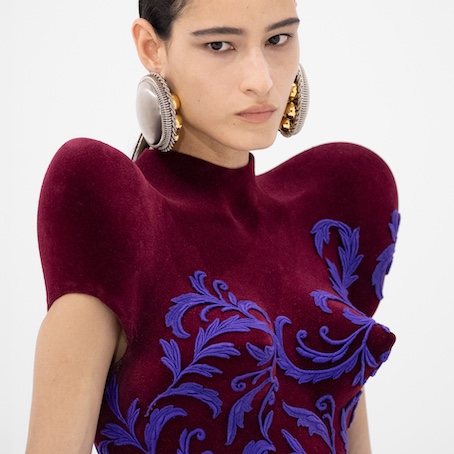
The growing role of 3D printing in fashion design was pushed to the fore during the Jean Paul Gaultier Autumn/Winter 2026/27 Haute Couture presentation, where industrial 3D printing specialist Sculpteo collaborated with designer ROMI to help realise some of the collection’s most technically ambitious runway looks.
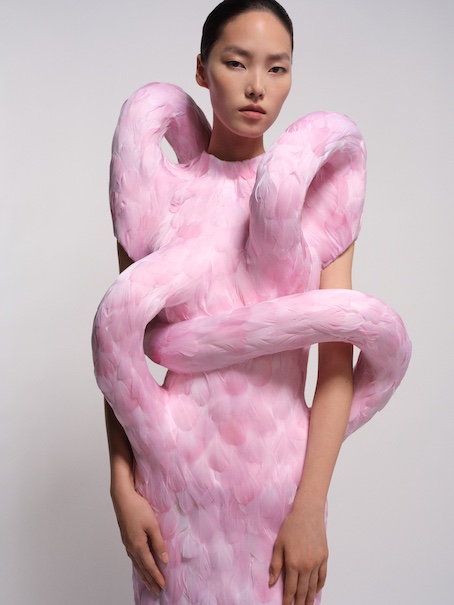
While 3D printing has long been used for prototyping and product development, its increasing application in finished couture pieces signals a broader shift in how designers are approaching creativity, material innovation and production.
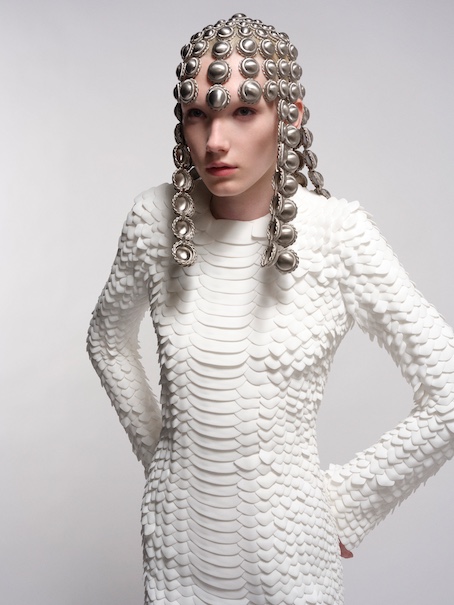
Working behind the scenes, Sculpteo produced components for five looks in the collection. Four featured complex 3D-printed structural elements that created sculptural silhouettes, while a standout white dress was covered in individually printed scales, each manufactured before being hand-sewn onto the garment by the Jean Paul Gaultier atelier.
The project demonstrates how digital manufacturing is becoming an increasingly valuable creative tool rather than simply a production technique. Using Multi Jet Fusion (MJF) technology, Sculpteo produced intricate components in PA12, a lightweight yet durable polymer, alongside flexible TPU materials to balance structure with wearer comfort.
For designers, the appeal of additive manufacturing lies in its ability to produce forms that would be difficult, or impossible, to achieve through traditional pattern cutting or construction methods. Complex geometries, lightweight structures and bespoke components can all be created with remarkable precision, opening up new possibilities for couture, costume and conceptual fashion.
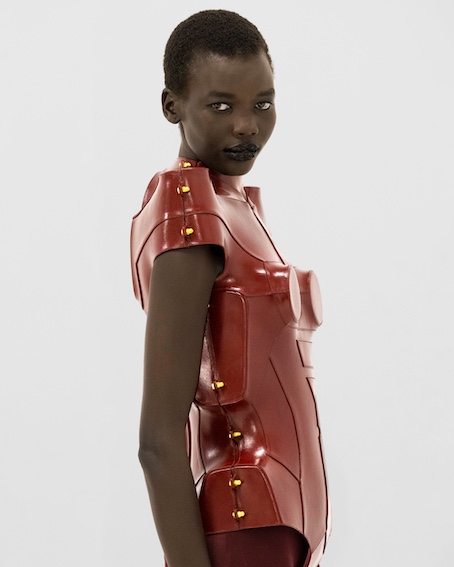
ROMI, whose client list includes Tom Ford and Loewe, collaborated with Sculpteo throughout the development process, highlighting another important aspect of successful fashion technology partnerships: close technical collaboration. Beyond manufacturing, projects often involve material selection, engineering support and the design of assemblies needed to transform digital concepts into wearable garments.
As fashion continues to embrace advanced manufacturing, companies with industrial expertise are finding opportunities beyond their traditional markets. Originally developed for engineering and aerospace applications, additive manufacturing is increasingly supporting luxury fashion, accessories, visual merchandising and creative installations.
Sculpteo has worked on projects with brands including Hermès, Guerlain, Lemarié and LVMH, reflecting the growing demand for specialist manufacturing capabilities that enable designers to experiment with scale, texture and construction without the constraints of conventional production methods.
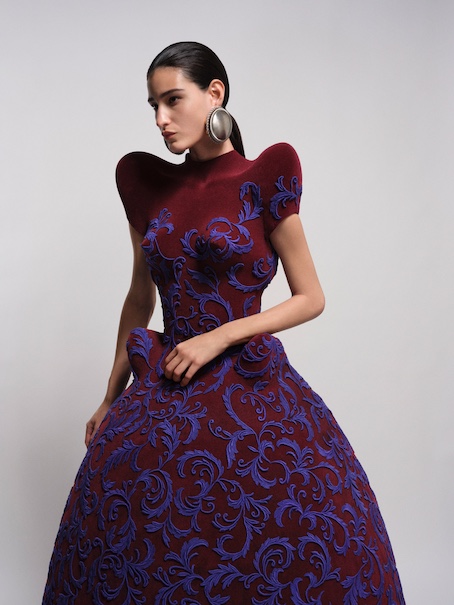
The technology also offers advantages for fashion development. Digital files can be rapidly refined before production, reducing material waste during sampling and allowing designers to iterate designs more quickly. Components can be manufactured on demand rather than requiring expensive tooling, making short-run or one-off pieces more commercially viable. Although 3D printing is unlikely to replace traditional craftsmanship, the recent Jean Paul Gaultier collaboration illustrates how the technology can complement artisanal skills.
For an industry continually searching for new forms of creative expression, additive manufacturing is becoming another tool in the designer’s arsenal. As materials become more sophisticated and production capabilities continue to evolve, the intersection of fashion, craftsmanship and advanced manufacturing is set to become an increasingly important area of innovation.
Commenting on the collaboration, Alexandre d’Orsetti, CEO of Sculpteo, said: “Working alongside designers like ROMI drives us to constantly rethink our processes. Every fashion project presents unique constraints regarding shape, weight and deadlines, and this is precisely what fuels our industrial expertise. This collaboration with Jean Paul Gaultier illustrates how innovation and creativity can enrich one another.”
For fashion businesses, the message is clear: 3D printing has moved well beyond experimentation. It is emerging as a practical production technology capable of supporting everything from concept development to the creation of finished show pieces, offering designers greater creative freedom while expanding the possibilities of modern fashion manufacturing.
Images courtesy of Jean Paul Gaultier Haute Couture catwalk show AW26/27 – Martin Sabyno / Yannis Vlamos


