


FEL CEO & ATMF Chair Jenny Holloway Attends Budget Night at Lowick Hedry
29-10-2026


British garment manufacturing must be recognised as a strategic part of the UK economy, with public procurement offering potential opportunities for SME factories, says Jenny Holloway, CEO of Fashion-Enter Ltd (FEL) and Chair of the Apparel & Textile Manufacturers Federation (ATMF).
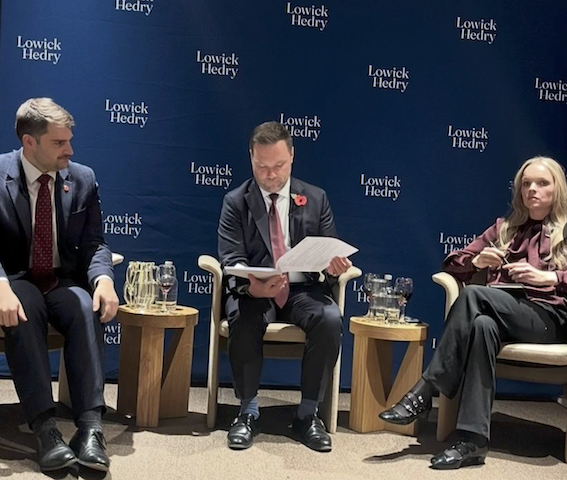
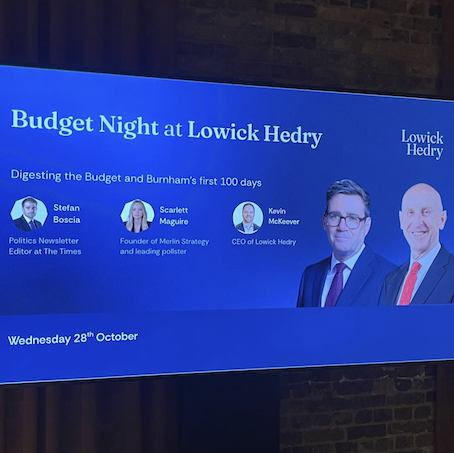
Jenny attended Budget Night at Lowick Hedry at The Stables in King’s Cross, London, on Wednesday 28th October 2026. The event featured Scarlett Maguire, founder of Merlin Strategy, and Stefan Boscia, Politics Newsletter Editor at The Times, with Kevin McKeever, CEO of Lowick Hedry, chairing the discussion.
A key concern for Jenny was the need for the Government’s Industrial Strategy to recognise garment manufacturing and its contribution to skilled employment, supply-chain resilience and the UK’s productive capacity. She stated that the next ten-year plan should give manufacturing greater consideration, with public procurement helping to translate policy into tangible orders for British factories.
The Cabinet Office published its updated Social Value Model on 28th October. Under Procurement Policy Note 026, the model is due to apply from 1st January 2027 to relevant central government procurements valued at £1 million or more, including VAT. It focuses on the wider contribution suppliers can make through employment, skills and opportunities.
The change does not apply automatically to every public contract, but it could create opportunities for manufacturers able to demonstrate their contribution to jobs, training and local supply chains.
Jenny welcomed the development as a potential step towards securing more orders for smaller factories. However, realising this opportunity will depend on accessible procurement processes and manufacturers being able to meet the technical, commercial and delivery requirements of contracts.
The evening’s discussion also explored household costs, social care, public finances and the wider economic outlook. Jenny described the Budget as having a strong welfare and social-care emphasis, while raising questions about how future commitments would be financed given the existing national debt burden.
For fashion manufacturers operating on tight margins, economic policy can influence costs, consumer demand and investment decisions. Reliable orders remain essential to supporting production, employment and business growth.
For FEL and the wider apparel and textile manufacturing sector, the priority is to ensure garment production is recognised not only as part of the fashion industry, but as a contributor to jobs, skills and economic resilience.
As the Government develops its long-term industrial plans and implements the updated Social Value Model, the opportunity is to turn recognition of British manufacturing into practical commercial opportunities for the factories that make clothing.


