


Debunking the Myths About UK Fashion Manufacturing
11-06-2026


A recent social media post suggested that UK manufacturers are too expensive, demand high minimum order quantities and are unwilling to work with smaller brands. Working and visiting factories across the country and being part of Fashion-Enter Ltd Factory and Fashion Studio in Haringey, London, turn these assumptions on their head. The UK fashion and textile manufacturing industry has changed significantly. Manufacturers are increasingly focused on flexibility, speed to market technology, ethical production, and supporting brands at every stage of growth.
Myth #1: UK factories are too expensive
This is perhaps the most common criticism of UK manufacturing, but it often focuses solely on unit price while ignoring the wider cost of production.
Many brands compare a UK manufacturing quote with an overseas factory quote without accounting for shipping costs, import duties, customs delays, communication challenges, longer lead times and the cost of carrying excess stock. When these factors are considered, the price gap is often much smaller than expected.
As Matt Brussels, Founder of The T-Shirt Bakery, explains: “A common myth is that UK production is always substantially more expensive than overseas manufacturing. While unit costs can sometimes be higher, many businesses overlook factors such as shipping costs, import duties, longer lead times, communication challenges, and the cost of holding excess stock. When those factors are considered, the overall cost difference is often smaller than people expect.
“UK production can also offer advantages beyond price. Faster turnaround times, easier communication, greater quality control, and the ability to react quickly to customer demand can all be valuable, particularly for growing brands that need flexibility rather than large-scale inventory commitments.”
Jenny Holloway, CEO of Fashion-Enter Ltd and Chair of ATMF, adds: “If you want your brand to be ethical then you need to consider the minimum wage (as a minimum). We don’t set the levels and it’s currently £12.71 an hour. However, compare that to trying to work with China. Language barriers, extortionate freight costs and time delays and then suddenly you will see that £12.71 can and does work.
“The ability to manufacture closer to market also allows brands to react faster to trends, replenish bestsellers and avoid tying up cash in large quantities of inventory.”
Myth #2: UK factories demand high MOQs
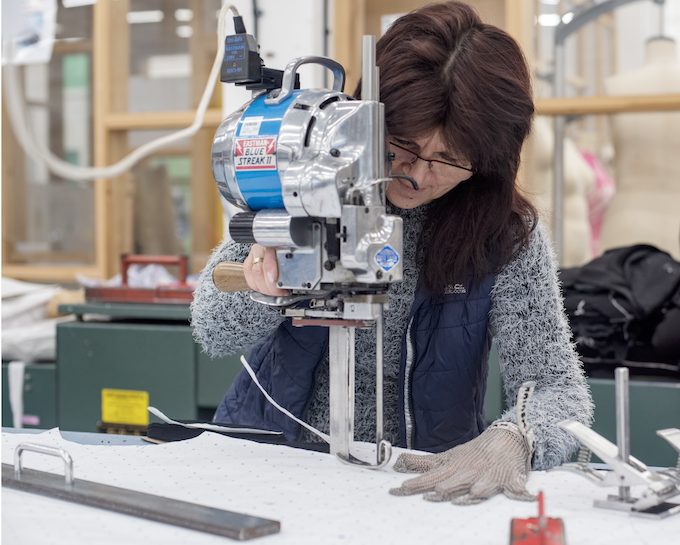
Fashion-Enter Ltd’s Fashion Studio in Haringey publicly offers pattern cutting, sampling, grading and short-run production from just one unit. It supports both emerging designers and established brands and was specifically designed to bridge the gap between concept and commercial production.
Fashion-Enter Ltd also confirms that its Fashion Studio service has a minimum order quantity of one. This flexibility stands in stark contrast to many factories globally, where MOQs of 50, 100, 300 or even 500 units per style remain commonplace.
During visits to Leicester manufacturers through Leicester Made & Regions, it was also evident that many factories are increasingly adapting to the needs of independent brands, offering shorter runs and more agile production solutions than many businesses assume.
Matt Brussels, Founder of The T-Shirt Bakery, comments: “One of the biggest misconceptions is that UK production automatically means large minimum order quantities. In reality, modern digital printing and print-on-demand methods have enabled brands to launch products, test ideas, and fulfil smaller orders without committing to hundreds or thousands of units upfront. For many start-ups and independent brands, that flexibility can significantly reduce risk.”
Myth #3: UK factories aren’t interested in start-ups
The evidence suggests the opposite. Fashion Studio’s client base ranges from new business start-ups through to established London Fashion Week designers. The service was created specifically to help brands develop patterns, samples and initial production runs before scaling.
Alongside manufacturing support, FashionCapital provides mentoring, technical guidance and business support for emerging fashion businesses. Rather than excluding small brands, organisations such as Fashion-Enter Ltd have built an entire ecosystem around helping them succeed.
Myth #4: UK factories are too slow
Speed should never be confused with rushing. Garment development requires pattern cutting, fit approvals, sampling and technical refinement. A factory that takes time to get these stages right is often saving brands from costly production mistakes later.
Fashion-Enter’s Fashion Studio outlines clear lead times for pattern development, sampling and production, reflecting the reality that quality garments require a considered development process rather than a race to manufacture.
As Jenny Holloway, CEO of Fashion-Enter Ltd and Chair of ATMF, says: “Here I find a lack of understanding of the pattern and fit process. You don’t want a rushed sample – you want a right fist time sample that’s to your expectation. This is when face to face meetings are essential so you can discuss all the detail. The devil is in the detail! Own it! Another advantage of having your manufacturer on home soil.”

Myth #5: UK factories don’t understand small brands’ needs
Having visited numerous UK manufacturers the opposite appears true. Many UK manufacturers actively encourage face-to-face collaboration, allowing designers to discuss technical details, review samples and solve problems directly with production teams. This level of accessibility is difficult to replicate when manufacturing thousands of miles away. The ability to visit a factory, inspect production and work collaboratively often becomes one of the biggest advantages of manufacturing in the UK.
In summary
The conversation around UK manufacturing is often dominated by outdated assumptions. The reality is that UK manufacturers such as Fashion-Enter Ltd and many of the factories showcased through Leicester Made & Regions are proving that flexible production, low minimums, ethical manufacturing and support for start-ups are not exceptions – they are increasingly becoming part of the industry’s future.
Before dismissing UK manufacturing based on social media commentary, brands should visit factories, speak to manufacturers and see what is actually available. The myths are easy to repeat. The facts tell a different story.
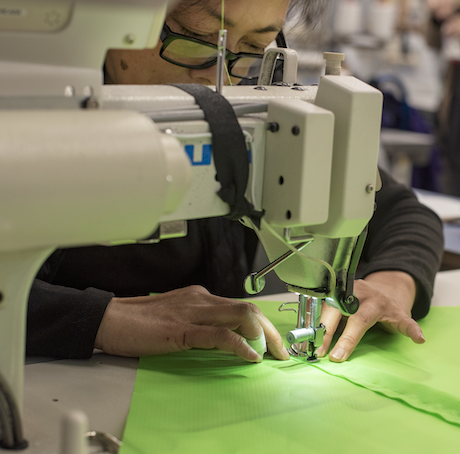
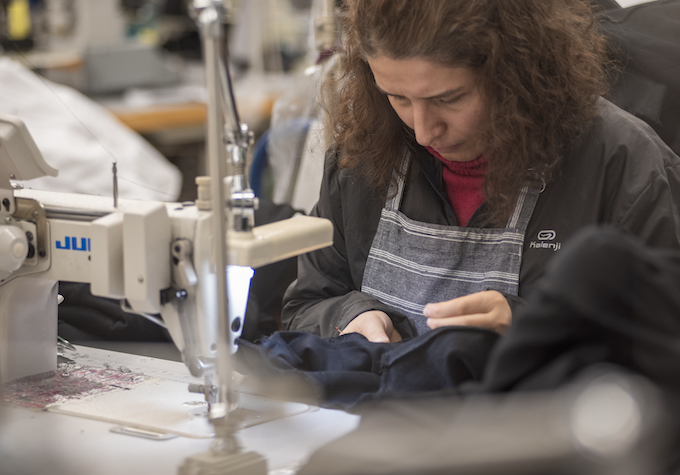
All images from Fashion-Enter Ltd Factory and the Fashion Studio.


