


Microplastic Pollution From Synthetic Clothing Waste Quadruples Since 2000, Global Study Finds
19-11-2026


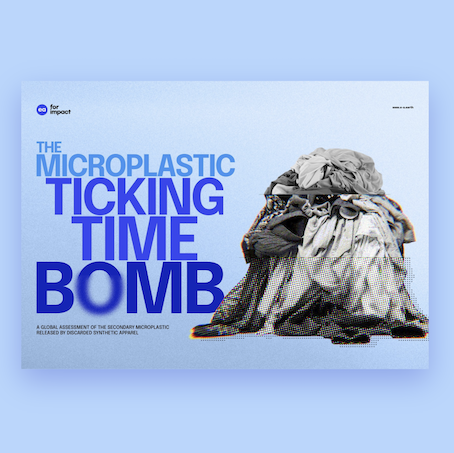
The Microplastic Ticking Time Bomb, published by Earth Action, tracks what happens to synthetic clothes after they are thrown away. It finds they keep breaking into microplastics for decades to centuries: within a few years when dumped in the open, and for up to two centuries when buried in landfills, so garments discarded decades ago are still polluting today.
In 2024 alone, discarded synthetic clothing generated an estimated 2.4 million tonnes of microplastics, of which more than a third (878,000 tonnes) leaked into the environment. In 2019, end-of-life leakage was four to eight times what the production and washing of synthetic clothing released together.
Microplastics, particles smaller than 5mm, are extremely difficult to remove once released. They enter food chains and can harm wildlife, and their long-term effects on human health are a growing area of concern.
Since 1963, discarded synthetic clothing has generated 44 million tonnes of microplastic, of which 16 million tonnes have leaked into the environment. Yet waste sites still hold about 19 times more plastic than has leaked so far, with 284 million tonnes of synthetic clothing yet to break down.
Each person now buys more than twice as much synthetic clothing as in 2000, driven in part by fast fashion’s shorter cycles and lower prices, which shorten the time between purchase and disposal, and by rising incomes in the countries where consumption has grown fastest. How clothing is discarded matters, garments dumped in the open lose half their weight to microplastics in about four years. Buried in landfill, it takes 60 to 112 years.
Clothing dumped in the open makes up around five percent of all synthetic clothing ever deposited, but accounts for around 90 percent of the leakage.
The research finds that 14 percent of discarded synthetic clothing is ultimately disposed of in a different country from the one in which it was consumed. In 2024, Europe and the United States exported around 1.35 million tonnes of used synthetic clothing to lower-income regions, while just 14,400 tonnes moved in the opposite direction.
Sub-Saharan Africa bears the greatest burden, accounting for nearly half (45%) of global leakage from discarded synthetic clothing. The region receives significant volumes of second-hand clothing while often having less access to contained waste infrastructure to prevent leakage into the environment.
The report finds that where discarded apparel is deposited, how long waste sites are managed after they close, and the resale potential and final destination of exported garments all influence how much microplastic leaks, and where.
In a scenario where waste management improves over thirty years in the countries where it is weakest, annual leakage in 2100 is 80 percent lower than in the reference scenario; consuming less removes 88 percent. Landfills that are covered, and whose water is collected and filtered, keep most of the microplastic that forms inside them out of the environment. But this is only for as long as they are maintained as the synthetic clothing they hold keeps breaking down for centuries after a site closes.
The report finds that longer-lasting, repairable clothing, kept in use and resold, reduces the synthetic apparel that becomes waste, the lever that removes the most leakage over the century.
Julien Boucher, Co-Founder & Head of Research, Earth Action: “The microplastic footprint of clothing does not end when a garment leaves our wardrobe. Discarded synthetic clothing is a ticking time bomb. What is already in waste sites will keep breaking down for generations, and every year we add more, increasingly in countries least equipped to contain it. Without action from governments and industry now, the problem will only grow. Ending open dumping, the source of 90 percent of leakage, would cut pollution within a few years, while clothes made to last would shrink tomorrow’s waste.”
Jesse Daystar, Ph.D., Chief Sustainability Officer, Cotton Incorporated, said: “A synthetic shirt can keep shedding microplastics long after its last wash. In 2019, discarded synthetic clothing leaked four to eight times as much microplastic as manufacturing and washing combined. This research gives the apparel industry a fuller picture of what happens after clothes are thrown away, and that should be part of how we think about the materials we choose and how long we wear them.”
Madalina Preda, CEO, MOVER, said: “Rigorous, transparent work like this is what brands need to make better material decisions, and MOVER is proud to support it. It’s essential to measure how long a garment persists in the environment, and equally important is what remains in the soil and water along the way: the fragments, the dyes, the finishing chemicals. We invite brands, researchers and regulators to work on filling both of these data gaps.”
For more information visit: https://www.e-a.earth/insights/


