


FEL Welcomes South Korean Government Delegation to Explore UK Apprenticeships, Skills and Manufacturing Innovation
09-11-2026


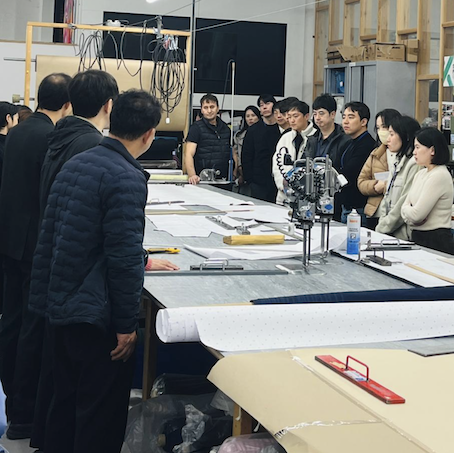
An international delegation from the Human Resources Development Service of Korea (HRDK) visited Fashion-Enter Ltd’s Haringey factory and learning facility and FC Designer Workspace in Islington on 9th November 2026, exploring how UK vocational education, apprenticeships and industry-led training can support South Korea’s future workforce development.
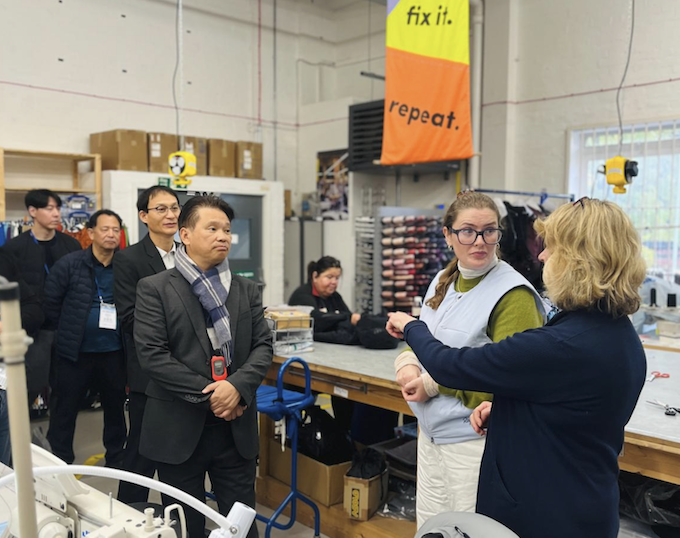
Fashion-Enter Ltd (FEL) welcomed 21 representatives from the Human Resources Development Service of Korea (HRDK), a government agency operating under the Ministry of Employment and Labor of the Republic of Korea, for an in-depth visit examining the UK’s approach to vocational education, modern apprenticeships and fashion manufacturing.
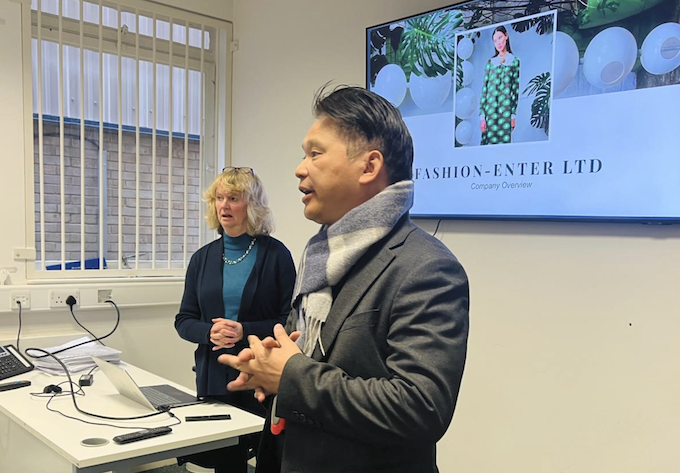
Led by Jenny Holloway, CEO and Founder of Fashion-Enter Ltd and Chair of the Apparel & Textile Manufacturers Federation (ATMF), the programme demonstrated how education, practical manufacturing experience and direct industry engagement can work together to create meaningful employment pathways.
The Korean delegation is undertaking a study of UK apprenticeship policies, vocational training systems and industrial collaboration models. Its objective is to benchmark existing approaches and explore how elements of the UK’s framework could be adapted to strengthen workforce development in South Korea.
The visit covered two key parts of Fashion-Enter’s operations: its learning and manufacturing facility in Haringey and FC Designer Workspace in Islington.
Connecting education with industry
The morning began with an introduction to Fashion-Enter Ltd, its operations, qualifications, tutors and the impact of its education and training programmes.
Jenny Holloway outlined the relationship between technical education and the realities of working within the fashion and textile industry, emphasising the importance of developing practical skills alongside wider industry knowledge.
Discussions explored the UK’s education and manufacturing landscape, including the roles of local authorities, the Department for Education, awarding organisations and apprenticeship frameworks in supporting technical skills development.
A central theme was ensuring that education reflects actual industry requirements. Fashion and textile manufacturing demands technical knowledge, practical competence, quality awareness and an understanding of production processes. These capabilities are strengthened when learners can apply their training in real working environments.
For the delegation, this provided an opportunity to examine how educational facilities can operate alongside manufacturing businesses rather than as separate learning environments.
Supporting emerging designers and enterprise
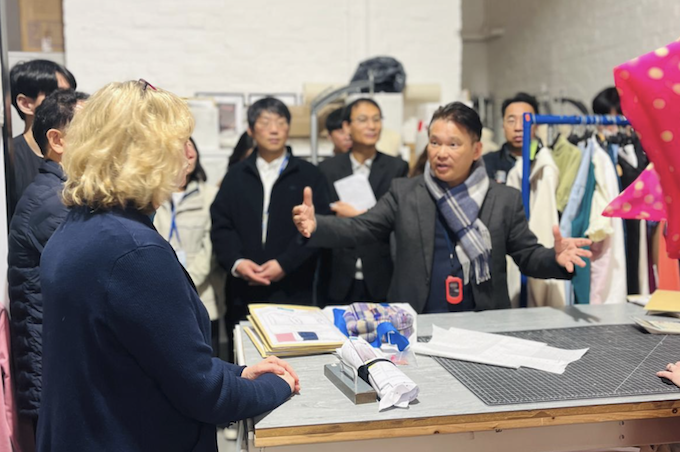
The delegation also visited FC Designer Workspace in Islington, where the focus turned to supporting emerging designers and developing new fashion businesses.
The workspace provides designers with opportunities to develop collections, access manufacturing expertise and understand the commercial and technical processes involved in bringing products to market.
Representatives met tutors, reviewed student work and explored the role of FC Designer Collective in connecting designers with the wider industry. A drive-by visit to FC Designer Collective at 113–115 Fonthill Road provided further insight into London’s established fashion business and retail community.
The visit highlighted the importance of combining creative education with practical business support, technical knowledge and access to production facilities.
Ethical manufacturing and sustainable solutions
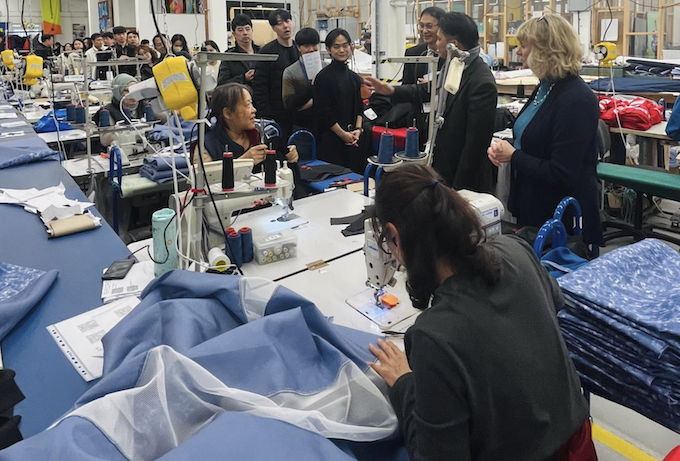
The programme continued at Fashion-Enter’s Haringey manufacturing facility, where the delegation explored ethical garment production, micro-factory operations and sustainable manufacturing solutions.
The tour demonstrated the importance of maintaining domestic production capabilities while responding to growing expectations around responsible sourcing, transparency and environmental impact.
The delegation was introduced to Fashion-Enter’s collaborative work with organisations including United Repair Centre and Maeknit, showcasing how partnerships can support repair, reuse and more sustainable approaches to textile production.
The micro-factory model also provided an opportunity to discuss smaller production runs, specialist skills and the needs of emerging fashion businesses. These practical environments illustrated how technical training can connect with contemporary manufacturing models and the evolving requirements of the fashion supply chain.
Apprenticeships, employment and government support
A substantial part of the visit was dedicated to questions and discussion around the policy framework supporting education and employment.
The delegation was particularly interested in four areas: curriculum development and training facilities; collaboration between education providers and employers; employment outcomes and long-term career support; and government funding and incentives for vocational training.
Discussions examined how students progress from training into employment, how employers can contribute to relevant curriculum development and how practical experience helps ensure graduates are industry-ready.
The role of government incentives in encouraging investment in manufacturing technology was also considered, alongside the potential for public procurement to generate more consistent demand for British garment manufacturers.
This is an important issue for the UK fashion and textile industry. Training programmes can develop skilled people, but sustainable employment opportunities ultimately depend on a healthy manufacturing base and businesses having the commercial confidence to recruit, invest and grow.
The relationship between skills policy, industrial strategy and manufacturing demand therefore remains central to the future of domestic garment production.
Building international knowledge and collaboration
The visit concluded with a review of the key themes and an opportunity for further questions, bringing together the education, manufacturing and policy discussions explored throughout the morning.
For Fashion-Enter Ltd, welcoming an international government delegation provided an opportunity to share practical experience and demonstrate how education and manufacturing can operate in partnership. For HRDK, the programme offered insight into a UK model connecting technical learning, factory experience, designer development and employment pathways.
The challenges facing fashion manufacturing are not confined to one country. Across international markets, the industry must address technical skills shortages, changing production technologies and the need to make manufacturing careers attractive to the next generation.
Ultimately, a successful manufacturing industry needs more than factories and machinery. It needs skilled people, relevant training, engaged employers and policies that create the conditions for businesses to invest in the future.
The exchange between Fashion-Enter Ltd and HRDK reinforced the value of international knowledge-sharing and the important role vocational education can play in sustaining a modern, skilled and competitive fashion and textile industry.


