


See Every Worker: Anti-Slavery Week 2026 12th – 18th October
08-10-2026


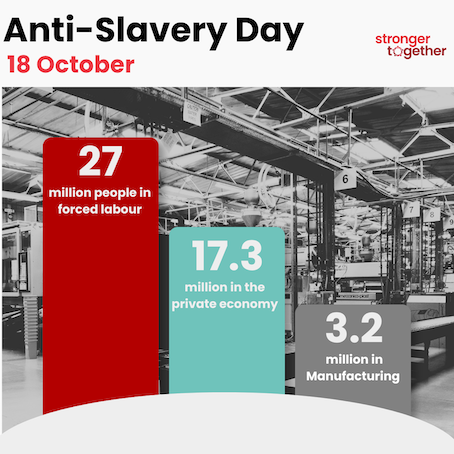
Modern slavery and labour exploitation can be difficult to see. That is precisely why this year’s Anti-Slavery Day campaign, ‘See Every Worker’, organised by Stronger Together is particularly relevant to the fashion and textile industry.
Taking place from Monday 12th to Sunday 18th October 2026, Anti-Slavery Week, along with Anti-Slavery Day -18th October, provides an opportunity for businesses to look beyond policies and procedures and ask a more fundamental question: do we really see every worker in our organisation and supply chain?
For fashion businesses, that question extends well beyond the people directly employed by a brand or manufacturer. It can include agency workers, temporary staff, subcontractors, homeworkers, logistics workers, cleaners, warehouse teams and workers further down a complex international supply chain. The campaign’s message is a timely reminder that exploitation can remain hidden in plain sight.
Seeing the people behind the supply chain
Fashion is a global industry, with production and recruitment networks that can involve multiple businesses, countries and layers of subcontracting. That complexity can create vulnerabilities.
Workers experiencing exploitation may be reluctant or unable to speak openly about their circumstances. Fear of losing work, debt, immigration concerns, threats, isolation or dependence on an employer or recruiter can all make it difficult for someone to ask for help. This means that simply having a modern slavery statement or supplier code of conduct is not enough.
Businesses need to understand how people are recruited, how they are paid, who controls their employment and accommodation, and where risks may arise within their own operations and supply chains. For fashion and textile businesses, responsible recruitment is therefore an important part of responsible sourcing.
A changing regulatory landscape
The business environment is also changing. With further developments around transparency in supply chains, the introduction of the Fair Work Agency and wider regulatory developments, businesses are facing an evolving set of responsibilities around employment practices, recruitment and the prevention of exploitation.
The direction of travel is clear: businesses are increasingly expected to understand what is happening not only within their own workforce, but across the relationships and supply chains on which they depend.
For smaller fashion businesses in particular, this can feel challenging. Supply-chain due diligence does not necessarily require complicated systems, but it does require businesses to know where their risks are and to build practical processes for identifying and responding to them.
Recruitment is a critical part of the picture
One area deserving particular attention is the recruitment chain. Temporary and agency workers can be particularly vulnerable where recruitment involves third parties, fees, deductions, accommodation arrangements or complex employment relationships.
Businesses should be confident about who is recruiting their workers and understand the terms under which people are being employed.
Questions worth asking include:
- Do workers understand their employment terms and rights?
- Are recruitment fees or other inappropriate costs being charged to workers?
- Are workers free to leave their employment?
- Are wages being paid correctly and transparently?
- Are deductions clearly explained and lawful?
- Do workers know where they can raise concerns independently?
- Do managers and supervisors recognise the indicators of exploitation?
- Are agency and subcontracted workers receiving the same level of protection and information as directly employed workers?
These are not simply compliance questions. They are questions about the culture and integrity of a business.
‘See Every Worker’ means looking beyond the obvious
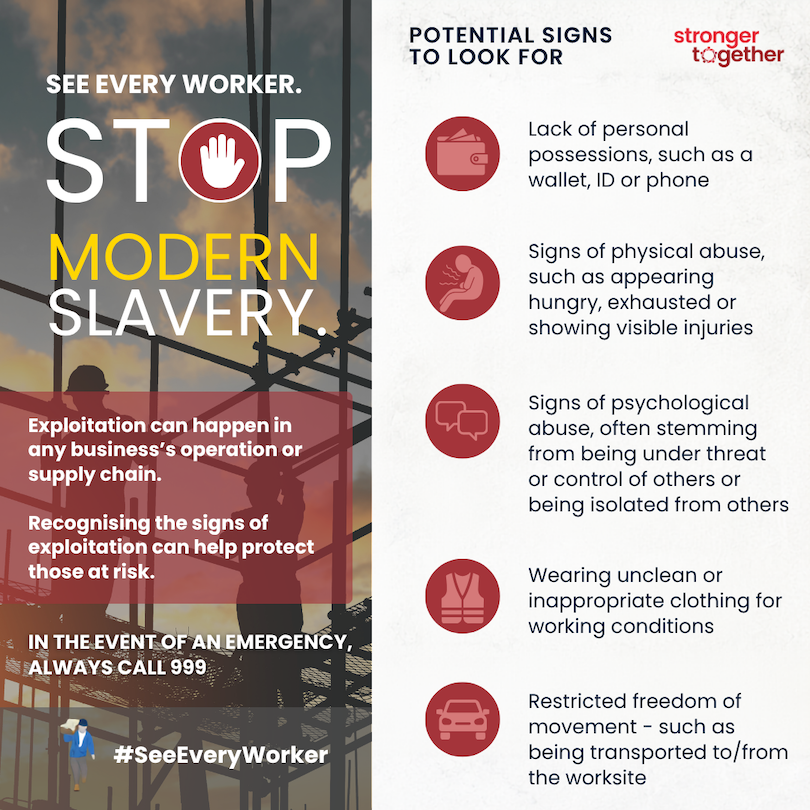
Anti-Slavery Week is also an opportunity to challenge assumptions about who might be at risk. Modern slavery and labour exploitation do not always look the way we expect. There may be no obvious signs of physical abuse. Instead, indicators can include unusual control over a worker’s movements, excessive deductions, restricted access to identity documents, excessive working hours, threats, isolation, debt or a worker appearing unusually fearful of management or recruiters.
The important point is not to expect employees to become investigators. It is to make sure that people across an organisation are aware, informed and confident enough to recognise when something does not look right and know what to do next.
That includes the people managing production, buying, sourcing, HR, recruitment, warehousing and logistics, as well as those working directly on the factory floor or in other operational roles.
Turning awareness into action
Anti-Slavery Week needs to extend beyond a once-a-year communications exercise. The campaign provides a useful opportunity to start conversations that can then become part of everyday business practice.
For fashion and textile companies, practical actions could include reviewing recruitment arrangements, refreshing modern slavery and responsible sourcing policies, providing accessible information for workers, checking that agency and subcontracted workers understand their rights, and ensuring that reporting channels are genuinely accessible.
Businesses could also use the week to engage suppliers and recruitment agencies directly. A short conversation with a supplier about recruitment practices, worker welfare and escalation procedures can be more valuable than simply sending another compliance questionnaire. The aim should be to build capacity, confidence and visibility throughout the organisation and its recruitment and supply networks.
Building responsible businesses all year round
The strongest response to Anti-Slavery Week is not necessarily the most visible one. It is the business that uses the week to identify a weakness, have a difficult conversation with a supplier, train a manager, improve worker communications or put a better reporting process in place and then continues that work long after the campaign has ended.
For the fashion industry, where supply chains can be complex and pressures on cost, speed and flexibility are considerable, responsible business practice requires constant attention to the people behind the products.
Every garment, textile, accessory and product has a human story behind it. ‘See Every Worker’ asks businesses to make sure that those people are not invisible.
To find out more about Anti-Slavery Week and download the information pack visit the Stronger Together website here.
Information and images courtesy of https://www.stronger2gether.org/


