


Independents On The High Street: New Research Reveals One in Three Brits Want More Independent Retailers
17-08-2026


From personal service and carefully curated collections to fashion events, styling evenings and genuine community connection, independent retailers are giving shoppers reasons to return to the high street. But if Britain wants more of them, government and local councils need to give independents the support and incentives to thrive.
For years, the conversation around the British high street has focused on decline: empty shops, rising business costs, changing shopping habits and the seemingly unstoppable growth of online retail and national chains. But there is another story taking place on high streets across the UK and it is one of resilience, creativity and reinvention. Independent retailers are not simply surviving. In many places, they are becoming the very reason people want to visit their local high street.
New research from Capital on Tap provides compelling evidence of the strength of Britain’s independent business community. Its analysis of thousands of businesses across more than 30 customer-facing sectors found that independent businesses account for the majority of operators in each of the UK’s ten leading independent business cities. Manchester tops the ranking, with 80.1% of businesses independently owned, while Bradford has the highest proportion overall at 85.4%. Bath, meanwhile, ranks tenth, with independents accounting for 76.8% of businesses.
Perhaps more importantly, the appetite is there. Capital on Tap reports that 34% of Brits say having a higher proportion of independent businesses would encourage them to shop on their local high street more often.
Independents offer something a chain simply can’t
The great strength of an independent retailer is not necessarily price. It is personality. Walk into a good independent fashion shop and the experience can be fundamentally different from browsing a national chain. The owner or sales assistant may know the products inside out. They can suggest an alternative size, find something that suits a particular occasion, remember a customer’s preferences or simply spend the time helping someone put an outfit together.
That personal interaction matters. Independent fashion retailers can also take risks that larger businesses often cannot. They can discover emerging designers, stock niche labels, experiment with smaller collections and respond quickly when customers ask for something different.
And increasingly, the shop itself is becoming part of the experience. Fashion independents are hosting styling evenings, designer showcases, trunk shows, launch parties, personal-shopping appointments, charity events and collaborations with other local businesses. A clothing shop can become a meeting place, a source of inspiration and a social destination rather than simply somewhere to make a transaction.
This is particularly important at a time when consumers can buy almost anything online. If the only proposition is “we sell clothes”, an independent retailer is competing against the entire internet. But if the proposition is “come in, we’ll help you find something brilliant, you’ll discover brands you haven’t seen before, you’ll meet other people and you’ll have a great experience”, the high street suddenly has something that an online basket cannot easily replicate.
Service is the independent retailer’s superpower
Capital on Tap’s Hugh Acland makes a similar point, arguing that independents can compete by understanding their communities, identifying gaps in the market, creating memorable customer experiences and responding quickly to local needs. That agility is one of the independent sector’s greatest assets.
A national retailer may have a sophisticated marketing machine, buying power and a recognisable brand. An independent can often make a decision on Monday and have it implemented by Tuesday. That could mean bringing in a new label because customers have been asking for it. It could mean changing a window display around a local event. It could mean staying open late for a private shopping evening or organising an impromptu collaboration with a nearby café, florist, artist or jewellery designer.
These are small things, but collectively they create something increasingly valuable: a reason to visit. The best independent retailers understand that customers are not simply buying a product. They are buying expertise, discovery, reassurance, entertainment and connection.
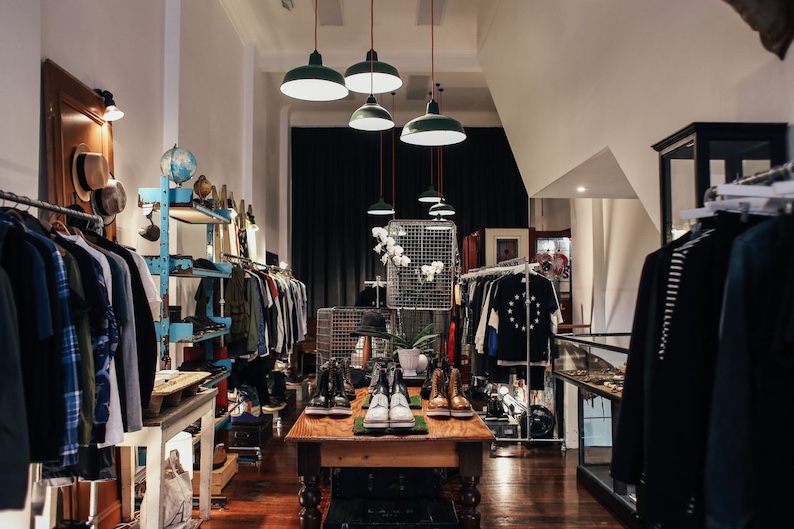
Independents can lead the high street revival
Fashion has a particularly important role to play in this revival. Clothing, footwear and accessories are inherently experiential. Customers want to see fabrics, try things on, talk about fit and discover how pieces work together. They also want to feel that what they buy reflects their personality.
This creates an enormous opportunity for independent fashion businesses. A well-curated independent shop can offer a point of view. It can say: this is what we believe looks great, these are the designers we love, and this is what we think our customers will want next. That curation is increasingly valuable in a world where consumers are overwhelmed by choice.
The independent fashion retailer can also turn the high street into an event. Imagine a Thursday evening where several local fashion businesses stay open late, a designer talks about a new collection, a stylist offers advice, a local photographer takes portraits and a nearby restaurant provides drinks. Suddenly, the high street is not competing with an online retailer. It is offering an evening out. Multiply that across towns and cities and the potential becomes significant.
The numbers show that the appetite already exists
The Capital on Tap research suggests this isn’t simply a romantic argument for supporting small businesses. Independent businesses are already proving their appeal.
Manchester leads the ranking with 1,303 independent businesses per 100,000 residents, while Bradford records an independent-to-chain ratio of 5.83:1. Norwich’s independents have the highest average Google rating among the top ten cities, at 4.65 out of five.
The message is clear: independents are not an endangered species that consumers have forgotten about. They are an important part of what makes places distinctive.
Government needs to move from talking to investment
If consumers are telling us they want more independent businesses, government and councils should be listening. That does not mean protecting every business regardless of its proposition. Nor does it mean artificially preventing national retailers from operating on Britain’s high streets. It means creating an environment in which independent businesses have a realistic chance to establish themselves, grow and stay in business.
There are several practical ways this could happen.
Business rates relief and targeted incentives could make it easier for new independent retailers to take on vacant premises. Councils could offer reduced rates or time-limited relief for genuinely independent businesses occupying long-term empty units.
Lower-cost meanwhile spaces could allow emerging retailers and designers to test a physical shop without committing to a long commercial lease. This could be particularly valuable for online brands looking to make their first move into bricks-and-mortar retail.
Local high street grants could support shop improvements, digital infrastructure, events, training and marketing – investments that individual small businesses can struggle to afford.
Additionally councils need to think more creatively about events, affordable parking and town-centre management. Independent retailers should not be treated as isolated businesses paying rent and rates. They are part of a collective destination. A fashion weekend, independent retail festival, late-night shopping event or local makers’ market can benefit dozens of businesses simultaneously.
Plus, there is the parking issue
There is another issue that cannot be ignored when discussing the future of the high street: parking. For many shoppers, particularly families and those travelling from outside a city centre, the cost and availability of parking can be a decisive factor in where they choose to shop.
Across Britain, retailers and business groups have repeatedly raised concerns that expensive parking, limited spaces and increasingly restrictive access can discourage visitors from city and town centres. The alternative is often an out-of-town retail park, where parking is typically plentiful, convenient and, in many cases, free. That creates a difficult imbalance.
An independent retailer can invest in exceptional customer service, carefully curated products, exciting events and a genuinely memorable shopping experience. But if a customer has to spend £5, £10 or more simply to park for a couple of hours, while they can drive to an out-of-town retail park and park for free, the high street is starting the race several lengths behind.
This is particularly significant for fashion independents. Shopping for clothes is rarely a five-minute transaction. Customers may want to visit several shops, have lunch, meet friends, attend an event or browse without a strict timetable. A parking regime that penalises longer visits can therefore work against precisely the kind of experiential high street that councils say they want to create.
The irony is that councils want people to spend more time in town centres, while some of their policies can make spending that time more expensive. Parking policy therefore needs to become part of the wider high street strategy rather than being considered separately. That could mean free or heavily discounted parking at certain times, free parking for the first hour, evening and weekend incentives, better signposting to available spaces, or partnerships between councils and local businesses that allow retailers to validate or subsidise parking for customers.
There is also a case for trialling parking incentives around major retail events. If a town is investing in an independent fashion weekend, late-night shopping evening or local retail festival, why not make it easier and cheaper for customers to attend? The objective should not simply be to maximise parking revenue. It should be to maximise the economic activity generated by people coming into the town centre. A customer who spends £3 on parking but then spends £100 in independent shops, cafés and restaurants may be considerably more valuable to the local economy than a parking space that generates a fee but contributes to a customer deciding to shop elsewhere.
Out-of-town retail parks have understood the importance of convenience for decades. High streets need to compete on convenience as well as experience. Councils need to make sure getting there isn’t the reason customers stay away.
We need to make it easier to become an independent retailer
There is also a bigger question. If we genuinely want independent high streets, we need to make it easier for people to become independent retailers in the first place. Entrepreneurs need access to affordable premises, finance, mentoring, business advice and practical support. They need councils that understand the difference between an empty shop and an opportunity.
Manchester’s example demonstrates what targeted support can look like. The city is backed by initiatives including the £1 million Greater Manchester Foundational Economy Innovation Fund, aimed at supporting local high street retail, hospitality and everyday SMEs. Bradford has also developed local SME support infrastructure, while Nottingham’s long-term city vision places independent retail, hospitality and creative SMEs at the centre of high street development.
These approaches point towards a more constructive model: government does not have to run the high street. It needs to help create the conditions in which entrepreneurs can.
The future high street won’t look like the old one
Perhaps the biggest mistake would be trying to recreate the high street of 20 or 30 years ago. The future high street is likely to be different. It may contain fewer traditional retailers, but the businesses that remain can be more distinctive, more experiential and more connected to their communities.
Independent fashion retailers have an important role in that future. They can make shopping social again. They can champion new designers and local talent. They can provide expertise that algorithms cannot. They can host events, create communities and give people a reason to leave the house rather than simply opening another browser tab.
But they cannot do it alone. Consumers have a role too. If we want independent shops on our high streets, we need to use them, not just say we value them. Retailers have a role in continuing to innovate and deliver exceptional experiences and government and councils have a role in making sure the economics and transport links do not make independence impossible.
Thanks to Capital on Tap for the ranking data, access the full report and leaderboard here:
https://www.capitalontap.com/en/blog/posts/the-uks-independent-business-hotspots/
Top image by Georgie Devlin, following image by Rachel Claire via pexels.com


