


How to Choose the Right Clothing Manufacturer for Your Fashion Brand
29-06-2026


Launching a fashion brand is exciting, but finding reliable wholesale clothing manufacturers can quickly become one of the biggest challenges you’ll face. The manufacturer you choose influences far more than production costs—it affects your product quality, delivery timelines, customer satisfaction, and your ability to grow.
If you’ve started comparing suppliers, you’ve probably noticed how similar many of them appear on paper. Competitive pricing, fast turnaround times, and impressive product catalogs are easy to promise. However, after seeing how successful fashion brands approach manufacturing, one thing becomes clear: the best partner isn’t necessarily the cheapest or the largest. Instead, you should focus on finding a manufacturer whose capabilities match your products, budget, and long-term business goals.
Rather than asking, “Which factory is the best?” ask yourself, “Which factory is the right fit for my brand today?”
Start with Your Brand’s Needs
Before you compare suppliers, define exactly what you’re planning to produce. A brand specialising in structured blazers requires very different manufacturing expertise than one launching oversized graphic T-shirts, swimwear, or activewear.
Many factories focus on specific product categories, machinery, and construction techniques. When you choose a manufacturer that already understands your type of garment, you’ll typically experience fewer sampling revisions, more consistent quality, and a smoother production process.
Choosing a specialist usually delivers better results than working with a factory that claims it can manufacture everything.
Match the Production Model to Your Stage
Not every fashion brand needs the same manufacturing solution.
If you’ve already completed your designs, patterns, fabric sourcing, and technical specifications, OEM or CMT manufacturing gives you greater creative control over the final product.
If you’re still developing your collection or want to bring products to market more quickly, an ODM or full-package manufacturer may be a better option. These suppliers can often assist with material sourcing, product development, sampling, production, packaging, and even shipping, allowing you to manage fewer moving parts.
The goal isn’t to choose the most comprehensive service available—it’s to choose the level of support your business actually needs.
Keep Order Quantities Realistic
One of the biggest mistakes you can make as a new fashion brand is ordering too much inventory too early.
Large minimum order quantities may reduce your cost per unit, but they also tie up valuable cash in products that haven’t yet been tested in the market.
Starting with smaller production runs allows you to evaluate customer demand, sizing, pricing, and sell-through rates before making larger investments. Even if your unit cost is slightly higher, the flexibility often saves you far more money in the long run.
Growing gradually is almost always smarter than scaling too quickly.
Never Compromise on Quality Control
A beautiful sample doesn’t automatically guarantee consistent production.
When you’re evaluating a manufacturer, ask detailed questions about its quality control process. Find out whether fabrics are inspected before cutting, how measurements are checked during sewing, and whether every order receives a final inspection before shipment.
Small inconsistencies in stitching, sizing, or finishing may seem minor during sampling, but they can become expensive problems once hundreds of garments are produced.
Treat the sampling stage as more than a design milestone. It’s your opportunity to confirm that the factory fully understands your quality expectations before mass production begins.
Look Beyond the Quoted Price
The lowest production quote rarely represents the lowest overall cost.
Shipping fees, import duties, product development expenses, packaging, warehousing, quality issues, delayed deliveries, and customer returns all affect your final profitability.
Sometimes paying slightly more for a manufacturer actually saves money because you receive better communication, more consistent quality, and fewer costly production mistakes.
Instead of comparing only the price per garment, compare the total cost of working with each supplier throughout the entire production process.
Consider Location Carefully
Both domestic and overseas manufacturing offer valuable advantages.
Local production often gives you faster communication, easier sampling, shorter lead times, and greater visibility throughout development.
Overseas production may provide lower manufacturing costs, larger production capacity, and stronger sourcing networks.
Neither option is automatically better.
The right choice depends on your priorities. If speed and collaboration matter most, local production may be worth the investment. If your focus is cost efficiency and scalability, overseas manufacturing may better support your business goals.
Read the Contract as Carefully as the Sample
A successful business relationship depends on more than an excellent prototype.
Before you place your first production order, carefully review payment terms, production schedules, ownership of patterns and designs, quality guarantees, cancellation policies, and responsibilities for defective products.
Clear agreements help prevent misunderstandings and protect your business as it grows.
Never assume that verbal discussions will be remembered. Make sure every important expectation is documented before production begins.
Build for Growth, Not Just Launch Day
The manufacturer that helps you launch your first collection may not be the same partner that supports your tenth.
As your brand grows, your production volume, product range, and service expectations will naturally evolve. Choosing a manufacturer that can adapt alongside your business gives you greater flexibility and reduces the disruption of changing suppliers too early.
Think beyond your first order. The strongest manufacturing partnerships are built on consistent communication, mutual trust, and the ability to grow together over time.
Final Thoughts
Choosing the right manufacturer isn’t about finding the biggest factory or accepting the cheapest quotation. It’s about selecting a production partner whose expertise, communication, and production capabilities align with your products, your budget, and your long-term vision.
When you take the time to evaluate quality standards, production models, order quantities, and total costs—not just unit pricing—you build a stronger foundation for sustainable growth. Great fashion begins long before your customers receive the finished garment. It begins by choosing the right wholesale clothing manufacturers to support your brand’s journey from the very first collection to future success.
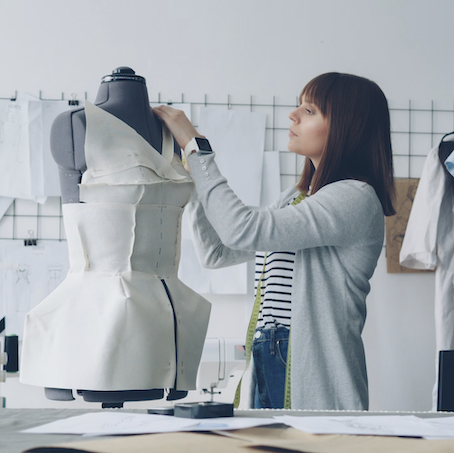
Image by Vitaly Gariev via pexels.com


