


The Low – Waste Blueprint: Why the Made – to – Order Model is the Future for Emerging Fashion Startups
26-06-2026


Launching an independent fashion label has historically followed a predictable, and often punitive, financial path. A designer sketches a collection, spends months sourcing fabrics, and eventually faces the daunting barrier of factory Minimum Order Quantities (MOQs). To get a single t-shirt or dress manufactured, a startup is frequently forced to order hundreds of units per style, spread across various sizes.
For a brand-new business, this upfront capital requirement is a major risk. If those sizes don’t sell as predicted, the brand is left with two serious problems: choked cash flow and a pile of deadstock sitting in a storage unit.
This inventory-heavy approach is increasingly being challenged. As the industry faces growing pressure to address its waste problem, and as young designers look for ways to launch with minimal capital, the made-to-order (MTO) model is proving to be a highly viable alternative. By producing garments only after a customer has placed and paid for an order, startups can protect their margins, reduce waste, and build a highly responsive business from day one.
Flipping the Cash Flow Formula
In the traditional fashion cycle, cash flow is negative for months before any revenue is generated. You pay for design, patterns, fabric sourcing, grading, and manufacturing upfront.
The made-to-order model flips this dynamic on its head. Because the customer pays at the point of sale before any fabric is cut, your working capital is secured in advance. This drastically reduces the initial financial barrier to entry. Instead of spending thousands of pounds on bulk inventory that may or may not sell, a startup can invest its limited resources into high-quality fabric sourcing, pattern optimisation, and localised marketing.
Furthermore, MTO completely eliminates the financial drain of unsold inventory. In bulk manufacturing, a brand’s profit margin is often locked up in the final 20% to 30% of their stock. If they have to discount those remaining pieces to clear space, their actual profit is severely eroded. With made-to-order, every single garment produced represents a guaranteed sale at full retail price.
Designing for Agile, Small-Batch Production
Transitioning to an on-demand model requires a shift in how you view design and production. Traditional factories are set up for high-speed lay-planning, where hundreds of layers of fabric are cut simultaneously. Individual cutting is slower, which means your patterns must be designed with production efficiency in mind.
Successful on-demand brands often focus on timeless, versatile silhouettes that do not require overly complex tailoring but still offer exceptional fit. For example, producing classic, everyday staples like tailored linen trousers or relaxed shift dresses allows pattern cutters to work quickly and minimise fabric waste.
This operational agility also allows brands to test the market without financial risk. If a designer wants to introduce a new color or minor design variation, they can simply add the digital sample to their e-commerce store. If customers respond well, production begins. If not, the brand hasn’t lost a single penny on wasted fabric or unused inventory.
Building the Localised Micro-Supply Chain
Executing a successful made-to-order model relies heavily on close proximity to your manufacturing partners. Trying to run an MTO system with overseas factories often falls apart due to shipping delays, custom holdups, and communication barriers.
To make on-demand work, many startups are turning to local micro-factories or running their own small, dedicated studios. This is a strategy used by established made-to-order fashion brands like SonFre, which handles all of its cutting, sewing, and finishing within a tight 50 km radius of its main studio in Lithuania. By keeping production hyper-local, they can maintain absolute control over garment quality, adjust quickly to pattern modifications, and ship finished pieces out to global customers within a matter of weeks.
For emerging designers, working with local sample-makers or independent seamstresses not only supports the local craft economy but also allows for a highly collaborative production loop. You can monitor quality in real-time, catch grading issues early, and ensure that every piece leaving the studio matches your exact specifications.
Navigating the Customer Expectation Gap
While the benefits of the made-to-order model are clear, it does present one major challenge: managing consumer expectations in an era of next-day delivery. To make MTO work, brands must learn to re-educate their audience.
The key to overcoming this hurdle is radical transparency. Customers are generally willing to wait two to three weeks for a garment if they understand why they are waiting. Successful MTO brands turn the lead time into a selling point rather than a drawback.
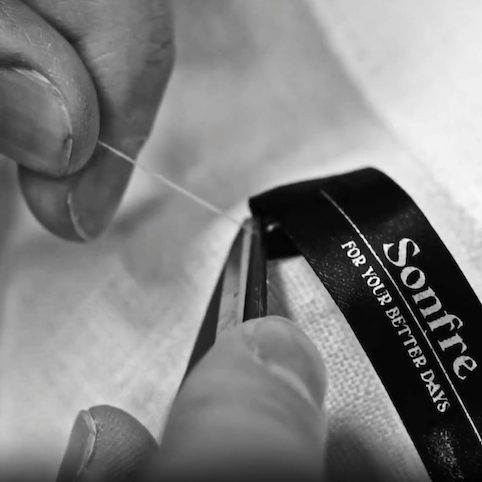
By taking customers behind the scenes—showing the fabric being sourced, the garment being individually cut, and the hands sewing it—brands turn the waiting period into an anticipation phase. The garment is no longer a faceless commodity pulled from a warehouse shelf; it is an artisanal piece crafted specifically for them.
The Bottom Line
For emerging fashion startups, the path to long-term survival is paved with financial caution and environmental responsibility. The traditional bulk-production model, with its high capital requirements and risk of overproduction, is becoming increasingly difficult to justify.
By embracing a made-to-order framework, new designers can launch with minimal overhead, build a highly resilient cash flow model, and prove that sustainable, low-waste fashion is not just an idealistic concept, but a highly profitable business model.


