


Graduate Fashion Week 2026: Champions Creativity But Are Grads Employment – Ready?
15-06-2026


As final-year exhibitions, portfolio presentations and catwalk shows take place across the UK, attention now turns to the next generation of fashion talent.
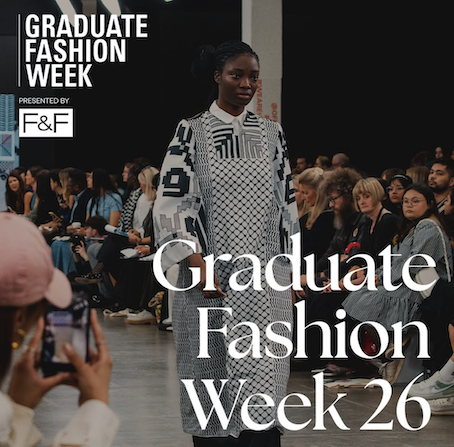
Today marks the opening of the 35th anniversary of Graduate Fashion Week 2026, running from 15th to 18th June, bringing together universities, employers, industry leaders and thousands of graduates eager to take their first steps into fashion careers. The annual showcase continues to provide an important platform for emerging talent, highlighting the creativity, innovation and entrepreneurial spirit that will help shape the future of the sector. Graduate Fashion Week’s 2026 programme celebrates new talent from across fashion design, buying, merchandising, marketing, communications, textiles, technology and sustainability disciplines.
Across the UK, more than 9,000 fashion graduates will leave university this summer, armed with fresh ideas, digital skills and a deep awareness of the sustainability, ethical sourcing and technological challenges facing the industry.
Graduates bring significant value to fashion businesses. They are often early adopters of emerging technologies, highly engaged with digital platforms and increasingly knowledgeable about circularity, sustainability, artificial intelligence, digital design and consumer behaviour. Many are also entering the industry with strong entrepreneurial ambitions, launching their own brands, creative agencies or freelance businesses.
Yet alongside the celebration of creativity comes an important question: how can the industry ensure graduates are equipped not only to innovate, but to thrive in employment?
The conversation around employability has become increasingly important as the UK’s youth employment challenges continue to grow. Recent figures show that more than one million 16 to 24-year-olds are currently classified as NEET (Not in Education, Employment or Training), representing 13.5% of young people in that age group. This is the highest level recorded in over a decade and highlights the urgent need for stronger pathways between education and employment.
For the fashion industry, the challenge is not a shortage of talent. Instead, employers frequently highlight a gap between academic achievement and workplace readiness. Many graduates possess strong creative and conceptual skills but may have had limited exposure to commercial realities such as production planning, sourcing, quality control, manufacturing processes, critical path management, costings, compliance requirements and customer expectations.
This issue has been increasingly recognised by universities themselves. Recent initiatives, including those highlighted in Manchester’s commitment to embedding real work experience into every degree programme, demonstrate a growing understanding that industry engagement can no longer be viewed as optional. Meaningful work placements, live projects, internships and employer partnerships are becoming essential components of higher education.
Fashion is, after all, a practical industry. Whether entering design, garment technology, product development, production, buying, merchandising or manufacturing, employers consistently value candidates who can demonstrate hands-on experience alongside academic qualifications.
This is particularly important as the UK seeks to strengthen domestic manufacturing capabilities and develop more resilient supply chains. The industry needs graduates who understand both creativity and commerciality; individuals who can design products but also understand how they are made, sourced, costed and brought to market.
Equally, there remains a need to recognise that university is only one route into fashion. Apprenticeships, traineeships and vocational training programmes continue to provide valuable alternative pathways, enabling young people to earn while they learn and gain practical experience from day one. These routes are particularly important for manufacturing, technical and production-based careers where hands-on skills remain essential.
At a time when the industry faces skills shortages in garment technology, pattern cutting, production management, stitching and manufacturing, vocational pathways offer a direct route into long-term careers while helping to preserve specialist skills within the UK.
This is where organisations such as Fashion-Enter Ltd and the Fashion Technology Academy continue to play a critical role.
Through apprenticeships, sewing traineeships, work-ready programmes and industry-led training delivered alongside live manufacturing environments, Fashion-Enter Ltd and the Fashion Technology Academy provide learners with direct exposure to the realities of fashion production and business operations.
By combining technical training with real-world experience, learners develop the practical skills, confidence and commercial understanding required by employers. Importantly, these programmes help bridge the gap between education and employment, ensuring that talent is not only developed but retained within the UK industry.
As Graduate Fashion Week celebrates 35 years of championing emerging talent, the future of fashion depends on maintaining a balanced approach to skills development. Creativity will always remain at the heart of the industry, but creativity alone is no longer enough. The graduates who will succeed in the years ahead are likely to be those who combine innovation with practical experience, technical knowledge and commercial awareness.
For employers, educators and policymakers alike, the message is clear: supporting young people into meaningful careers requires stronger collaboration between education and industry, greater access to work experience and a continued investment in both academic and vocational routes.
The talent is undoubtedly there. The challenge now is ensuring that every young person has the opportunity to turn that talent into a sustainable and rewarding career.
To find out more about apprenticeships, traineeships and industry-led training opportunities, visit: https://fcfta.com/
Image courtesy of GFW / Graduate Fashion Foundation


