


From Wedding Celebrations to Factory Floors: Jenny Holloway Explores Southern India’s Fashion & Textile Industry
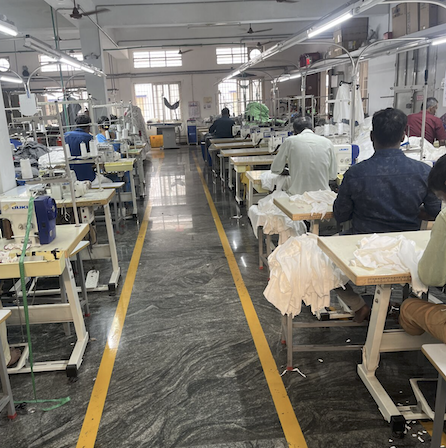
02-06-2026


Fashion-Enter Ltd CEO and Chair of the Apparel and Textile Manufacturers Federation (ATMF), Jenny Holloway, recently travelled to Southern India to attend the wedding of a valued colleague, but the trip quickly evolved into a deeper exploration of one of the world’s most significant textile and garment manufacturing regions.
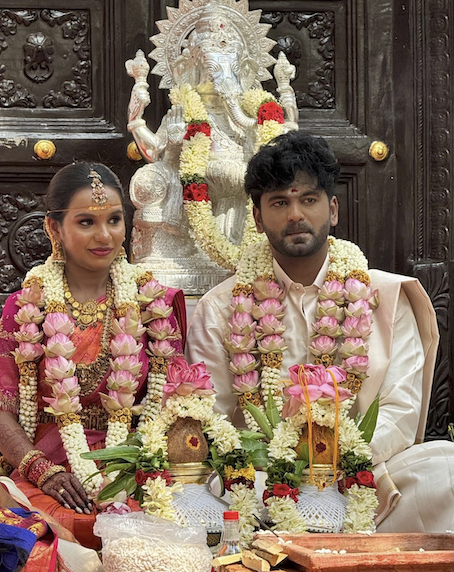
The visit was particularly meaningful for Jenny as she celebrated the marriage of Nivetha Thirumoorthy, known as Nivi, who joined Fashion-Enter Ltd and FashionCapital five years ago after applying for a merchandising role while studying in the UK on a student visa.
(Image right: Nivi’s wedding celebration)
Today, Nivi is an established production specialist at Fashion-Enter’s Haringey factory, working under a Skilled Worker Visa and playing an important role within the company’s manufacturing operations.
Reflecting on the experience, Jenny said: “How lucky to have interviewed Nivetha Thirumoorthy five years ago. Roll on to the present day and Nivi is our well-established production expert at our factory in Haringey. I was honoured that she invited me and my husband Tim to her wedding in Tiruppur and what a wonderful experience it has been. I can’t thank Nivi and her family enough for their generosity and kindness through the Haldi, Reception and Muhurtham ceremonies.”
While the wedding celebrations provided a unique cultural experience, Jenny’s longstanding passion for garment manufacturing meant that factory visits were inevitably on the agenda.
Southern India: The Engine Room of India’s Textile Industry
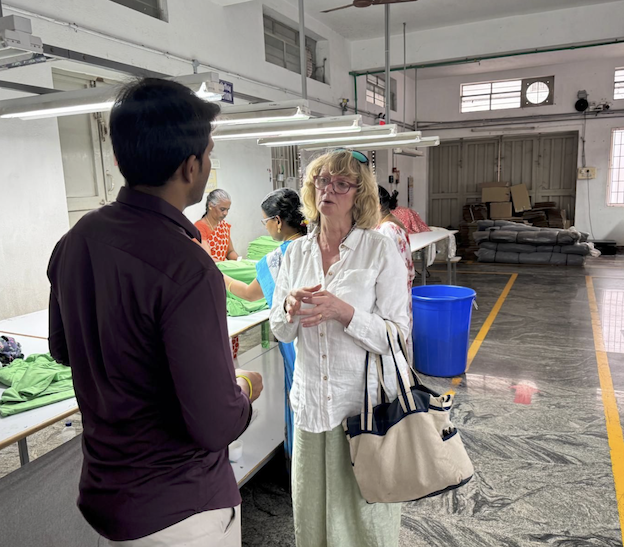
Southern India has long been recognised as the powerhouse of the country’s textile and apparel sector. States such as Tamil Nadu and Karnataka play a pivotal role in supplying global fashion brands, retailers and wholesalers with high-quality garments across womenswear, menswear and childrenswear.
(Image left: Jenny visiting Pro Knits factory Tiruppur)
The region’s strength lies not only in its manufacturing capacity but also in its highly integrated supply chain. From spinning and knitting through to dyeing, finishing and garment production, many businesses operate within tightly connected systems that support efficiency, scalability and quality control.
Tiruppur: India’s Knitwear Capital
At the heart of this region sits Tiruppur, often referred to as the “Knitwear Capital of India” and the “Town of Export Excellence.” The city is responsible for approximately 90% of India’s cotton knitwear exports and has developed a globally recognised reputation for producing high-quality jersey garments, T-shirts, loungewear, activewear and children’s clothing.
What makes Tiruppur particularly impressive is its interconnected network of specialist businesses. Manufacturers, dye houses, knitting units, printers and embroidery specialists operate in close proximity, creating a highly responsive and efficient production environment capable of servicing major international markets. For brands seeking cotton-rich products, Tiruppur remains one of the most important sourcing destinations in the world.
Coimbatore and Erode: The Textile Heartland

Nearby Coimbatore and Erode further reinforce Southern India’s manufacturing strength. Coimbatore is home to thousands of spinning mills, textile engineering businesses and vertically integrated manufacturing facilities. The city has become synonymous with cotton processing, yarn production and fabric manufacturing, providing critical infrastructure that supports garment production throughout the region.
(Image right: Adiyogi Shiva bust in Coimbatore)
Erode, meanwhile, is renowned for its textile trading markets and processing expertise, particularly in cotton fabrics and home textiles. Together, these cities form one of the largest textile clusters globally.
Natural Fibres and Craftsmanship
Southern India’s textile reputation extends beyond industrial-scale manufacturing. The region is also celebrated for its rich heritage of natural fibres and traditional craftsmanship.
Cotton remains the dominant fibre, prized for its softness, breathability and versatility. However, Southern India is equally respected for producing premium linen fabrics, luxurious silks and elegant satin constructions that serve both domestic and international markets.
The region’s silk traditions are particularly notable. Karnataka is one of India’s leading silk-producing states, while Tamil Nadu is famous for its exquisite handwoven silk saris that combine generations of craftsmanship with contemporary design.
The sari itself remains one of the most iconic garments in the world, a testament to the enduring artistry of Indian textile production. From vibrant wedding attire to sophisticated everyday wear, the sari showcases the technical excellence and cultural richness that continue to define the region’s fashion identity.
Building Sustainable UK-India Partnerships
During her visit, Jenny met with Ravikumar Prabhakaran and the team at Pro Knits, a manufacturer producing womenswear, menswear and childrenswear for European markets.
The discussions focused on future opportunities for collaboration and how international partnerships can evolve to become more sustainable and commercially viable.
Rather than relying on frequent air freight shipments, Jenny believes there is significant potential for a more strategic approach to sourcing and replenishment.
“Our hope is for sustainable opportunities. Instead of flying garments from India to the UK, why not test and then repeat with the UK?” she commented.
The concept aligns with growing industry demand for smarter supply chains, combining offshore manufacturing expertise with responsive UK production capabilities to reduce waste, improve planning and lower environmental impact.
Future Opportunities
For Jenny, the trip has highlighted both the human and commercial connections that underpin the global fashion industry.
What began as a journey to celebrate a colleague’s wedding has become a valuable opportunity to strengthen relationships, gain fresh insight into one of the world’s most important textile regions and explore future partnerships that could benefit manufacturers in both India and the UK.
As she continues to visit factories across Southern India, the early signs point towards exciting opportunities for collaboration, innovation and sustainable growth between two nations with deep-rooted expertise in textile and garment production.
Images by Tim Holloway


