


Drip By Drip Challenges Fashion’s Intensive Water Use With New Industry Publication
20-03-2026


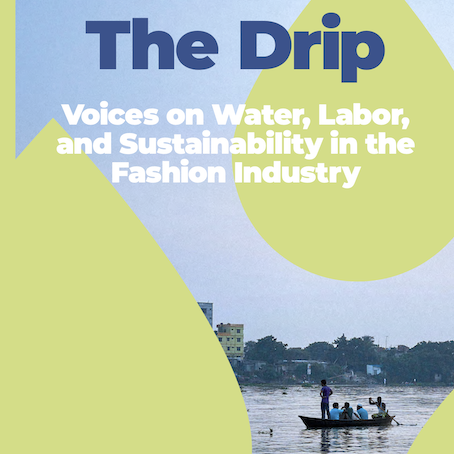
Water has long been acknowledged as fashion’s most significant environmental impact, yet it remains one of the least visible within the industry’s sustainability frameworks. A new publication, The Drip: Voices on Water, Labor and Sustainability in the Fashion Industry, aims to confront that disconnect, bringing frontline perspectives into a conversation often dominated by metrics, targets and reporting standards.
Published by nonprofit organisation drip by drip, The Drip assembles voices from across the textile supply chain to examine how water use is experienced in practice by workers, communities, and ecosystems and why existing sustainability models are falling short.
Despite widespread industry commitments to sustainability, water continues to be treated largely as a technical or efficiency issue. The scale of the problem is well documented: while 2.2 billion people globally lack access to safe drinking water, fashion production, from cotton cultivation to dyeing and finishing, remains highly water-intensive. A single pair of jeans, for example, can require up to 9,000 litres of water.
Yet much of this impact remains effectively invisible within sustainability reporting and audit systems. The Drip challenges this invisibility by reframing water not as a resource management issue alone, but as a structural one shaped by governance, pricing, and power dynamics within global supply chains.
Voices from the Supply Chain
The publication brings together eight contributors spanning academia, industry, labour organisations, and civil society across South Asia’s key textile-producing regions. Through a combination of research, analysis, and firsthand testimony, it documents how water-related risks are experienced on the ground.
Accounts include garment workers denied access to drinking water during extreme heat, environmental scientists tracking industrial contamination in local waterways, and former brand auditors describing how environmental protections are often performative – present during inspections but absent in day-to-day operations.
These perspectives collectively point to a recurring pattern: water risk is routinely displaced, geographically, politically and economically, while sustainability claims remain concentrated at the brand level.
Three Systemic Failures
At the core of The Drip are three systemic gaps the publication identifies as central to the industry’s ongoing water crisis:
- Lack of community-owned data: Water data is typically controlled by brands or third-party auditors, with limited input from the communities most affected.
- Misalignment between commitments and purchasing practices: Brand-level sustainability goals are frequently undermined by cost pressures and sourcing decisions that push environmental and social burdens downstream.
- Disproportionate impact on women and frontline communities: Those most affected by water scarcity and pollution, particularly women, remain largely excluded from decision-making processes.
Together, these failures expose the limitations of current compliance-driven models, which often prioritise documentation over measurable outcomes.
From Reporting to Accountability
Amira Jehia, Executive Director of drip by drip, describes the publication as an attempt to shift the industry’s perspective: away from abstract targets and toward lived realities.
Rather than adding another layer to existing reporting frameworks, The Drip calls for a more fundamental shift—toward accountability grounded in evidence, transparency, and shared responsibility across the supply chain.
This includes recognising how pricing structures, lead times, and purchasing practices directly influence environmental conditions at the production level.
Industry Implications
For fashion businesses, the message is clear: water cannot remain a peripheral KPI within sustainability strategies. As regulatory scrutiny intensifies and expectations around due diligence evolve, the industry will increasingly need to demonstrate not just commitments, but credible, on-the-ground impact.
The Drip suggests that achieving this will require deeper engagement with suppliers, greater inclusion of worker and community voices, and a reassessment of the economic models that underpin production.
In doing so, it positions water as a lens through which broader systemic issues in fashion such as transparency, equity, and accountability can be more clearly understood.
The Drip is available to download now HERE


