


London Fashion Week AW26: Reuse Reimagine Repeat
24-02-2026


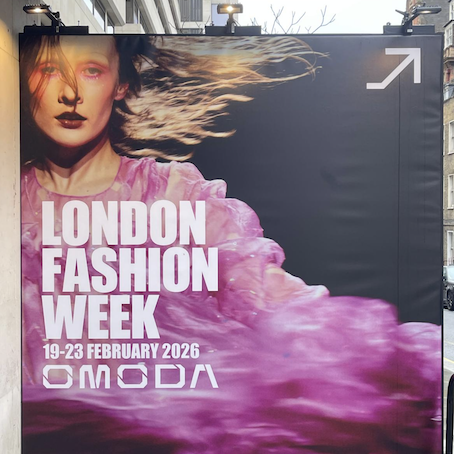
From 19th to 23rd February, stylish eyes focused on the capital as London Fashion Week returned with renewed clarity. At the centre of this evolution stood NEWGEN and the LFW Designer Showcase, a redefined platform connecting emerging designers directly with local and international industry professionals.

The Showcase spotlighted a selected cohort that included: Aaron Esh, Ahluwalia, Bleue Burnham, Clio Peppiatt, Clothsurgeon, E.W.Usie, Johanna Parv, Nicholas Daley, Steve O Smith, Talia Byre and TheVXLLEY. Many have progressed through the British Fashion Council Foundation initiatives, demonstrating a clear and effective pipeline from talent development to global visibility. The message was clear: London is not just about nurturing creative ideas – it’s about building businesses.

(NEW GEN Steve O Smith, image JoJo Iles)
As of January 2026, the British Fashion Council implemented stricter sustainability criteria for NEWGEN designers, mandating no destruction of unsold goods and encouraging the use of preferred, recycled or deadstock materials. A directive that materialised across collections in deeply considered ways, proving that sustainability is no longer an aesthetic add-on but a fundamental requirement.
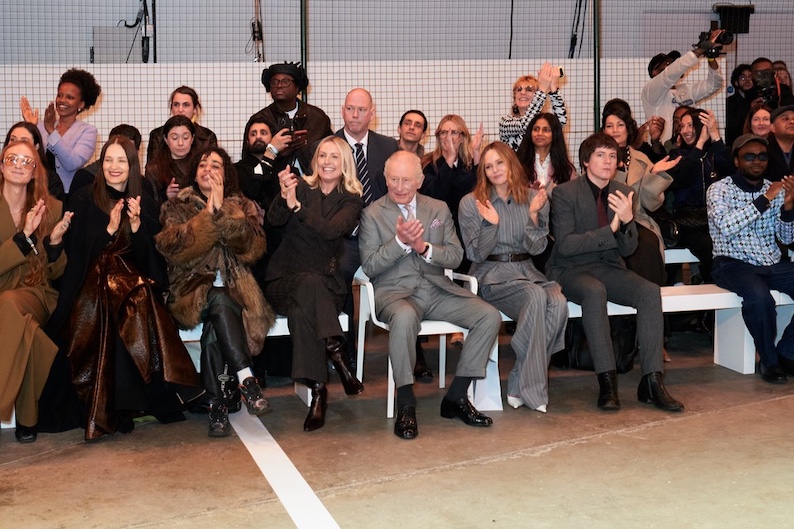
(King Charles at the Tolu Coker show, image courtesy of the British Fashion Council)
Opening the week Tolu Coker, presented her AW26 collection under the gaze of King Charles III. Since the Queen Elizabeth II Award for British Design was initiated in 2018 its not been unusual to see members of the Royal family rub shoulders with the FROW, in this case Stella McCartney on one side and Laura Weir, CEO of the British Fashion Council, on the other. Coker’s concept of “reformative luxury” centred on deadstock fabrics, upcycled denim and leathers, and heritage British wool.
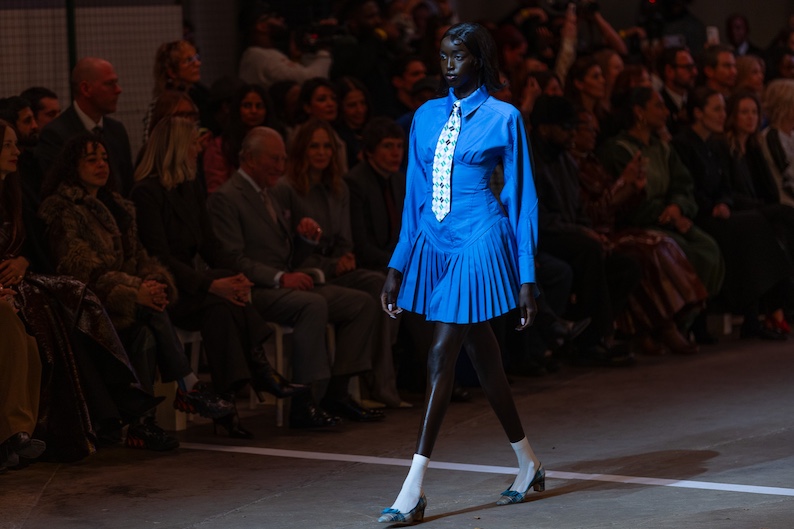
(Tolu Coker AW26, image courtesy of the British Fashion council)
The collection unfolded in a palette of earthy neutrals including tobacco, charcoal and moss punctuated by deep oxblood and indigo. Silhouettes were sculptural yet grounded: elongated tailoring, structured shoulders softened by draped panels, reworked denim pieced into almost armour-like bodices. Patchworked leather coats felt both protective and ceremonial. The tension between fragility and resilience ran throughout, proposing that true luxury lies not in excess but in restoration.
This ethos resonated across the schedule. NEWGEN designer Liza Keane continued her exploration of upcycled and deadstock materials, constructing poetic, tactile garments that foregrounded process. In parallel, Ksenia Schnaider presented her signature deconstructed denim built from recycled remnants – jeans split, reassembled and spliced into unexpected proportions, turning waste into sharp, directional silhouettes.
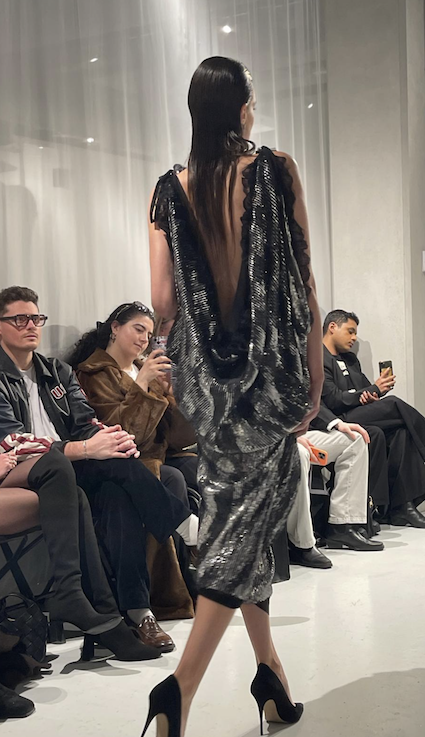
(Poet-Lab AW26, image JoJo Iles)
At Spitalfields E1, the Poet-Lab collection examined the moment a woman moves, from adapting to expectations to owning her narrative. Clean, elongated columns and slip silhouettes referenced 90s minimalism, while stripped-back shapes introduced quiet sensuality. Bare shoulders, open backs and draping created exposure worn with confidence and ease. Every Poet-Lab piece is created from deadstock and recycled textiles embracing both sustainability and slow fashion.
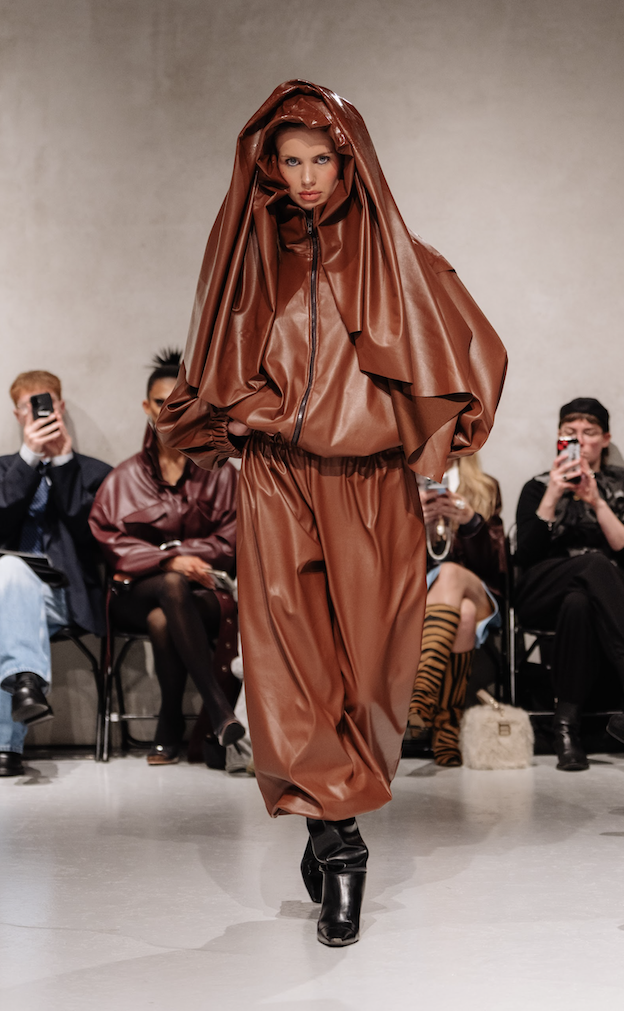
(Poet-Lab AW26, image Marcushartelt)
A sense of introspection continued with Kazna Asker, whose presentation emphasised reuse and material reconsideration. Meanwhile, Fam Irvoll offered contrast with “I Used to Be Seventeen,” a nostalgic take on adolescence. Known for whimsical silhouettes and unapologetic joy, Irvoll balanced playful storytelling with technical precision. Colour was vibrant, detailing exuberant, yet beneath the humour lay a mature reflection on growing up without surrendering imagination.
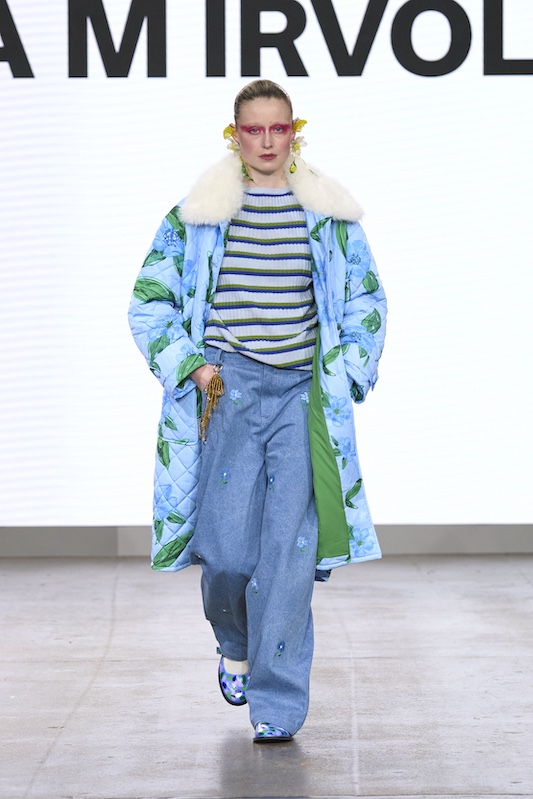
(Fam Irvoll AW26 ©Olu Ogunshakin / Chris Yates Media)
Few presentations captured craftsmanship as atmospherically as The Ouze. The dark NEWGEN presentation space featured floor to ceiling music sheets accompanied by a live cellist playing dramatic chords. Guests were invited to weave around the space to discover displays of handcrafted jewellery, from silver violin brooches, rings and cufflinks, some featured precious stones and hammered textures complete with visible fingerprints that celebrated the handmade. Here, each piece honoured time, trace and touch.
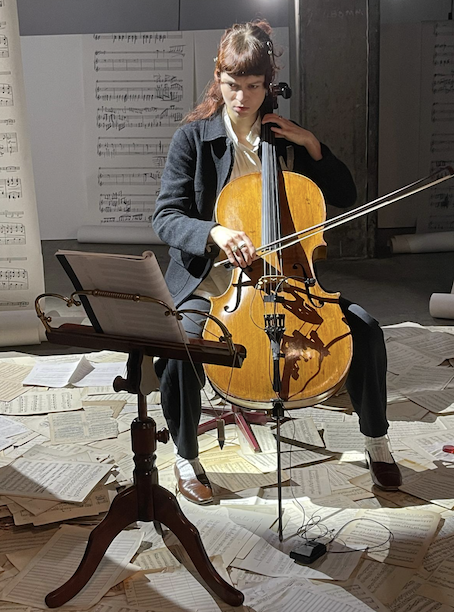
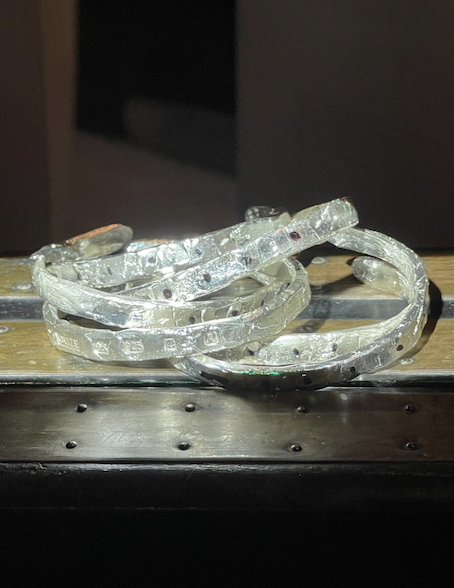
(NEWGEN The Ouze)
Elsewhere, INFDARK envisioned a subtle post-apocalyptic world that continues after collapse. Relaxed silhouettes, exposed underlayers and prints inspired by crumpled pattern-making paper, digitally reconstructed into trompe-l’oeil surfaces, symbolised revision and reconstruction. It was conceptual yet wearable, merging wasteland aesthetics with everyday adaptability.
FC Designer Workspace resident Raquel De Carvalho also made a strong showing with a Discovery Lab Presents short film that presented her sexualised knitted forms in a striking, editorial format.

(Raquel De Carvalho AW26 DiscoveryLAB)
Established names also reinforced London’s balance between experimentation and refinement. Erdem Moralıoğlu delivered romantic precision, while Clothsurgeon maintained its dialogue between tailoring and streetwear.
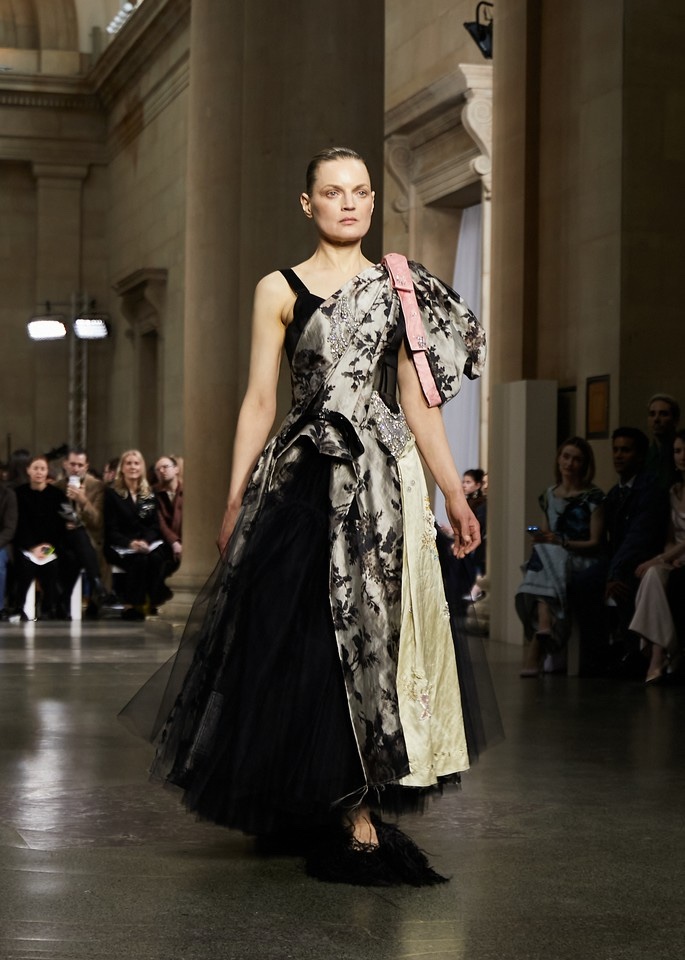
(Erdem AW26, image courtesy of the British Fashion Council)
Closing the week, Burberry delivered a finale rooted in national identity. Rain-ready trenches, layered hoodies and protective outerwear nodded to Britain’s persistent mercurial weather while reaffirming the raincoat in glossy, heavy fabrics. Unmistakably British, it was a fitting way to round off London Fashion Week.


