


Sustainability is Now Shaping Brand Strategy – A.M. Custom Clothing Reveals

30-03-2026


Recent Fashion Weeks in New York, London, Milan and Paris have placed greater emphasis on production methods and materials. From September 2025 through the February / March 2026 Fashion Week seasons, sustainability is becoming an expected standard. Brands are facing more scrutiny and yet more opportunity than before.
Google Trends data shows a 222% increase for “sustainable fashion” in the two weeks leading up to February 2026 Fashion Week. Looking more broadly, interest in sustainable fashion in the UK has reached its highest point in five years. It is filling search bars, shopping baskets, and the questions people ask before they click buy.
Sustainability is no longer sitting in the margins. It is shaping brand strategy, influencing procurement decisions and prompting closer looks at supply chains. ESG pressures are tightening, and expectations around transparency are rising across the sector.
With all these changes, the sustainable clothing market is growing. This article examines UK search data alongside A.M. Custom Clothing’s own production data to show how demand for sustainable materials has changed over the past five years, and what that means for brands choosing the right fabrics.

What is sustainable fashion?
Sustainable fashion is about making clothes in ways that reduce environmental harm and consider social impact. This can involve:
- using lower-impact materials
- making supply chains more transparent
- reducing production waste
- and considering what happens to clothes when people are done with them.
The phrase has been around for years, but since 2020, it has moved from industry jargon into everyday conversation. People want to understand what it actually means, and more importantly, what it looks like in practice.
Search behaviour backs this up. In the UK, “what is sustainable fashion” now sees around 480 searches per month. “Sustainable fashion brands” gets roughly 3,600. That gap is telling. It’s one thing to ask what it means. It’s another to start looking at who’s doing it well.
During key times in the fashion calendar, this attention spikes. During Fashion Week, searches for sustainable brands increase by about 50%. As collections launch, people might be looking at beautiful clothes. But they are also thinking about sourcing, materials, and credibility.
These questions connect back to the circular economy. The idea that clothing should last longer, be reused, or recycled is becoming more widely understood. As people learn about circular fashion, they increasingly expect lower-impact and recycled garments to be part of a brand’s responsible offering. This rising awareness has resulted in growing pressure, and now brands are rethinking their production choices.
A.M. Custom Clothing are seeing that directly. Over the past year, they have recorded a 76% increase in the number of garments produced from recycled materials. For many brands, sustainable sourcing is already part of current procurement planning, not a future ambition.
How have sustainable materials grown in the last five years?
Sustainability conversations were broad. Now they are specific. Brands are being asked what garments are made from and how those fibres are sourced.
Search data suggests several materials are getting more attention…
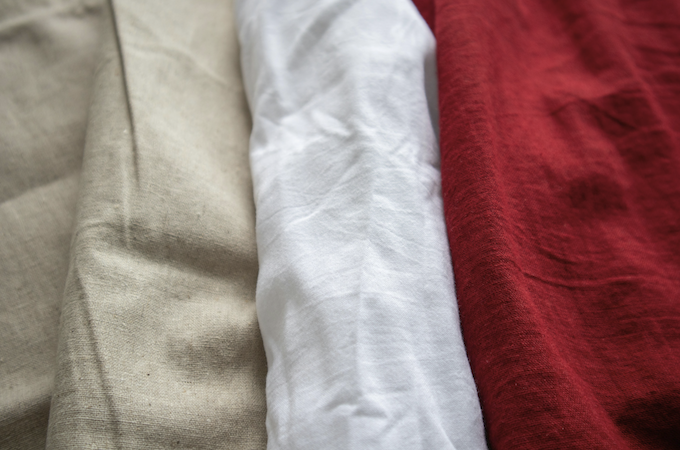
Linen is making a comeback
First, linen has seen a 73% rise in UK search interest over the last five years. The growth of “cottagecore” and other slower, nature-led trends has brought textured fabrics that allow your skin to breathe back into focus.
But linen’s appeal goes beyond styling. It is made from flax, a crop that typically requires far less irrigation than conventional cotton because it can grow well using natural rainfall.
It is durable, biodegradable and works well in warmer climates. For brands working on summer collections or relaxed pieces, that combination is commercially practical.
The rise of viscose and lyocell
Searches for viscose and lyocell are also on the rise, increasing by 54% and 42%, respectively. Both fibres are lightweight and breathable, which makes them easy to incorporate into everyday pieces.
Lyocell, in particular, is often associated with closed-loop production, where much of the solvent used in manufacturing is recovered and reused. That production story matters. It gives brands a clearer narrative around impact, without sacrificing on feel or performance.

Recycled polyester and organic cotton: not a straight line
Recycled polyester has grown by 30% across the UK in the last five years. In our own production data, garments made using recycled materials are up 76% year-on-year.
At the same time, organic cotton remains dominant. Internal figures show that volumes for organic garments are seven times higher than those for recycled clothing.
That contrast says a lot. Moving towards sustainable materials isn’t a clean swap from one fibre to another. Brands are juggling performance requirements, supply chain familiarity, certification standards and customer expectations.
In many cases, organic cotton remains the backbone of a sustainable range, while recycled polyester finds its place in more performance-led products.
Sustainable fashion means using the right material that’s fit for purpose
Each sustianbale material has its place; what’s important is choosing the right material for the garment you are making.
Modal has seen a 24% rise in interest over the past five years. This could be thanks to how soft and breathable it feels. Recycled polyester tends to be picked when durability, stretch or water resistance matter. Cotton is still widely used, largely because brands understand it, trust it and can certify it clearly. Interestingly, discussions around sustainability are shifting, though. The focus isn’t only on production methods anymore, but on how long a garment will last and how it performs over time.
As Alex Franklin, co-founder at A.M. Custom Clothing, explains:
“We’re seeing a clear shift in expectations around sustainable fashion. Brands are thinking more seriously about circularity: not just how garments are made but how well they’ll last and perform so the wearer can enjoy them with a clearer conscience.”
In other words, material choice is no longer theoretical. It’s practical. Brands are considering how garments will hold up in real life, so they remain dependable pieces that can be worn with a clearer conscience.
The rise of the cost-per-wear mindset
As the cost of living tightens budgets, people are looking more closely at value in every aspect of daily life. Both brands and consumers are thinking carefully about cost-per-wear.
Cost-per-wear is the total cost of a garment divided by the number of times it is worn. A greater upfront investment can make sense if the product:
- lasts longer
- holds its shape and colour
- performs consistently under regular use.
This only highlights how important material choice is. Durability isn’t simply a technical detail; it directly affects the overall value.
For consumers, this way of thinking often aligns with the values behind sustainable fashion. While responsibly sourced clothing can sometimes come with a higher upfront price, many buyers see it as a worthwhile investment. Instead of buying several cheaper items, they are choosing a smaller number of well-made pieces they expect to wear regularly and keep in their wardrobe for longer.
The same idea applies to brands. Sustainable sourcing must match performance needs. If a product is marketed as responsible, it should earn its place in the wardrobe by being worn again and again. As a result, wardrobe staples are gaining renewed attention, with brands focusing on pieces designed to stay relevant season after season.
Conscious design is woven beyond the first wear
Plant-based leather alternatives such as apple leather and cactus leather are getting their fair share of well deserved attention. Especially from brands looking to reduce their use of animal products. Still as exciting as they sound, many companies find it challenging to produce these materials at scale.
Currently, these leathers are mainly used for small runs or accessories rather than main product lines. Although their potential is promising, brands still have to consider long-term performance and practicality.
Ethical sourcing is moving up the priority list
Alongside material innovation, we’re also seeing more demand for certified ethical production. Fairtrade clothing volumes are up 20% year-on-year. Businesses’ sustainability policies are changing. Impact on the environment still matters, but so do labour standards and transparency. For many brands, ethical certification is becoming part of how they buy, not just how they market.
Choosing the right material for the job
By this point, the question for most brands is not whether to use sustainable materials. It’s how to use them well.
Alex Franklin explains:
“As the most familiar, cotton is consistently the most popular, and its natural sourcing means it fits established supply chains, carrying recognisable certifications like organic or Fairtrade. Its ethical origin is also clearer for brands to communicate as a sustainable option, with established recycling and repurposing streams at the end of life, extending its lifespan beyond first wear.
“Whereas with recycled fabrics like polyester (RPET), its water repelling qualities and quick drying nature means its finding its place as a sustainable alternative in performance-led sectors, like sportswear and technical workwear.”
Matching fibre to function in the real world
What we find in practice is that successful, sustainable ranges aren’t built around a single trend or fibre. They are built around how the product is used day to day.
Linen, for example, gets chosen again and again for pieces like summer dresses and hospitality uniforms used in warmer months. Those products are worn for long shifts or events where comfort and breathability matter more than technical stretch.
In contrast, for sports kits, branded work shirts or technical outer layers, the priorities are different. These garments are washed regularly and are expected to withstand hard use. Recycled polyester sits well in those scenarios because it handles moisture, dries quickly and maintains shape after repeated wear. That isn’t just a sustainability benefit. It’s a practical choice for a product that has to last.
A material that works beautifully in a linen summer dress won’t necessarily perform in workwear, and a performance fabric that holds up on the training field may be overkill for a casual tee.
Matching materials to real-world use helps brands protect quality, reduce unnecessary replacements, and deliver garments that perform well for both buyers and wearers.
Brand strategy for sustainable fashion is still evolving
If the past five years have shown anything, it’s that sustainable sourcing is no longer static. What brands are asking for today is more nuanced than it was even a few seasons ago.
As reporting rules become stricter and buyers become more knowledgeable, brands will need material strategies that are adaptable and scalable. Trying new approaches will still matter, but so will being clear, responsible and able to back up claims with evidence.
As Alex Franklin puts it:
“Where functional clothing is a priority, brands can take a step in the right direction balancing both types of sustainable materials to create a considered clothing range. Sustainable fashion isn’t about one material replacing another — it’s about using the right fabric for the wearer to look, feel and perform their best.”
In other words, progress in sustainable fashion will not come from a single fibre solution. It will come from thoughtful choices, made product by product, with performance and longevity in mind.
With thanks to A.M. Custom Clothing for the information and images.


