


Online Discussion – Orchestrating Circular Ecosystems: A Symphony or a Cacophony?
03-03-2026


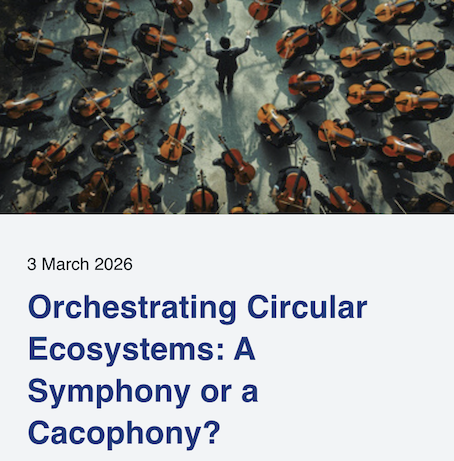
On the 3rd March 2026, Fashion-Enter Ltd (FEL) and its sister platform FashionCapital joined leading academics and industry experts for the online panel discussion, “Orchestrating Circular Ecosystems: A Symphony or a Cacophony?”
The event was hosted by Manchester Metropolitan University in collaboration with the British Academy of Management and the Society for the Advancement of Management Studies. The session formed part of the Orchestrate Project, led by Tulin Dzhengiz and Alaa Abed, exploring how circular ecosystems can be effectively coordinated across sectors and geographies.
Representing industry practice, Jenny Holloway, CEO of Fashion-Enter Ltd and Chair of ATMF, attended the session to contribute to discussions bridging manufacturing reality with academic research.
The webinar explored whether circular ecosystems operate as a harmonious “symphony” where stakeholders align towards regenerative outcomes or risk becoming a “cacophony” when coordination breaks down.
Drawing on ecosystem theory and recent academic research, the discussion focused on how circular systems are shaped by:
- Value exchange between organisations
- Material flows across supply chains
- Knowledge creation and collaboration between academia and industry
- Governance and leadership, described metaphorically as the “maestra(o)” orchestrating the ecosystem
Panellists highlighted that orchestration is never universal. Circular ecosystems are deeply influenced by geography, local policy, industrial capability, cultural context, and available infrastructure. What works seamlessly in one region may create friction in another.
For Fashion-Enter Ltd, operating a UK-based factory with integrated education, sampling, production, and repair services, this place-based perspective strongly resonated. The company’s model demonstrates how manufacturing, skills training, and sustainability initiatives must align within a specific regional and socio-economic context to be viable.
Bridging Academia and Industry
A central theme of the discussion was how academia and practitioners can collaborate more effectively. Too often, theoretical frameworks and real-world implementation operate in parallel rather than in partnership. The Orchestrate Project aims to close this gap by encouraging trans-disciplinary dialogue and co-creation.
From a practitioner’s standpoint, the conversation reinforced the importance of:
- Translating circular economy theory into operational systems
- Ensuring policy aligns with manufacturing realities
- Embedding education and skills development within circular strategies
- Recognising SMEs and regional manufacturers as key ecosystem players
The metaphor of orchestration proved particularly powerful. In a circular fashion ecosystem, leadership may come from policymakers, manufacturers, educational institutions, or collaborative networks but success depends on alignment, communication, and responsiveness to local dynamics.

Shaping the Future of Circular Collaboration
The 90-minute session brought together diverse voices to explore three thematic areas within circular ecosystems, encouraging participants to actively shape the direction of future research and practice around inter-organisational relationships.
For FEL / FashionCapital, participation in this dialogue underscores a continued commitment to advancing circularity not just through discussion, but through tangible action – from ethical UK garment production to education pathways and repair services.
As circular economy conversations evolve, events such as this demonstrate that true progress lies in harmonising theory with practice ensuring the “orchestra” of stakeholders works in sync to deliver regenerative, place-sensitive solutions for the fashion industry and beyond.


