


Government Releases Alan Milburn’s Report To Tackle UK’s NEETs: Why Practical Skills, Apprenticeships and Industry Training Matter More Than Ever
17-11-2026


The UK faces a growing challenge in ensuring that young people have the skills, opportunities and support they need to enter the workforce. With almost one million young people currently not in education, employment or training (NEET), a major new report by former Health Secretary Alan Milburn has placed the issue firmly in the national spotlight.
Published on 17th November 2026, the ‘From a Welfare State to a Working State: a new settlement for the next generation’ 267-page review sets out an ambitious series of recommendations to tackle youth unemployment, improve access to education and training, and create more opportunities for young people to build sustainable careers.
The scale of the challenge is considerable. The latest figures highlighted in the review put the total NEET population at approximately 981,000 young people aged 16–24, representing around 13% of this age group. Without meaningful intervention, the number could rise further, putting additional pressure on public services, employers and the wider UK economy.
For Fashion-Enter Ltd (FEL) and its Fashion Technology Academy (FTA), the report reinforces something the organisation has long championed: practical, industry-led training and apprenticeships must be an integral part of the solution.
What are the key recommendations in the Milburn report?
Among the principal recommendations highlighted in the BBC’s initial coverage are several proposals designed to make employment and training more accessible and attractive to young people.
1. A fundamental overhaul of the benefits system
The report proposes replacing Universal Credit for under-25s with a new Youth Allowance, alongside changes to disability-related financial support. The intention is to create a system that places greater emphasis on supporting young people towards education, training and employment.
2. Making it easier for employers to recruit young people
Proposals include reducing Employers’ National Insurance thresholds over five years for certain younger workers in retail and hospitality, potentially lowering the cost of recruiting people aged 21–24.
3. Doubling apprenticeship completions by 2036
One of the most significant recommendations is an ambition to double the number of young people completing apprenticeships over the next decade, positioning apprenticeships as a mainstream alternative to the traditional university route.
4. Expanding further education opportunities
The review recommends an additional 150,000 further education places for 18–24-year-olds. It also proposes that regional mayors work with employers to establish industry-led technical colleges and specialist campuses that respond to local skills requirements.
5. Financial incentives for employers recruiting NEET young people
Employers could receive financial support for taking on young people who have been out of work or education. Proposed incentives include £3,000 for recruiting someone who has been inactive for six months, with an additional focus on supporting care leavers and disabled young people.
6. A long-term ambition to bring hundreds of thousands into sustained employment
The modelling suggests that the proposed reforms, alongside other measures in the review, could help approximately 440,000 young people into sustained work.
These are recommendations rather than implemented policy, and some proposals apply specifically to England, while certain welfare and tax measures would have a wider UK reach.

Why vocational training and apprenticeships are central to the solution
While the report considers changes to welfare, employment incentives and further education, one message is particularly relevant to the work undertaken by Fashion-Enter and the Fashion Technology Academy: young people need access to training that leads directly to real employment opportunities.
Not every young person wants to pursue a university degree, and not every career requires one. For many, the opportunity to develop practical skills, gain industry experience and earn while learning can provide a more suitable and rewarding route into employment.
This is particularly relevant to the UK fashion and textile industry, where technical and manufacturing skills are essential to maintaining a skilled domestic workforce.
The industry needs trained sewing machinists, garment makers, pattern cutters, material cutters, product technologists and other technical specialists. These are valuable career pathways that offer opportunities for progression, specialisation and long-term employment.
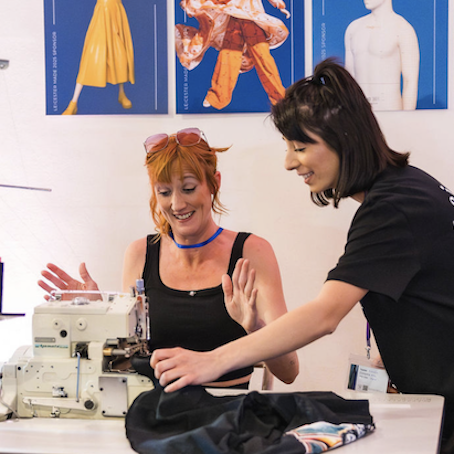
However, developing these skills requires more than classroom-based learning. Young people need access to specialist equipment, experienced trainers, practical instruction and opportunities to understand how a real production environment operates.
How Fashion-Enter Ltd and the Fashion Technology Academy are making a difference
Fashion-Enter Ltd and its Fashion Technology Academy have been developing precisely these opportunities, providing specialist training, accredited courses and apprenticeships designed around the needs of the fashion and textile sector.
The FTA has the advantage of operating alongside a live factory and fashion studio, allowing learners to experience real apparel manufacturing environments while developing their technical skills and working towards recognised qualifications.
Alongside apprenticeships, the FTA offers shorter accredited courses in pattern cutting, stitching, tailoring and production skills.
These shorter courses are particularly important in providing accessible entry points for people who may be exploring a new career, returning to learning or looking to develop specific technical abilities before progressing to higher-level qualifications or apprenticeships.
The apprenticeship model also provides an important link between education and employment, combining structured training at the Academy with practical workplace learning alongside an employer.
For businesses, this offers an opportunity to develop the skills they need while investing in the next generation of talent.
Fashion-Enter and the FTA recognise the importance of introducing the fashion and textile sector to students at an early age, helping them understand that the industry offers far more than the design and retail roles they may traditionally associate with fashion.
Through engagement with schools and careers events, the organisation can introduce students to the technical, creative and manufacturing opportunities available within the sector.
Recent careers fair activity by the FTA Leicester team at Fullhurst Community College and Herewood Academy is one example. With approximately 1,100 students attending across the two events, the team was able to discuss career opportunities within fashion and share information about the training and pathways available through FEL.
Introducing these opportunities before students select their GCSE options can help broaden their understanding of future careers and encourage them to consider vocational routes alongside more traditional academic pathways.
Building a stronger future for UK manufacturing
The Milburn review presents an important opportunity to rethink how the UK supports young people into employment. Its recommendations highlight the need for closer collaboration between education providers, employers, government and industry.
For the fashion and textile sector, this conversation is particularly timely. As businesses look to strengthen UK manufacturing capabilities, develop domestic supply chains and address shortages of specialist production skills, investing in people is essential.
Apprenticeships and vocational training should not be viewed as secondary options. They are an important part of developing a skilled workforce, supporting business growth and giving young people the opportunity to build fulfilling careers.
At Fashion-Enter Ltd and the Fashion Technology Academy, we believe that every young person should have access to opportunities that allow them to discover their potential, develop practical skills and progress into meaningful employment.
The challenge outlined in the Milburn report is significant, but so is the opportunity. By connecting young people with employers, specialist training and real industry experience, we can help create a stronger future for both the workforce and the UK’s fashion and textile manufacturing industry.


