


Beyond GCSE’s: Why Practical Skills Could Be Your Route into Fashion
18-08-2026


This Thursday 20th August 2026, GCSE students will receive their results, marking an important moment for thousands of young people across England, Wales and Northern Ireland. For some students, results day will confirm a carefully planned route into sixth form, college or higher education. For others, it may prompt questions on what to do next. For anyone interested in fashion, the answer could be found not in a lecture theatre but at a cutting table, behind an industrial sewing machine, in a sample room or on a tailoring bench.
Alexander McQueen’s lesson: Learn how clothes are actually made
One of British fashion’s most celebrated designers provides a powerful example of the value of practical skills. Alexander McQueen left school at 16 and began his fashion career through tailoring training on Savile Row. He apprenticed at Anderson & Sheppard before moving to Gieves & Hawkes, learning traditional tailoring and pattern-cutting techniques. He later worked as a pattern cutter for theatrical costumiers Angels & Bermans before eventually studying for an MA in Fashion Design at Central Saint Martins.
The important point with McQueen’s story is that technical knowledge was fundamental to his creativity. McQueen himself understood the value of learning construction. His early experience gave him an understanding of cut, proportion, fabric and tailoring that became central to his later work. His story demonstrates that fashion is not simply about having ideas; it is also about understanding how those ideas can be turned into a physical garment.
Fashion is much bigger than becoming a designer
Fashion careers are often presented through the most visible roles: designer, stylist, photographer, buyer or creative director. Yet every garment that reaches a shop, runway or customer depends on a much larger network of technical and production specialists.
There are careers in:
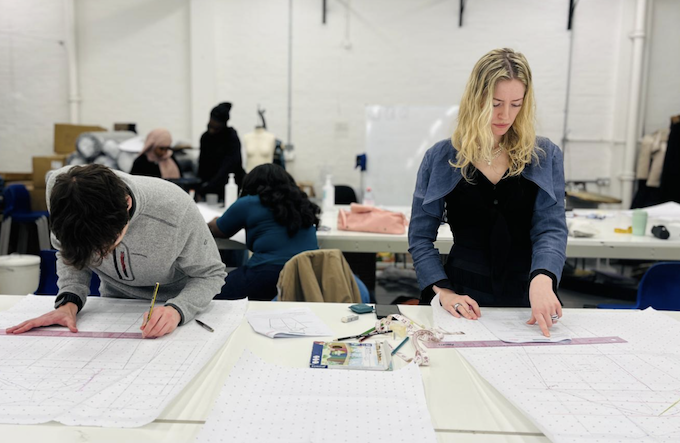
- Pattern cutting — translating a design into accurate pattern pieces that can actually be constructed.
- Garment technology/product technology — solving technical problems, testing fabrics and samples, developing specifications and ensuring garments can be manufactured to the required quality, cost and timescale.
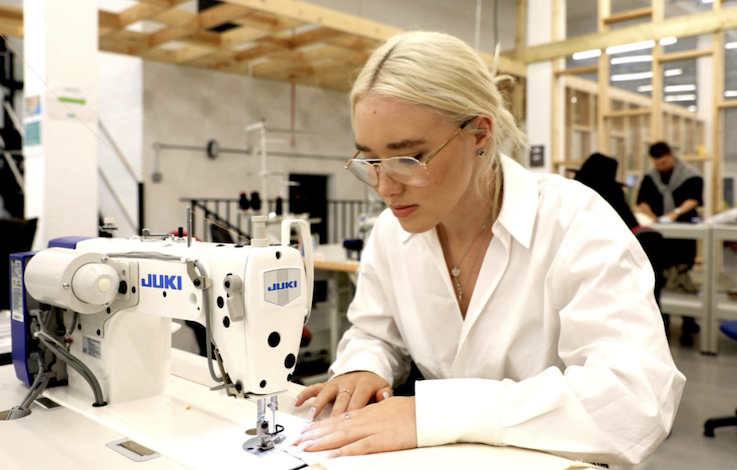
- Garment making and sample machining — constructing samples and finished garments with a high degree of accuracy.
- Tailoring and bespoke cutting — working with specialist techniques to create garments for individual clients.
- Production and quality control — ensuring that garments are manufactured consistently and to specification.
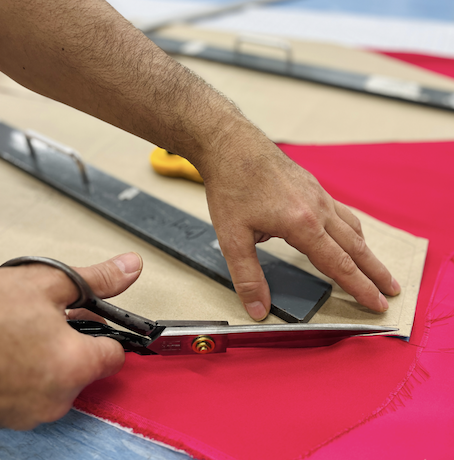
- Material cutting — accurately preparing fabric and other materials for the construction process.
- Style3D and digital pattern cutting — combining traditional technical knowledge with the latest digital tools.
Indeed, the UK’s current occupational standards recognise fashion and textiles pattern cutting as a Level 3 technical occupation. Pattern cutters can work across clothing, textiles and other sewn products, combining manual techniques with Style3D and digital systems.
Garment and product technologists are similarly central to turning a creative concept into something that can actually be manufactured. The National Careers Service describes garment technologists as working with fabrics, patterns, samples, manufacturers and quality control, with potential progression into senior technology, quality control and technical production roles.

Practical skills can be a career discovery tool
For a young person who loves clothes but isn’t sure which part of the industry appeals to them, the biggest challenge can be knowing where to start.
That is where short, practical courses and workshops can be particularly valuable. The Fashion Technology Academy (FTA), part of Fashion-Enter Ltd, specialises in technical fashion and garment-production training. Its longer courses cover areas including pattern cutting, industrial stitching, tailoring, production skills and Style3D.
There is also value in trying a skill before committing to a qualification. FashionCapital’s /FTA workshops provide exactly this kind of hands-on introduction. Its 1 and 2 day programme includes beginner-friendly sessions in areas such as pattern cutting, industrial sewing and garment making, alongside upcycling, sewing, draping, textile embellishment and other fashion techniques.
The behind the scenes jobs are where fashion becomes real
There is a tendency to think of fashion as a hierarchy, with designers at the top and technical roles somewhere behind the scenes. It may be the designers name in the spotlight however it takes a team to bring a sketch to wearable reality. Without production skills, a sketch remains a sketch.
This is why practical fashion education can be so powerful. It gives young people an opportunity to discover not only whether they like fashion, but which part of fashion they like.
Results day doesn’t have to define the future
GCSE results are important, but they are not a verdict on someone’s potential. For a young person interested in fashion, there are multiple routes forward: sixth form and further education, vocational qualifications, apprenticeships, employment with on-the-job training, specialist short courses and, later, higher education if that becomes the right choice.
The National Careers Service, for example, lists university, college courses, apprenticeships and working towards the role as potential routes into pattern cutting. It also notes that someone can begin as a pattern-cutting assistant or sample machinist and develop through training and experience.
That flexibility is important. A student who isn’t ready to commit to three years of university doesn’t have to abandon fashion. They can start by doing. Spend a day learning pattern cutting. Try a sewing machine. Make a garment. Take something old apart and work out how it was constructed. Learn what a toile is. Visit a fashion training academy. Talk to someone who works in production. Discover whether you prefer the creative freedom of design or the problem-solving precision of technical development.
Start with curiosity then develop the skill
The fashion industry needs creative thinkers, but it also needs people who understand materials, construction, fit, technology and production. Alexander McQueen’s career is a striking example of how technical craftsmanship can become the foundation for extraordinary creativity. He did eventually go to Central Saint Martins, but his journey did not begin there. It began with learning how garments were made.
For students receiving their GCSE results this August, that is perhaps the most useful message of all:
You don’t have to know exactly what your fashion career will be on results day. You just need to be willing to try something.
A practical one- or two-day workshop could be enough to turn an interest in clothes into an understanding of pattern cutting, garment construction, industrial stitching, tailoring or upcycling and that first experience could help reveal a career that a traditional careers brochure might never have suggested.
Explore practical fashion training
The Fashion Technology Academy’s courses includes pattern cutting, stitching, tailoring, production skills and Style3D.
You can also explore FashionCapital’s 1 and 2 day workshops on Eventbrite, including beginner sessions and practical workshops in pattern cutting, sewing, industrial garment making, upcycling and related skills.
FTA Head Office: Unit 4, Crusader Estate, 167 Hermitage Road, London N4 1LZ
Tel: 0208 809 3311 Email: education@fashion-enter.com


