


Finding the Right Face for Your Brand
28-07-2026


Every season, a brand’s most important asset walks out under the lights for less than three minutes: the model’s face.
Not the label, not the sample, not the seating chart. The face is what a room remembers, and it’s the one part of a show that has already been through four cities, several time zones and a stack of quick changes before it ever reaches the runway.
Finding the right face for a brand isn’t only a casting decision. It’s a logistics problem, and increasingly, a skincare one.
The Circuit That Never Stops
The Big Four fashion weeks run in a fixed order twice a year, New York first, then London, then Milan, then Paris, covering roughly a month of back-to-back shows each February and September. The travel windows between them are tight by design. New York to Milan allows about three days. London to Milan gives closer to twenty-four hours. Paris alone runs more than ninety major shows across its ten days, while New York’s Lincoln Center schedule packs in over fifty.
A model walking a full circuit isn’t doing one show. They’re doing dozens, across four countries, on a sleep schedule built around flight times rather than bedtimes.
That pace lands directly on the skin. Cabin air runs drier than most homes, long-haul flights disrupt the sleep cycle the skin barrier relies on to repair itself overnight, and four cities in four weeks means four different climates, water types and hotel bathroom lighting to look good under.
Backstage teams have to produce camera-ready, lit-for-the-runway skin on a face that’s jet-lagged, dehydrated from cabin air, and meeting a new makeup artist every 48 hours.
Backstage Skin Runs on a Different Clock
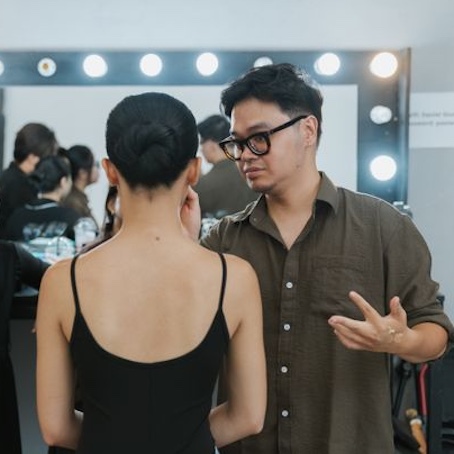
Facialists working the circuit have learned to move fast rather than elaborate. Most backstage routines run four or five steps at most, cleanse, tone, hydrate, protect, done, because there’s rarely more than a few minutes and a folding chair to work with.
A typical pre-show sequence layers a hydrating toner, an essence and a plumping serum before makeup ever goes on, chasing the smooth, light-reflecting “glass skin” finish that photographs well from every angle in the room. Teams at shows this season, including 111Skin backstage in London and SkinCeuticals at Erdem, have leaned on quick treatments like cryo massage and targeted masking specifically because they deliver visible results without needing thirty spare minutes nobody has. SPF still goes on as the final step even under stage lighting, because a show day often starts with a fitting under real daylight hours before the model ever reaches the venue.
New product launches get avoided close to showtime. Familiar, fragrance-free formulas win, because an unpredictable reaction two hours before doors open is not a risk anyone backstage is willing to take.
Smaller Shows, Same Problem
It isn’t only the big houses managing this. An emerging designer showing at a smaller venue often has one freelance makeup artist covering six looks and no esthetician on call, which makes the skin problem harder to solve, not easier.
There’s no glam squad to decant products into neat travel sizes between cities, and no budget line for a dedicated skin team flying in ahead of the show.
Whatever’s in the kit bag has to work fast, travel light and not take up the one free suitcase pocket that isn’t already full of samples, garment bags and the steamer nobody wants to check as luggage.
For a young label, that’s not a small detail.
A model who looks tired or patchy under the lights reads as the brand looking underprepared, regardless of how strong the collection is. Buyers and press clock the whole picture, not just the clothes, and an emerging designer rarely gets a second look if the first one lands wrong.
That’s the other constraint the circuit creates: when the kit shrinks, everything left in it has to earn the space.
Cleansers and moisturisers are non-negotiable, but they’re maintenance. The step that actually changes what the camera sees in the ninety seconds before makeup goes on is the concentrated one, which is why a well-chosen face serum is usually the last thing a travelling kit should drop.
One small bottle, aimed at whatever the week has done to the skin, dehydration, dullness, a barrier worn thin by four climates in four weeks, does more for the finish than a fourth cream ever will.
What This Means for the Brand
None of this is really about vanity. A show’s whole visual argument rests on how the clothes look moving under lights on skin that reads as healthy from the tenth row and the front row alike.
Skin that’s dry, patchy or overworked fights the makeup artist and fights the lighting, and a brand’s carefully built image spends its three minutes competing with problems the audience can’t quite name but can absolutely see.
Investing in how a model’s or stylist’s skin survives the circuit isn’t a beauty department line item. It’s part of the same presentation budget as the runway, the seating and the show notes, and it belongs in the planning conversation as early as the casting call does, not as an afterthought sorted out the night before doors open.
The right face for a brand, then, isn’t just a casting call. It’s whichever face can still look like itself in Paris after starting the week in New York, and increasingly, that comes down to what’s packed in the kit.
Top image by Huy Nguyen via pexels.com


