


From Dirt to Design: Rethinking Sustainability at the Barbican’s Dirty Looks
12-12-2025


The Barbican’s current exhibition Dirty Looks invites audiences to step away from the polished, hyper-perfect world of mainstream fashion and instead immerse themselves in the raw, messy and defiantly imperfect side of the industry. From ruined evening gowns and faux-stained jeans to mud-splattered dresses and radically upcycled ensembles, this exhibition challenges visitors to rethink what beauty means and why the future of fashion may depend on getting a little dirty.
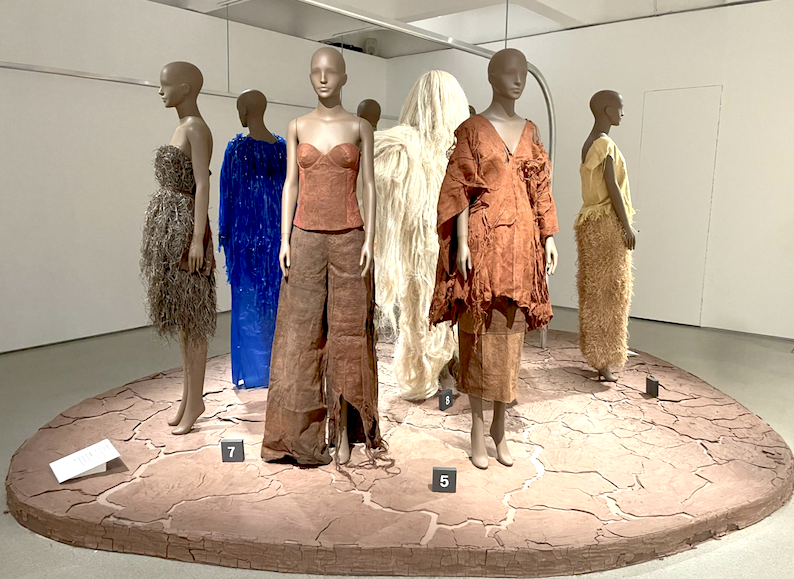
(IAMISIGO founded by Bubu Ogisi using fabrics made with bark cloth, banana leaf raffia, handwoven hemp and more)
At the heart of Dirty Looks is a provocative question: Where did fashion’s fascination with dirt originate, and what does this aesthetic reveal about our relationship with the earth and our own bodies?
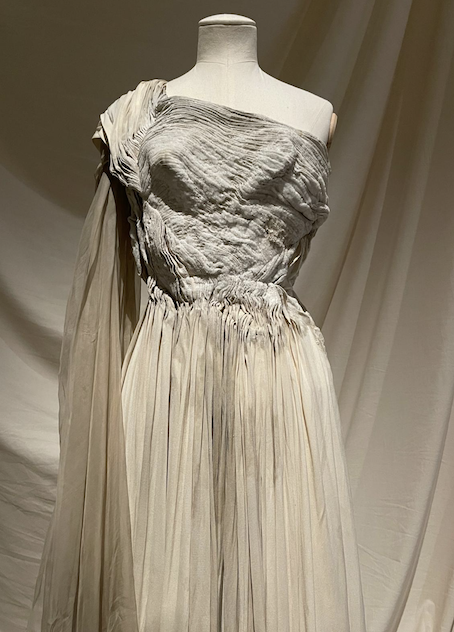
(Alice Potts, Perspire Madame Gres Biocouture – cystal sweat 2025)
Rather than treating dirt as something to be avoided or concealed, the exhibition traces its use as a rebellious design tool, one that disrupts the conventions of glamour, cleanliness and traditional ideals of beauty. Dirt and decay are reframed not as signs of neglect but as symbols of resistance, authenticity and truth-telling in an industry that often prioritises polish over reality.
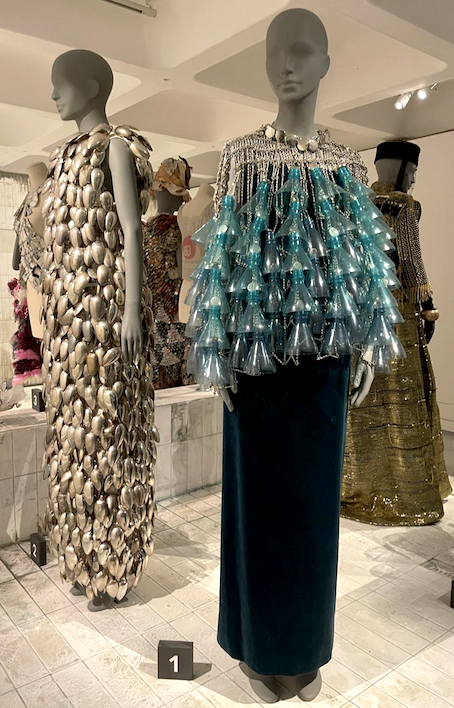
(Paco Rabanne HC AW92 – used plastic bottle tops, next to Hodakova AW23 created from spoons)
The exhibition brings together some of fashion’s most influential disruptors. Visionaries such as Hussein Chalayan, Alexander McQueen, Vivienne Westwood, Miguel Adrover and Maison Margiela have long used distressing, deconstruction and decay as powerful artistic statements. Their boundary-pushing works challenge audiences to confront fashion’s darker edges, its environmental footprint, its reliance on perfection and its detachment from the natural world.
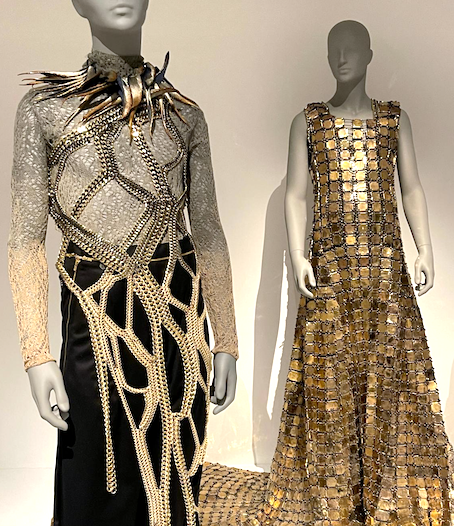
(Yuima Nakazato uses waste raw materials to create innovative recycled fabrics)
Alongside these icons, Dirty Looks showcases a new generation of designers who are redefining what sustainable fashion can look like. Rising talents including Elena Velez, Yuima Nakazato and IAMISIGO use natural materials, waste repurposing and craft-centred techniques to explore dirt as both an aesthetic and ethical choice. In an age dominated by glossy digital filters and immaculate AI-generated visuals, this shift toward earthiness and imperfection feels radical and refreshingly human.
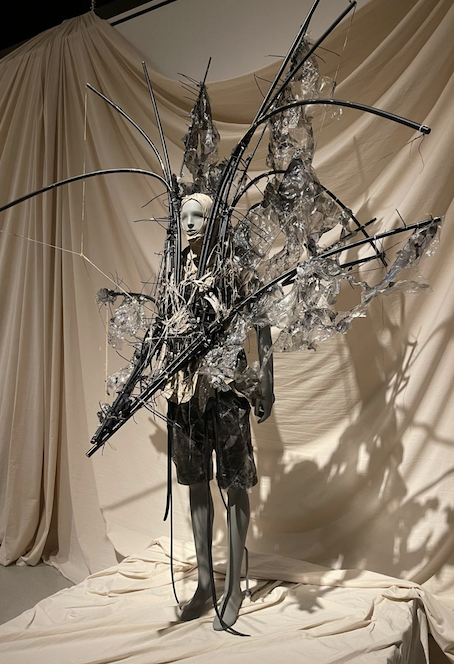
(Yodea-Marquel Williams Central Saint Martins Graduate Collection 2024)
A standout moment of the exhibition is the inclusion of two designs by former Fashion Technology Academy (FTA) student and apprentice Yodea-Marquel Williams. His journey, from mastering garment-making fundamentals to expanding his conceptual and technical vocabulary at Central Saint Martins, is a testament to what grounded training and imaginative risk-taking can achieve.
To see Williams’ work displayed alongside legends like Margiela, McQueen and Westwood is not only a personal triumph for the designer but also a proud moment for the FTA, that supported his early development. His pieces fit seamlessly among the exhibition’s themes, embodying both experimental aesthetics and a thoughtful use of sustainable, earth-conscious materials. Williams represents the future of a fashion industry that values craft, creativity and conscience in equal measure.
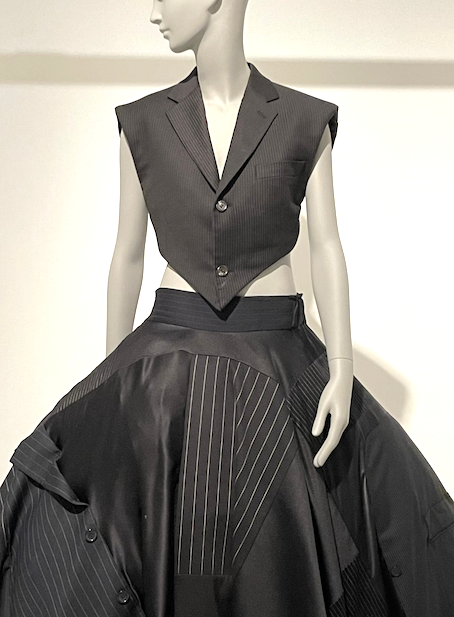
(Nina Hollein, Suit-Up Dress 2020)
Dirty Looks is not merely an exploration of style, it is a call to re-examine the environmental and ethical implications of garment creation. By spotlighting designs marked by dirt, decay and reuse, the exhibition foregrounds a more honest relationship with the materials that underpin our industry. It encourages viewers, especially fashion design students, to look critically at each stage of a garment’s lifecycle: from raw fibre production and dyeing processes to construction, wear, repair and eventual reuse.
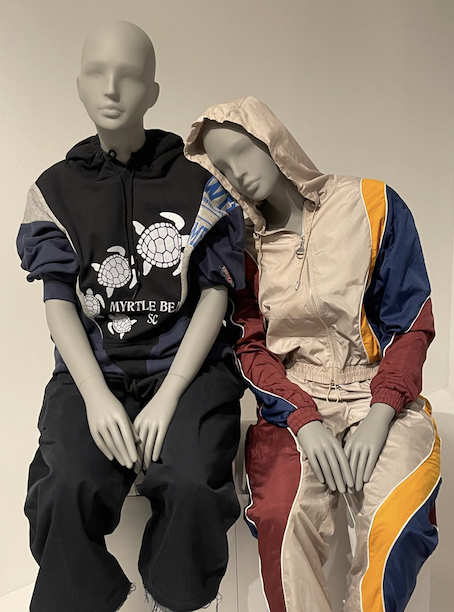
(Ahluwalia SS23 – using deadstock, damaged, excess, donated and recycled fabrics)
In resisting the sterile perfection that has dominated much of fashion’s recent past, Dirty Looks offers a refreshing counter-narrative, one that embraces the beauty of imperfection, the richness of material history and the urgency of sustainable practice.
Running until 25 January 2026, this exhibition is essential viewing for all fashion students, educators and industry professionals. It poses challenging, necessary questions about where fashion has been, where it is heading and why the next revolution might just begin with welcoming a little dirt.
Words and images by JoJo Iles


